

Apple Explores Acquisition of Semiconductor Company to Enhance Competitiveness in AI Server Chips
Apple has recently sounded out some semiconductor startups regarding a potential sale and has also been holding discussions with investment banks regarding an acquisition, U.S. IT news outlet The Information reported on the 15th (local time), citing multiple sources.
Apple is currently running its internal AI servers on its self-developed ‘M2 Ultra’ chip, but is reportedly facing difficulties due to performance issues.
Apple had originally planned to launch its next-generation server chip, codenamed ‘Valtra,’ this year, but the schedule has been delayed, sources said.
China’s Largest DRAM Maker CXMT Lists… Will It Be a ‘Watershed’ for Semiconductor Self-Reliance?
According to Chinese economic media outlet Caixin and U.S. news agency Bloomberg on the 16th, CXMT began accepting subscriptions for its public offering on the Shanghai Stock Exchange’s STAR Market. The offering price is 8.66 yuan per share, and 6.69 billion new shares will be issued. If the over-allotment option is exercised, the total number of shares offered will reach 7.69 billion, raising up to 66.6 billion yuan (approximately 14.6 trillion won).
It is nearly double the amount initially expected to be raised.
Coreweave Seeks Financial Products to Hedge Against Memory Price Decline
Reuters reported on the 15th, citing sources, that Coreweave, a ‘neocloud’ company, is considering using financial derivatives as a hedge against falling prices of memory and storage chips.
While this serves as a shield for semiconductor companies during a slowdown in demand, it poses a risk to buyers like CoreWeave, who provide AI computing resources such as graphics processing units (GPUs) on a subscription basis as needed, that they will continue to pay much higher than the market price if prices fall in the future.
For this reason, it is reported that Coreweave’s management has been discussing hedging measures in preparation for a potential drop in memory chip prices in the future.
Intel Takes the Lead in High-Aspect-Ratio EUV Commercialization… Ahead of TSMC and Samsung
ASML announced during its second-quarter earnings announcement on the 15th (local time) that “Intel is utilizing high-aperture EUV for the production of Core Ultra Series 3 (Panther Lake) and has secured the yield and production stability required for mass production.”
High aperture ratio EUV is a next-generation lithography technology that enables the implementation of finer circuits by increasing the EUV numerical aperture (NA) from the current level of 0.33 to 0.55. Since the appointment of former CEO Pat Gelsinger in 2021, Intel has adopted high aperture ratio EUV as a strategic move to close the gap with TSMC.
TSMC Announces Additional Investment of Approximately 148 Trillion Won in the U.S.
TSMC announced on the 16th that it plans to spend an additional $100 billion (147.89 trillion won) to expand production capacity in the United States.
With this announcement, TSMC’s total investment commitment for U.S. chip manufacturing is expected to reach $265 billion (392.094 trillion won). TSMC Chairman and CEO CC Wei explained at the quarterly earnings conference on the 16th that this is “to support strong multi-year demand from major U.S. customers.”
Prosecutors raid three locations, including Montage Technologies, over semiconductor component price-fixing
According to legal sources, the Fair Trade Investigation Division of the Seoul Central District Prosecutors’ Office raided the South Korean offices of Chinese fabless company Montage Technology, Japanese integrated semiconductor company Renesas Electronics, and U.S. semiconductor design firm Rambus on the 15th on suspicion of violating the Fair Trade Act. It is reported that the prosecution will investigate the specific timing and nature of the collusion based on mobile phones and company documents seized on that day.
Montage Technology and others are suspected of colluding on prices while supplying semiconductor components to Samsung Electronics and others (violation of the Fair Trade Act). These are oligopolistic companies that supply components to global memory semiconductor manufacturers such as Samsung Electronics, SK Hynix, and Micron of the United States.
Labor Union Launched at Samsung Electronics Semiconductor Equipment Subsidiary ‘Semes’
According to industry sources on the 15th, the Semes Labor Union officially announced the launch of the union across all workplaces, including Dongtan, Cheonan, Hwaseong, and Pyeongtaek. It is reported that the union plans to prioritize recruiting members and establishing an organizational structure, with the goal of holding its first collective bargaining session next year.
The labor union plans to secure criteria for calculating performance bonuses and client contribution profits, and also review the possibility of introducing a performance bonus system linked to Samsung Electronics’ Semiconductor (DS) division. While acknowledging that it is difficult to change the prime contractor-centric business structure in the short term, their position is that the compensation gap between affiliates must be improved.
Semes is a semiconductor and display equipment company in which Samsung Electronics holds a 91.54% stake.
Chinese AI Company Alipay Pushes for 6 Trillion Won Paid-in Capital Increase
According to Bloomberg on the 8th (local time), Zhifu, traded on the Hong Kong stock exchange under the ticker symbol ‘Knowledge Atlas Technology’, is pursuing a paid-in capital increase to issue 19.8 million new shares at HK$1,588 to HK$1,698 per share. This is a 13% discount from the closing price on the 8th.
Alipay’s stock price has skyrocketed 1,328% since its listing on the Hong Kong stock exchange. Behind this surge is Alipay’s AI model, ‘GLM-5.2’. It has garnered attention for its performance comparable to Antropic’s latest models, while offering the advantage of having usage fees that are only one-sixth of those of US AI models.
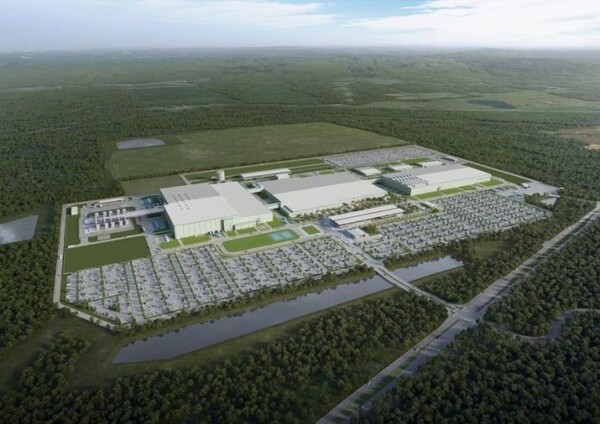
HSBMA plant bird’s-eye view. / Source: SK On
SK Onc-Hyundai Motor Joint Venture Plant in U.S. Begins Mass Production of EV Batteries
According to industry sources and local media outlet Atlanta Journal-Constitution (AJC) on the 15th, HSBMA, located in Bartow County, Georgia, commenced operations last month and began producing its initial volume. It is reported that the battery cells produced there will be supplied to Hyundai Motor Group’s new dedicated electric vehicle plant, ‘Hyundai Motor Group Metaplant America (HMGMA),’ for use in electric vehicle production.
HSBMA is a joint venture established in 2023 by Hyundai Motor Group and SK On with a joint investment of a total of $5 billion. Each holds a 50% stake. Construction began in 2023 and was recently completed.
Chinese EVs Gaining Popularity in UK… Sales Surge 110% in First Half
According to the Society of Motor Manufacturers and Traders (SMMT) on the 14th (local time), sales of Chinese car brands in the UK, including Chery, BYD, and Geely, reached 183,000 units in the first half of this year, an increase of 110.1% compared to the same period last year. Their share of the total new car market also rose by 7.7 percentage points over the past year to 16.1%.
It was found that the Chinese brands with high recognition among British consumers are MG, BYD, and Jaecoo.
Covestro Joins Hands with BYD for EV and Battery Material Development
Covestro announced on the 15th that it had signed a memorandum of understanding with BYD for long-term cooperation in the future mobility and energy sectors. Covestro is a global chemical materials company that produces high-performance polymer materials, such as polycarbonate and polyurethane, used in automobiles, electrical and electronic equipment, and construction.
The two companies will pursue joint research and development, technology development, and the identification of new projects in the fields of new energy vehicles (NEV), batteries, public transportation, ESS, and next-generation technologies. They also plan to review strategic investment opportunities together.
SM Bexcel to Embark on Full-Scale Development of Next-Generation Batteries for Drones and Robots
SM Bexel announced on the 15th that it has established a Battery Pack Solution Team at its R&D Center and is launching a mid-to-long-term project to target the cutting-edge battery market. The company intends to enter the advanced battery market by expanding R&D investment in high-output, high-density battery packs required for everything from industrial drones to humanoid robots.
The Battery Pack Solution Team is expected to include specialized personnel responsible for product design, manufacturing, evaluation, analysis, and domestic and international sales, as well as staff responsible for BMS circuits, firmware, and mechanical design.
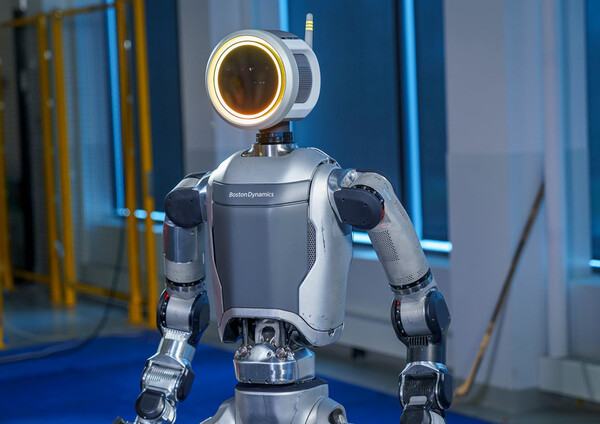
Humanoid robot Atlas. /Photo by Boston Dynamics
Hyundai Rotem Develops Core Technology for Future Autonomous Train Driving
Hyundai Rotem announced on the 16th that it has completed the development of an Advanced Driver Assistance System (ADAS) specialized for railway vehicles. ADAS for railway vehicles is a technology that detects obstacles on the tracks and alerts the driver to dangerous situations to prevent collisions. Because trains have longer braking distances than automobiles, they must be able to see more than 100 meters ahead and perceive obstacles and the environment.
With the development of this ADAS, Hyundai Rotem is elevating its technological capabilities to enable trams to achieve fully autonomous driving.
Kakao Mobility to Build Autonomous Service Vehicles with Kia
Kakao Mobility announced on the 16th that it has signed a partnership agreement with Kia for the supply of dedicated vehicles for autonomous driving services and technology cooperation.
Through this agreement, the two companies plan to cooperate on the development of autonomous driving service technology, the development of vehicles dedicated to autonomous driving services, and the advancement of autonomous driving service operation technology. Among these, the most critical area of cooperation is the development of vehicles dedicated to autonomous driving services.
Kia plans to develop a dedicated autonomous vehicle based on the autonomous driving technology and service operation optimization specifications requested by Kakao Mobility.
Hyundai Motor Group Acquires Full Stake in SoftBank’s Boston Dynamics… Accelerating Robot Commercialization
Hyundai Motor Group announced on the 16th that it exercised a put option (right to put common stock) on its stake in Boston Dynamics in early July of this year, in accordance with an agreement signed by SoftBank in 2020. As a result, existing shareholders, including Hyundai Motor Group affiliates, purchased SoftBank’s stake, thereby securing the entire stake in Boston Dynamics.
Hyundai Motor Group has begun reviewing the acquisition process, amount, and the acquisition share of each shareholder.
SoftBank’s stake in Boston Dynamics was 20% at the time of Hyundai Motor Group’s acquisition in 2021. It is reported that SoftBank’s stake subsequently dropped to less than 10% during Boston Dynamics’ capital increase process.
GeoRobot Supplies Autonomous Mobile Robots to Samsung Electronics’ Overseas Production Bases
GeoRobot announced on the 16th that it has supplied its autonomous mobile robot, ‘Mobile Worker,’ to Samsung Electronics’ overseas production base.
According to GeoRobot, the mobile worker was successfully supplied to Samsung Electronics’ mass production line last year. The mobile worker robot can also be expanded into a mobile manipulator (AMMR) combined with a robotic arm, making it suitable for supply to various manufacturing sites.
GeoRobot is a company capable of supplying robots required in the field of physical artificial intelligence (AI) because it possesses unrivaled capabilities to independently carry out the entire process from robot design to manufacturing and software.
Cowin Tech Equips Autonomous Mobile Robots with V-SLAM Technology
Cowin Tech, an intelligent robot automation company, announced on the 15th that it is expanding its intelligent robot platform business through vision-based autonomous driving technology.
According to the company, Cowin Tech has advanced the autonomous driving architecture of its Autonomous Mobile Robots (AMRs) currently in mass production by integrating V-SLAM (Visual Simultaneous Localization and Mapping) technology.
V-SLAM is a visual information-based autonomous driving technology that estimates position using camera images and recognizes the surrounding environment.
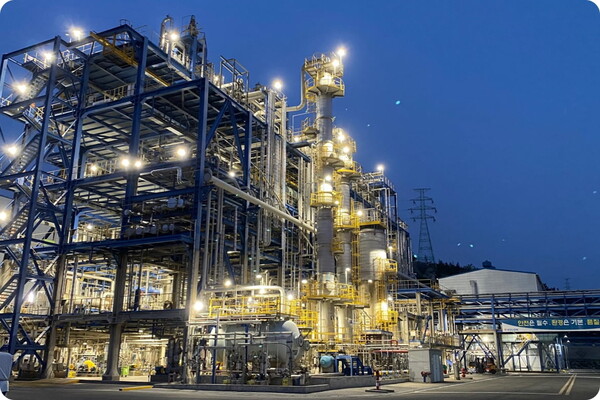
Kolon Industries’ Daesan plant in South Chungcheong Province. / Photo by Kolon Industries
Kolon Industries Sells Semiconductor and Display Materials Business Unit
Kolon Industries has decided to sell its semiconductor and display materials business unit and has selected IMM PE (Private Equity) as the preferred bidder. Kolon Industries disclosed on the 13th that it had signed a Memorandum of Understanding (MOU) with IMM PE, the preferred bidder for the sale of its functional materials and imaging materials businesses.
Following the signing of this MOU, Kolon Industries decided to proceed with the transfer of shares related to the OC (Overcoat), OLED encapsulation, and dry film (DFR) businesses under the Specialty Business Division.
Sunik Systems Completes Phase 1 of Pyeongtaek Brain City Factory
Sunik Systems, a company specializing in OLED vacuum deposition equipment, announced on the 13th that it has completed the construction of Phase 1 (Building A) of its new production base within the Pyeongtaek Brain City General Industrial Complex and is beginning to build production infrastructure in earnest.
According to the company, the facilities that received approval for use include the production plant in Building A, the office building, and auxiliary buildings. The Pyeongtaek Brain City plant is being constructed on a total site area of 22,628 square meters with a total floor area of 15,756 square meters based on the overall plan. The completion of Building A marks the first step in establishing the new production base, and construction on Building B is currently underway with the goal of completion this coming October.
The new production base in Pyeongtaek is a strategic production infrastructure being built to meet the growing demand for next-generation vacuum deposition equipment, such as 8.6th generation OLED, OLEDoS (OLED on Silicon), and Perovskite.
VESA Establishes New ‘True Black 1400’ HDR Certification for Next-Generation OLEDs
VESA (Visual Electronics Standards Association), a global industry standardization body for displays, has introduced a new certification standard, ‘DisplayHDR TrueBlack 1400,’ to verify the HDR performance of OLED displays.
This measure is taken with the performance improvements of OLED monitors and displays to be released over the next two to three years in mind. DisplayHDR is a VESA certification program that verifies the brightness, contrast ratio, and color gamut reproduction of HDR monitors, displays, and laptops.
The brightness and lifespan of OLED panels are rapidly improving with the introduction of new technologies such as Tandem OLED and V-Stripe. Maximum brightness is also expected to surpass 1,000 nits, which was previously considered the limit.
Leave a Reply