

Micron Increases Investment in U.S. Semiconductor Plants to $250 Billion
Micron announced on the 9th (local time) that it plans to invest $250 billion in the U.S. semiconductor industry by 2035. This is an increase of $50 billion from the existing $200 billion.
Micron made these remarks at a concrete pouring ceremony for a semiconductor plant under construction in Claytown, New York. The purpose of the expanded investment is to increase funding for chip production plants and technology development in the U.S. in preparation for the surge in demand for artificial intelligence (AI) memory semiconductors.
The additional $50 billion will be invested in expanding advanced memory chip production and technology development being pursued in New York, Idaho, Virginia, and other U.S. states.
Meta Plans to Deploy 7GW of Computing Capacity This Year… Adding Another 7GW Next Year
Reuters reported on the 9th (local time), citing an internal memo, that Meta Platform will begin mass production of its self-designed artificial intelligence (AI) chips this coming September. Earlier in March, Meta unveiled four types of its own AI chips, including the MTIA 400, known by the codename ‘Iris’.
The MTIA 400 is one of the fourth-generation projects of the ‘Meta Training and Inference Accelerator (MTIA)’ currently under development by Meta, with Broadcom handling the design and Taiwan’s TSMC handling production.
Meta announced plans to build a 7-gigawatt (GW) computing infrastructure this year. It explained that it added 1GW in the first half of the year and expects to build an additional 5.5GW by the end of the year.
Tencent Pursues Acquisition of Manus Stake… Set to Become Largest Shareholder
On the 10th (local time), the Financial Times (FT) reported that Tencent is expected to secure the position of the largest shareholder of Manus with a stake of less than 50%.
Tencent expected that increasing its stake in Manus would create synergies with its AI agent business. Last May, Tencent CEO Martin Lau stated, “It is becoming increasingly clear that agentic AI is a groundbreaking use case beyond the base model,” adding, “Our platform inherently has many advantages in accommodating AI agents.”
Officials added that Manus plans to continue independent operations based in Singapore without being incorporated into Tencent’s business.
China Plans to Allow Alibaba, ByteDance, and Others to Import NVIDIA H200
Chinese authorities recently notified major tech companies such as Alibaba, ByteDance, and DeepSeak that they may permit the purchase of H200 GPU chips, U.S. IT news outlet The Information reported on the 8th (local time), citing multiple sources.
This comes seven months after President Donald Trump notified Chinese President Xi Jinping on December 8 of last year that he intended to allow the export of H200 chips.
However, sources said that the total number of Nvidia chips to be approved for purchase is estimated to be less than 200,000, which is less than half the quantity requested by companies this year.
Chinese SSDs in Lenovo Laptops… YMTC Memory Expands Globally
According to industry sources and foreign media on the 5th, YMTC’s SSDs have reportedly been applied to some Lenovo laptop models recently. The products in question belong to the entry-level lineup and are said to be included in the volume sold in the global market.
This is effectively the first time that YMTC SSDs have been installed in finished products from major global PC manufacturers. Lenovo was previously known to have used DRAM from another Chinese memory manufacturer, Changxin Memory Technology (CXMT), only on a limited basis in laptop models intended for the Chinese domestic market. This instance is also being evaluated as the first time that NAND flash manufactured by YMTC has been installed in laptop products sold outside of mainland China.
“AI Investment Shakes Foundations”… Oracle Barely Skips ‘Junk’ Credit Rating
International credit rating agency Standard & Poor’s (S&P) announced on the 9th (local time) that it is downgrading the credit rating of software and cloud service provider Oracle by one notch from ‘BBB’ to ‘BBB-‘. The BBB- rating is the step just above speculative grade (junk bond).
S&P stated, “Oracle’s growing AI infrastructure business is diluting its existing stable business structure,” adding that it “previously underestimated the scale of investment required to expand the AI business and its impact on Oracle’s overall credit rating.”
SpaceXAI Launches New AI Model Grok 4.5… “Claude Opus Class”
SpaceXAI announced on the 8th (local time) that it is introducing ‘Grok 4.5’, optimized for coding, agent work, and office tasks.
Until now, Grok was evaluated as lagging somewhat behind leading AI models such as Claude, GPT, and Gemini, but Grok 4.5, announced today, has raised its performance to a level comparable to these models.
In terms of performance indicators (benchmarks), it scored 83.3% on ‘Terminal-Bench 2.1’, which measures coding ability in a terminal environment, which is higher than Claude Opus 4.8 (78.9%) and similar to GPT-5.5 (83.4%).
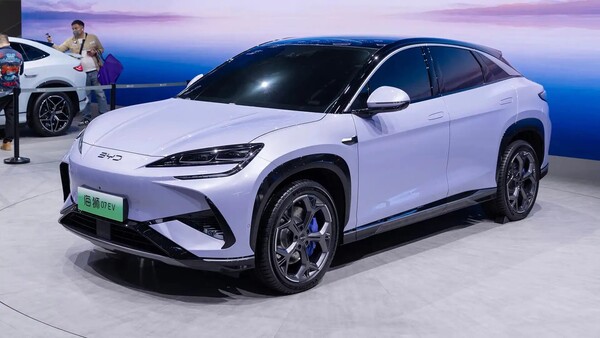
BYD, World’s First to Produce 17 Million Electric Vehicles
BYD held an event at its Xi’an plant in China to celebrate surpassing 17 million cumulative units in the production of its eco-friendly vehicles. The star of this record is the newly unveiled large flagship family sedan, the ‘SEAL 08’.
With this record, BYD became the world’s first automobile manufacturer to achieve a cumulative production of 17 million eco-friendly vehicles.
BYD recorded 1,808,511 units in global sales during the first half of this year. Of these, overseas sales of passenger cars and pickup trucks totaled 789,367 units, a 68% increase compared to the same period last year, continuing its strong growth in overseas markets.
Daedong Gear Secures 262.8 Billion Won in Orders in First Half… to Begin Mass Production of EV Components Next Year
Daedong Gear, a powertrain specialist of Daedong Group, announced on the 9th that it has completed preparations for mass production of key electric vehicle components ordered by last year and will begin generating revenue from electric vehicle components starting next year.
Daedong Gear is building 20 production lines to produce electric vehicle components for supply to Hyundai Motor and Hyundai Transys. The construction progress is in the 80% range.
In addition, to secure Noise, Vibration, and Harshness (NVH), a core competitive advantage for electric vehicle powertrain components, we have introduced transmission error measurement equipment and are operating a quality verification system comparable to that of global automakers.
Germany’s Volkswagen Plans to Lay Off 100,000 Jobs and Close Four Factories… 16% of Global Employees
AFP reported on the 9th, citing economic media manager Magachin, that company executives began a meeting on the 9th to discuss a restructuring plan that could be the largest in the history of the global automotive industry, and that unions are preparing to protest.
If finally approved, this plan will reduce Volkswagen’s global workforce of approximately 630,000 employees by about 15%.
This surpasses previous scale of layoffs in the automotive industry, including General Motors cutting approximately 50,000 employees at the time of its bankruptcy in 2009.
Enchem Introduces AI-Based Electrolyte Design… “Advancing Cryogenic Battery Research”
Enchem, a company specializing in electrolytes, is embarking on the development of battery materials for special environments by introducing AI-based electrolyte design technology.
Enchem announced on the 10th that it is collaborating with AI specialist AISTAR to introduce an AI-based research and development (R&D) system specialized in liquid electrolyte design and to advance research on next-generation battery electrolytes capable of responding to special environments such as cryogenic and high-power environments.
The AI system being introduced by Enchem is a technology that analyzes experimental results and performance data accumulated during the research process to propose promising candidate electrolyte compositions and predict performance. It is utilized in a manner where the AI suggests candidate compositions, after which the research team reviews their technical feasibility and verifies their performance through actual experiments and evaluations.
LG Ensol and GM Restart U.S. Battery Joint Venture Plant with ESS
On the 7th (local time), Ultium Cells, a joint venture between LG Energy Solution and GM, announced that it has begun full-scale production of LFP cells for ESS at its Ultium Cells plant in Spring Hill, Tennessee, USA.
This comes about four months after Ultium Cells announced the production of LFP products for ESS at its Tennessee plant last March. At the time, Ultium Cells stated that it would convert part of its existing electric vehicle battery production lines into ESS battery production lines through a facility conversion investment of approximately $70 million (about 106.2 billion won) and begin full-scale mass production starting in the second quarter.
L&F to Begin Commercial Operation of Saemangeum Precursor Plant in Q4… Completion of Battery Material Vertical Integration
L&F announced on the 9th that LS-L&F Battery Solution (LLBS), a joint venture with LS Group, has completed the construction of an annual 40,000-ton NCM (nickel-cobalt-manganese) precursor production facility in the Saemangeum National Industrial Complex in North Jeolla Province and will begin commercial operations in the fourth quarter of this year.
Once LLBS begins full-scale operation, L&F will complete a vertically integrated value chain extending from precursors to cathode materials. Through this, the company plans to establish a unified operational system from raw material procurement to production, thereby enhancing cost competitiveness and profitability.
KNS Wins 3.5 Billion Won Order for Cylindrical Battery Equipment
KNS, a company specializing in unmanned automation for advanced industries, announced on the 10th that it has signed a supply contract worth 3.5 billion won with secondary battery component company Jongrui Electronics for automated equipment for cylindrical battery CID (current interruption device).
According to the company, the CID is a key safety component applied to cylindrical batteries that cuts off the current in the event of abnormal pressure inside the battery, thereby reducing the risk of fire and explosion. KNS possesses technological capabilities in the field of CID automation equipment and holds a 75% market share in the domestic market.
Tesla Distributes Autonomous Driving ‘FSD v14 Lite’ in Korea… Targeting US-Made Model 3 and Y
Tesla’s latest driving assistance system, the ‘Full Self-Driving (FSD) Supervised v14 Lite’ version, has been launched in the domestic market. Tesla Korea announced via its official social media channels, “The arrival of FSD (Supervised) v14 Lite in Korea,” stating, “Sequential distribution begins today.”
However, this feature is currently available on a limited basis only to Model 3 and Model Y vehicles produced in the United States that have the FSD option enabled.
SK AX Initiates Transition to Full-Stack Manufacturing Robots… Targeting Autonomous Factories
SK AX announced on the 9th that it is launching the ‘Manufacturing RX Full Stack Service,’ which supports robot-based operational innovation for manufacturing companies. The core of the Full Stack Service is to realize an autonomous manufacturing environment by combining digital twins, physical AI, and heterogeneous robot integrated control technology.
In the digital twin phase, the actual factory’s equipment layout, worker movement, material flow, and process conditions are implemented in a virtual space. This method involves iteratively verifying thousands of work scenarios before deploying robots to the site to analyze bottlenecks, collision risks, quality variations, and charging schedules in advance, thereby deriving the optimal operational plan.
China’s Autonomous Driving Engine Momenta Lists on Hong Kong Stock Exchange… Raises 1.084 Trillion Won
According to the Hong Kong Economic Daily, Sinpah Finance, and Dongwang, Momenta raised HK$5.656 billion (1.084 trillion KRW) through an initial public offering (IPO) on the Hong Kong stock market on this day. This marked the largest IPO in the autonomous driving sector conducted on the Hong Kong stock market this year.
60% of the raised funds will be invested in core research and development (R&D), including core algorithms, automation tool systems, and the Momenta platform. Momenta defines itself as a “Physical AI company” and presents a strategy to advance its technology from mass-produced Advanced Driver Assistance Systems (ADAS) to fully autonomous driving through a data-driven flywheel effect.
ICH Confirms Supply of Polyurethane Foam for Physical AI Robots
ICH announced on the 10th that high-performance polyurethane (PU) foam applied to Physical AI robot projects has completed the customer’s quality evaluation (Qual) and mass production supply has been confirmed.
According to the company, unlike general information technology (IT) devices, physical AI robots are continuously exposed to repetitive driving, movement, and shock and vibration environments; therefore, the materials used require complex performance characteristics such as lightweightness, resilience, vibration absorption properties, repetitive compression stability, and long-term durability.
Mistral AI Launches Robot Navigation Model… Accelerating Targeting of Physical AI Market
Mistral AI unveiled its robot navigation model, ‘Robostral Navigate,’ on the 8th (local time). This model is designed to enable robots to autonomously navigate complex spaces such as offices, factories, homes, and cities using only a single camera and simple natural language commands.
In addition, it features an independent structure not dependent on specific hardware, allowing it to be applied to various robot models. The company explained that learning was conducted entirely through simulation, rather than using robot driving data.
Mistral AI, founded in 2023 by researchers from Google DeepMind and Meta, is considered a leading AI company in Europe.
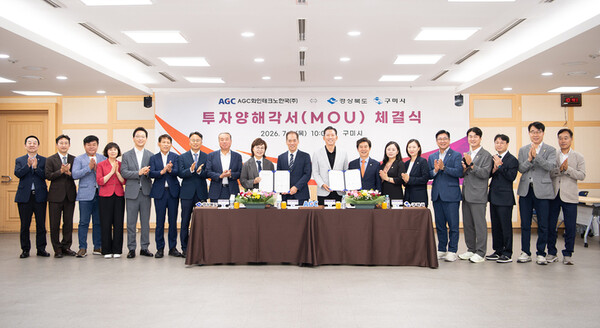
Scene of the MOU signing ceremony between Gumi City and AGC Fine Techno Korea. / Photo by Gumi City
Major Transition from LCD to OLED… AGC Fine Techno Korea Makes Large-Scale Investment in Gumi
On the 9th, Gumi City signed a Memorandum of Understanding (MOU) with AGC Fine Techno Korea regarding investment in next-generation display facilities at the City Hall conference room.
AGC Fine Techno Korea plans to completely convert its existing LCD glass production line into a next-generation display glass line capable of producing large OLEDs.
The strategy is to proactively respond to the rapidly growing global large-sized OLED market through this, expand the production of high-value-added products, and strengthen its position as a key hub in the global display supply chain.
Sunik Systems Attends India Investment Council… Expanding Cooperation in Next-Generation OLED and Perovskite
Sunik System announced on the 10th that it attended an investment council hosted by the Andhra Pradesh state government in India and discussed cooperation plans in the fields of next-generation displays and perovskites.
Nara Lokesh, Minister of the Andhra Pradesh State Government in India, attended the meeting and exchanged views on cooperation in advanced industries between Korea and India and ways to strengthen global manufacturing competitiveness. Minister Lokesh, who recently visited Korea, is carrying out investment and industrial cooperation schedules with major domestic companies, and this event was also organized to expand cooperation in the advanced manufacturing industry between the two countries.
Genitix Partners with Chinese Semiconductor to Target Wearable OLED… Jointly Developing TDDI
Genitix announced on the 8th that it has signed a memorandum of understanding (MOU) with a Chinese semiconductor company for the joint development of TDDI for wearable OLEDs.
This collaboration is being pursued by combining Genitix’s touch sensor and control technologies with the partner’s display driver chip (DDI) development capabilities. The company’s strategy is to shorten the development period through joint development and accelerate entry into the global wearable OLED market.
The partner is a Chinese semiconductor company developing DDIs for major clients based on a close cooperative relationship with the world’s largest display manufacturer.
Source: Kipost.net
Leave a Reply