

Intel Reports 2.64 Trillion Won Operating Profit in Q2, Turns to Surplus… AI Revenue Surges 59%
Driven by increasing demand for artificial intelligence (AI) data centers, U.S. semiconductor company Intel recorded revenue of $16.1 billion (approximately 23.77 trillion won) and an operating profit of approximately $1.79 billion (approximately 2.64 trillion won) in the second quarter of this year. Revenue increased by 25% compared to the same period last year, and operating profit turned positive.
Intel’s foundry division recorded revenue of $5.8 billion (approximately 8.56 trillion won), a 31% increase compared to the same period last year. Intel announced that its 1.8-nanometer (nm) process, ‘Intel 18A-P,’ has entered risk production, a verification phase prior to mass production. Some products of the next-generation PC processor ‘Panther Lake,’ which utilizes the 18A process, are currently being mass-produced using ASML’s High Numerical Aperture Extreme Ultraviolet (High NA EUV) equipment.
AMD Unveils First Rackscale AI Solution… Captures Antropics and OpenAI
AMD announced its next-generation AI infrastructure and physical AI portfolio at ‘AMD Advancing AI 2026’ held at Moscone West in San Francisco, USA on the 23rd (local time).
On this day, AMD unveiled AMD Helios, an open rack-scale AI platform that provides the industry’s first and highest level of performance. AMD Helios integrates 72 high-performance AMD Instinct MI455X GPUs, 18 6th-generation AMD EPYC Venice CPUs, AMD Pensando frontend, scale-up and scale-out networking, and AMD ROCm open software into a single optimized system.
Thanks to this, AMD Helios can process up to 30% more AI inference tokens per dollar compared to competing solutions.
NVIDIA Holds 9.3% Stake in Navius… Expanding AI Ecosystem
CNBC reported on the 21st (local time) that it was confirmed through a filing with the U.S. Securities and Exchange Commission (SEC) that Nvidia’s stake in Nevius has increased to 9.3%.
Earlier, Nvidia announced last March that it would invest $2 billion (approximately 3 trillion won) in Nasdaq-listed company Navius.
In a statement at the time, the two companies announced that they planned to cooperate in areas such as building and managing AI infrastructure, inference, and designing and supporting AI factories. Additionally, NVIDIA agreed to provide early deployment of the latest generation accelerator systems to support Navius’s goal of building over 5 gigawatts (GW) of capacity by the end of 2030.
Walldex to Expand Semiconductor Materials Plant in Gumi… Investing 260 Billion Won
Walldex plans to invest 260 billion won by 2030 to build a semiconductor material production facility on approximately 25,000 pyeong of land in the Gumi National Industrial Complex 5. Starting with land acquisition in the second half of this year, construction will begin in April next year, with the first phase of operations scheduled to start in 2028 and the second phase of expansion to be completed by 2030.
Walldex, which has grown based in Gumi since its founding in 2000, is a company specializing in core semiconductor materials and components. It produces silicon parts, quartz parts, and fine ceramic parts used in the etching process, which engraves microcircuits on wafers during the semiconductor front-end process.
TSMC Likely to Raise Semiconductor Prices by Up to 10% Next Year
Taiwan’s TSMC, the world’s largest foundry (semiconductor contract manufacturing) company, is expected to raise semiconductor production costs by up to 10%. Rising raw material prices and geopolitical risks are the main reasons.
Nikkei Asia reported this on the 21st, citing multiple sources. According to the report, TSMC has decided to raise unit prices by 5–10% depending on the customer and product line. The increased prices will take effect starting in early 2027. It has been confirmed that related price negotiations were already concluded this month.
Specifically, prices for mature process products, such as 12nm, 16nm, and 28nm, will rise by up to 10%. Mature processes are a key sector, accounting for approximately 23% of TSMC’s revenue in the second quarter.
OpenAI, which had faltered with ‘Stargate’, resumes large-scale AI infrastructure construction
OpenAI announced on the 22nd (local time) that it is launching ‘Project Camellia,’ a 3.2 GW (gigawatt) long-term data center in Effingham County, Georgia, USA. 1 GW is typically the generating capacity of one nuclear power plant, which is enough to supply electricity to about 1 million households.
This marks a shift in direction from OpenAI’s previous plans, such as the lack of progress on the ‘Stargate’ project to build a data center in the U.S. in collaboration with SoftBank and Oracle, and its withdrawal from overseas data center projects in the UK and Norway.
Kioxia ordered to pay over 300 billion won in damages after losing U.S. patent lawsuit
Japanese media outlets, including NHK, reported on the 18th that Kioxia Holdings, a Japanese NAND flash manufacturer, lost a patent infringement lawsuit in the United States and was ordered to pay $229 million (approximately 340 billion won) in damages.
According to reports, the U.S. satellite communications company ViaSat filed a lawsuit five years ago alleging that some of Kioxia’s flash memory products infringed on its patents related to high-speed data processing technology.
This patent is known for technology related to reducing power consumption and increasing the lifespan of memory semiconductors.
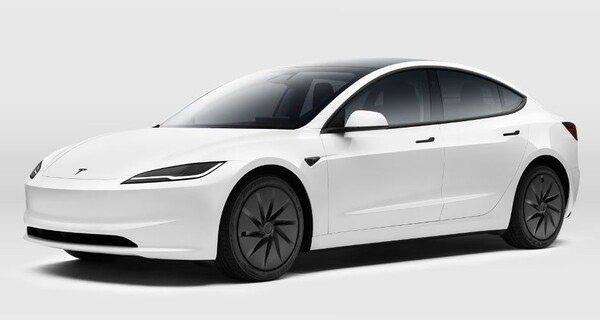
Tesla electric car ‘Model 3’. /Photo = Tesla
Musk: “Tesla and SpaceX Overlap More and More”… First Hint at Merger Possibility
Electrek, an automotive news outlet, reported that Elon Musk left room for a potential merger between Tesla and SpaceX during Tesla’s second-quarter earnings conference call on the 22nd (local time).
Tesla CEO Elon Musk avoided giving a direct answer regarding the possibility of a merger between Tesla and SpaceX, which has been consistently raised in the market, but hinted at the possibility of a merger by stating, “The two companies are overlapping in more and more areas.”
On this day, he did not directly mention the merger of the two companies, but stated only that “appropriate legal procedures must be followed.”
Blocking Chinese Cars, Cutting EV Support… GM’s Surprise Earnings Pushed by Trump
On the 21st, GM announced that its second-quarter results exceeded market expectations and raised its annual profit forecast by $500 million. GM stated that despite high gasoline prices and a decline in domestic car purchases, sales in the second quarter increased by 1.9% year-on-year. The company also showed strength in its core market, North America. Operating profit in the North American region for the second quarter reached $3.4 billion, up 42.7% from the same period last year. GM’s stock price rose 5% immediately after the announcement.
The Trump administration’s repeal of preferential policies for electric vehicles had a significant impact on GM’s performance improvement. This was because the company was able to abandon its plan to transition to electric vehicles, which were already less competitive, and instead focus on the sales of internal combustion engine trucks and SUVs. Originally, GM planned to eliminate internal combustion engine vehicles and switch to 100% electric vehicles within 10 years.
SK Signet, unable to withstand the EV ‘chasm’, to proceed with delisting procedures
SK Inc. announced on the 24th that it has decided to launch a tender offer for common shares of its subsidiary SK Signet, a KONEX-listed company. SK Signet is a company specializing in electric vehicle chargers established in 1998. It was incorporated into SK Inc. in 2021. Currently, it provides charging solutions tailored to global standards, focusing on fast and ultra-fast charging.
The tender offer price is 8,200 won per share. This is more than 20% higher than the volume-weighted average price over the past month.
L&F Recycles LFP Beyond NCM… Completes Battery Resource Circularity System
L&F announced on the 21st that it is launching a full-scale NCM and LFP battery recycling business through strategic cooperation with CIS Chemical. The plan is to complete a circular structure by establishing a value chain extending from pretreatment to post-treatment, in which key minerals recovered from used batteries are fed back into the production of cathode materials.
In the meantime, L&F has secured pre-processing capabilities to crush and sort waste cathode materials and black mass, centered around its subsidiary JHC. However, post-processing technology to extract key metals such as lithium and nickel with high purity from the pre-processed materials remained a challenge for completing the value chain.
Korens Acquires International Standard Certification for ‘EV Refrigerant Integrated Driver’
Korens, a company specializing in automotive parts, announced on the 21st that it has successfully completed the ‘Electric Vehicle Refrigerant Integrated Driver Project’ and obtained ‘A-SPICE CL1’ certification, a global standard for automotive software development processes.
‘A-SPICE’ is a global standard guideline for controller development created by automakers worldwide to evaluate the software development capabilities and quality of component manufacturers. With the recent acceleration of the transition to Software-Defined Vehicles (SDVs) and the increasing complexity of electronic components in electric vehicles, it is recognized as an essential gateway for entering the global automotive supply chain.
Sambo Industry and Rio Tinto Jointly Develop Aluminum to Reduce Electric Vehicle Weight
Sambo Industry, a company specializing in aluminum materials, announced on the 21st that it has signed a Memorandum of Understanding (MOU) and a Joint Development Agreement (JDA) with Rio Tinto to pursue the supply of scandium, the joint development of next-generation aluminum alloys, and the development of eco-friendly recycling technology.
The two companies plan to jointly pioneer the high-value-added lightweight materials market by linking stable raw material procurement with material technology development, and to strengthen the competitiveness of eco-friendly and high-performance materials required by the future mobility industry.
Rio Tinto is one of the world’s largest mining and resource companies, headquartered in the UK and Australia, and produces and supplies various key minerals such as iron ore, aluminum, copper, lithium, and borate.
Eco & Dream Begins Shipments from Saemangeum Precursor Plant
Eco & Dream announced on the 24th that it has produced nickel-cobalt-manganese (NCM) precursors at its Saemangeum campus and shipped the volume.
Eco & Dream’s strategy is to continuously improve yield and productivity based on process data and quality control experience accumulated during the expansion of production volume, and to establish a foundation for the stable production of various products in the future.
The annual production capacity (CAPA) of precursors at the Saemangeum Campus is 35,000 tons. Once production stabilizes, it is expected to secure a total CAPA of 40,000 tons, together with the existing Eco & Dream Cheongju plant, which has a capacity of 5,000 tons.
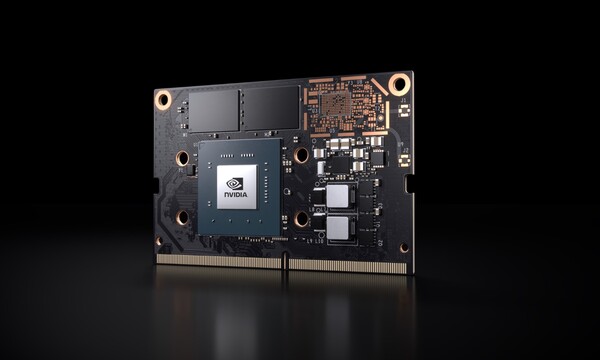
NVIDIA ‘Jetson Nano’./Photo=NVIDIA
Etipos Selected as Lead Organization for 3.5 Billion Won Defense Semiconductor R&D Project
Etipos, a company specializing in V2X (vehicle-to-object communication) semiconductors, announced on the 24th that it has been finally selected as the lead research and development institution for the new project “Development of Ultra-High Speed and Ultra-Low Latency Communication Modem Defense Semiconductors for Heterogeneous Platforms of Manned and Unmanned Hybrid Systems,” which is part of the “2026 2nd Materials and Components Technology Development Project” announced by the Ministry of Trade, Industry and Energy and managed by the Korea Institute of Industrial Technology Planning and Evaluation (KEIT).
This project will be carried out for 30 months from July of this year to December 2028, with a total R&D budget of 3.52 billion won invested, including 2.375 billion won in government funding.
NVIDIA GPUs Set Foot on the Moon… Introduced in Lunar Exploration Robot Vehicles
Luna Outpost, a space infrastructure and robotics startup, announced on the 23rd (local time) that it will equip its unmanned lunar exploration vehicle with Nvidia’s Jetson, a graphics processing unit (GPU) for driving robots.
Lunar Outpost’s lunar exploration vehicle plans to utilize Jetson chips and NVIDIA’s software library ‘CUDA-X’ to perform lunar surface mapping, autonomous driving, data processing, and communication.
Hulim A-Tech Accelerates Acquisition of AI Defense Robot Company ‘IDIOS’
Hulim A-Tech announced on the 23rd that it is accelerating the acquisition of AIDIOS CO., LTD., which possesses AI (artificial intelligence) and special equipment technology. Previously, the company decided at a board meeting last April to enter the AI defense and security robot sectors through the acquisition of AIDIOS.
At a recent extraordinary general meeting of shareholders, Hulim A-Tech completed an amendment to its articles of incorporation to add Idios’ core robot businesses—such as the manufacturing of military robot components, mine detection and removal, and Explosive Ordnance Disposal (EOD) robots—as new business objectives. This move lays the groundwork for immediate entry into the AI defense robot market, aligning with the ongoing acquisition of a stake (over 51%) in Idios.
KNS Secures Additional Order for Over 400 Robots from Global Enterprises
KNS, a company specializing in unmanned automation for advanced industries, announced on the 22nd that it is accelerating the expansion of its overseas robotics business by successfully securing an additional large-scale robot order from global company S.
KNS Vietnam has secured an order for over 400 industrial robots from global company S, marking an additional achievement following the supply contract for automated guided vehicles (AGVs) signed last June. However, the counterparty remains undisclosed in accordance with the terms of the contract.
The company views this order as significant in that it has greatly increased supply volume to Company S while diversifying its product portfolio, including industrial robots and AGVs.
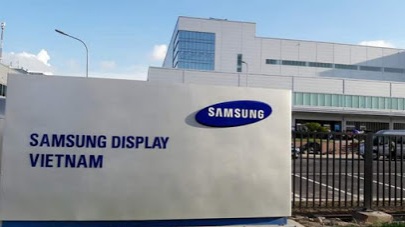
FineTech Signs 19.5 Billion Won OLED Manufacturing Equipment Supply Contract with Samsung Display
FineTech announced on the 24th that it has signed a supply contract worth 19.5 billion won for OLED manufacturing equipment with Samsung Display Vietnam.
This contract marks the largest single-order deal in the company’s history, achieved in the 10 years since 2017. FineTech expects a significant rebound in performance starting in the second half of the year as these large-scale orders begin to be fully reflected in revenue. At the same time, the company anticipates that its position as a key equipment supplier within the global OLED supply chain will be strengthened.
National Growth Fund to Push for Over 1 Trillion Won Low-Interest Loan to LG Display… Supporting OLED Competitiveness
According to Yonhap News and the financial sector on the 23rd, the Financial Services Commission held a National Growth Fund Investment Review Committee meeting on the 21st and approved a plan to provide LG Display with a low-interest loan of around 1 trillion won. The support plan is expected to be finalized next week after passing through the Fund Management Review Committee.
LG Display is reportedly planning to invest the funds received into advancing its production technology for small and medium-sized OLEDs.
Earlier, the Financial Services Commission announced a plan to expand the size of the National Growth Fund from the existing 150 trillion won to 200 trillion won through the President’s work report for the second half of the year.
Source: Kipost.net
Leave a Reply