

Orchestro to Take on 11.2 Billion Won AI Semiconductor Software Project
Orchestro announced on the 8th that it has been selected as the lead organization for a research and development (R&D) project to expand the domestic artificial intelligence (AI) semiconductor ecosystem.
This project, organized by the Ministry of Science and ICT and the Institute of Information and Communication Technology Planning and Evaluation (IITP), is the ‘Development of AI Semiconductor Specialized Cloud Native SW Stack and Model Hub Technology’ project, with 11.25 billion won invested over four years until 2029.
The goal is to establish an operating system that enables next-generation AI accelerators, such as domestically produced Neural Network Processing Units (NPUs) and Processing-in-Memory (PIMs), to perform at their full potential in a general-purpose cloud environment, and to enhance the usability of domestic AI semiconductors.
Musk Bets At Least 80 Trillion Won on Semiconductors… To Build a Massive Factory
AFP reported on the 6th (local time) that Musk’s space company SpaceX plans to build a semiconductor production facility called ‘TerraFab’ in Grimes County, northwest of Houston, Texas.
The scale of investment is massive. At least $55 billion, or approximately 80 trillion won, is expected to be invested in the construction of the factory. Including additional expansion, the total investment is estimated to reach $119 billion, or approximately 173 trillion won.
Musk announced that Tesla and SpaceX would jointly operate this facility. This is interpreted to mean that they intend to support the computing demands required for electric vehicles, robotics, and space businesses through in-house semiconductor production.
NVIDIA invests 2.9 trillion won in data center company IREN
Bloomberg reported on the 8th that Nvidia has decided to invest up to $2.1 billion (approximately 2.9 trillion won) in data center developer IREN.
In a joint statement released today, the two companies announced that NVIDIA has been granted a five-year right to purchase up to 30 million shares of IREN stock at $70 per share. Through this agreement, NVIDIA will collaborate with IREN to build large-scale AI infrastructure.
The two companies plan to build a 2-gigawatt (GW) data center at the Sweetwater campus in Texas by combining NVIDIA’s semiconductor equipment with IREN’s site and power acquisition capabilities. 2GW is enough electricity to supply 1.5 million households.
Intel Hires Qualcomm PC Executive… Entrusts PC and Physical AI
On the 4th (local time), Intel hired Alex Katouzian, former executive vice president of Qualcomm who worked at Qualcomm for 23 years, as senior vice president to oversee the PC (client computing) and physical AI divisions.
New Senior Vice President Alex Katouzian earned a bachelor’s degree in electrical engineering from UC San Diego and worked at Conexant Systems (acquired by Synaptics, 1989–2002) and Qualcomm (2002–2026).
At Qualcomm, he was responsible for 3G technology, devices, compute (PC), infrastructure, and XR. For the past five years, he focused on laying the foundation for Snapdragon-powered Arm-based Windows PCs alongside Kedar Kondap, Senior Vice President and Head of Compute & Gaming.
AMD Lisa Su: “Server CPU Market to Reach 168 Trillion Won in 4 Years”
AMD CEO Lisa Su (pictured) predicted that the server central processing unit (CPU) market will exceed $120 billion (approximately 168 trillion won) by 2030. This is double the previous estimate of $60 billion.
CEO Su appeared on the US economic media outlet CNBC on the 6th (local time) and said, “CPUs are the core of data center infrastructure,” adding that “AI-based workloads are increasing computing demand much faster than expected.”
Valuation of Chinese AI DeepSeek Soars to 65 Trillion Won… Government and Big Tech Aggressively Support
Chinese artificial intelligence (AI) startup DeepSeek has sought its first external investment, causing its corporate value to skyrocket to $45 billion (approximately 65 trillion won) in a short period. Amidst U.S. semiconductor export controls, the company is building an AI ecosystem based on Huawei chips, and with the added strategic support of the Chinese government, it appears to be emerging as a key axis in the global competition for AI supremacy.
According to foreign media outlets such as the Financial Times and Bloomberg on the 6th (local time), the China Integrated Circuit Industry Investment Fund (BIFF), China’s state-run semiconductor investment fund, is reportedly leading DeepSeak’s first round of external investment. It is also known that Chinese big tech companies, including Tencent and Alibaba, are discussing participation in the investment.
INOX Advanced Materials Supplies ’20㎛ DAF for Low-Power DRAM’ to Top Global Semiconductor Company
Inox Advanced Materials (272290) announced on the 7th that it has obtained product approval for a 20-micrometer (㎛) ‘DAF (Die Attach Film)’ for low-power DRAM (LPDDR) from a global top-tier semiconductor manufacturer and has begun full-scale mass production.
DAF is a key material used to precisely bond chips (dies) and substrates in the semiconductor packaging process. With the recent enhancement of artificial intelligence (AI) capabilities, the demand for high-density packaging technology, which stacks more chips within a limited space, is expanding; consequently, heat control and high-temperature durability are becoming increasingly important.
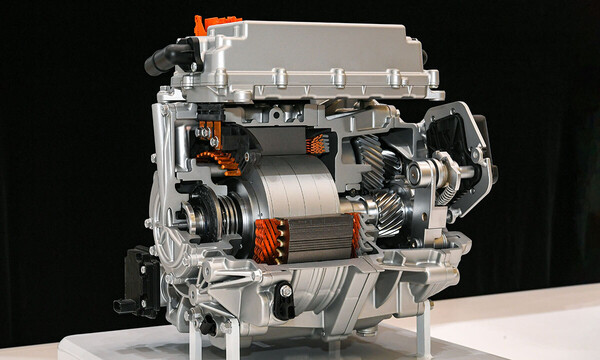
EV Heart PE System… Hyundai Mobis Develops Independently
Hyundai Mobis has successfully independently developed a ‘160 kW-class PE system’ for general-purpose electric vehicles. As a result, Hyundai Mobis has secured the capability to directly manufacture and supply the ‘heart’ of most electric vehicles, ranging from compact cars to high-performance sports cars.
The general-purpose 160 kW PE system developed by Hyundai Mobis is equivalent to 215 horsepower in terms of internal combustion engines. This is a level that can be applied to most electric vehicles currently in mass production.
Hyundai Mobis developed a 250 kW model for high-performance vehicles last year. Following the general-purpose 160 kW model, the company plans to complete a 120 kW model suitable for compact cars in the first half of the year.
Nissan’s U.S. Plant to Halt EV Production Plans for ‘SK On Battery Supply’
It has been reported that Japan’s Nissan Motor Company has suspended electric vehicle production plans at its Canton, Mississippi plant, which was scheduled to receive batteries from South Korea’s SK On. According to the Asahi Shimbun on the 7th, Nissan announced that it is halting electric vehicle production plans at the plant.
The newspaper reported that U.S. President Donald Trump “was pressured to review (production) as market conditions deteriorated,” citing the elimination of electric vehicle tax credits.
Nissan announced in 2022 that it would invest $500 million in this plant to begin manufacturing electric vehicles. However, it postponed production last year and has now officially decided to halt production. It is expected that the plant will expand production of vehicle models other than electric vehicles in the future.
Honda Indefinitely Postpones Construction of Canadian EV Factory
The Nikkei reported on the 6th that Japan’s Honda Motor Company has decided to indefinitely suspend plans to build an electric vehicle factory in Canada.
According to the newspaper, Honda plans to halt the construction of its planned electric vehicle and battery factories in Ontario, Canada.
When construction plans were announced in April 2024, the factory was scheduled to begin operations in 2028. However, as the electric vehicle market in North America did not grow as expected, the start of operations was postponed by about two years last May.
China’s CATL and BYD Intensify Offensive… K-Battery Market Share Drops 8.3%p
Global usage of electric vehicle batteries, excluding China, continued to grow at a double-digit rate, but the market share of the three major domestic battery companies declined.
According to SNE Research on the 8th, the total battery usage in electric vehicles (including plug-in hybrids and hybrids) sold in the global market excluding China in the first quarter of this year was 117.4 GWh, an increase of 17.4% compared to the same period last year.
On the other hand, the combined market share of the three domestic battery companies—LG Energy Solution, SK On, and Samsung SDI—was 29.6% during the same period, a drop of 8.3 percentage points compared to the same period last year. By company, LG Energy Solution fell by 0.1% to 20.3 GWh compared to the same period last year, while SK On decreased by 10.2% to 9.0 GWh and Samsung SDI decreased by 27.7% to 5.3 GWh.
Following China’s BYD… Zike Also Lands in Korea
Chinese electric vehicle manufacturer Zeekr will open its first showroom in Korea in Gangnam, Seoul, on the 8th. It plans to launch its mid-size electric SUV, the ‘7X,’ as early as next month and begin sales. Zeekr is a brand launched by China’s Geely Group in 2021 targeting the luxury car market, and it has become the second Chinese automaker to enter the Korean market, following BYD, which entered the market last year.
Ziker Korea held an opening ceremony for the ‘Ziker Brand Gallery’ on the 7th in Daechi-dong, Gangnam-gu, Seoul, attended by Ziker Brand CEO Chen Yu. It will begin accepting general customers starting at 10 a.m. on the 8th. This move takes into account that Gangnam, Seoul, has the highest demand for luxury cars, and Ziker aims to establish 14 showrooms and 11 service centers nationwide, starting with this location.
Japan’s SoftBank Partners with Korean Startup to Pursue Commercialization of New Concept Battery
On the 4th, the Nikkei reported that SoftBank is partnering with Cosmos Lab to launch a commercialization project for zinc-halogen batteries. Specific details regarding the cooperation between the two companies were not disclosed due to a non-disclosure agreement (NDA).
Cosmos Lab has been developing zinc-based zinc-halogen batteries instead of the rare metals, such as lithium or cobalt, that conventional batteries have used. It is known as a startup that has garnered attention in Korea for using water as an electrolyte, which eliminates the risk of fire.
N Robotics Commercializes 24-Hour Automatic Robot Battery Replacement System
N Robotics (formerly Nycom) announced on the 7th that it has completed the development of an automatic robot battery replacement system and is entering commercialization. According to N Robotics, the company previously filed a patent for “a device and method for replacing a battery of a mobile robot.”
The key feature of this system is that the entire battery replacement process is performed automatically without human intervention. When the battery of an artificial intelligence (AI) service module drops below a certain level, a drive unit picks up the module and autonomously moves it to a battery station.
Tesla Model Y First to Pass New U.S. Autonomous Driving Safety Test
According to Reuters and other sources, the U.S. National Highway Traffic Safety Administration (NHTSA) announced on the 7th (local time) that the 2026 Tesla Model Y has passed the new Advanced Driver Assistance Systems (ADAS) evaluation.
This test was newly added to the existing New Car Assessment Program (NCAP) following approval by the U.S. Congress in 2024, and no vehicle has passed it to date. Jonathan Morrison, Administrator of the National Highway Traffic Safety Administration, stated, “This passing marks a significant step forward in our efforts to establish the most comprehensive vehicle safety rating system in history,” adding, “We look forward to more automakers meeting these standards.”
Robot Atlas Successfully Performs ‘L-Seat’ Difficult for Humans
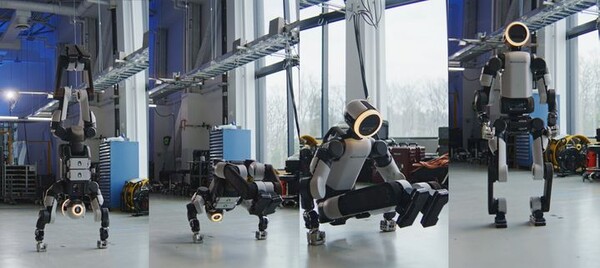
Boston Dynamics, a robotics affiliate of Hyundai Motor Group, released a video on its YouTube channel on the 5th (local time) featuring gymnastic movements by its humanoid robot, ‘Atlas’. This marks the first time the flexibility and precise control capabilities of a ‘development model’ for mass production—rather than the research model previously unveiled—have been showcased, signifying that the robot possesses the capability to be deployed in actual industrial settings.
In a video released by Boston Dynamics, Atlas starts in a handstand position and demonstrates a movement where it maintains a horizontal body while supporting its entire weight with only its hands. It then flips over to stably maintain an ‘L-seat’ position for about 5 seconds, supporting its body weight with its hands while extending its legs forward, before standing upright.
GM Super Cruise Hands-Free Driving Surpasses 1.6 Billion Kilometers
GM announced that the cumulative hands-free driving distance of its Super Cruise system in North America has reached 1 billion miles (approximately 1.6 billion km). According to GM, Super Cruise is currently installed in about 750,000 vehicles across 23 models in North America. The real-world driving data obtained through this system is being utilized in the development of autonomous driving technology.
GM plans to introduce ‘eyes-off’ driving technology, which requires no driver eye intervention, starting with the Cadillac Escalade IQ in 2028. This technology is applicable to both internal combustion engine vehicles and electric vehicles.
A to Z and HL Mando Join Hands for ‘Autonomous Driving Commercialization’
On the 6th, A to Z signed a Memorandum of Understanding (MOU) with HL Mando for the development of core technologies for autonomous vehicles at the A to Z Pyeongchon Research Center in Anyang, Gyeonggi-do.
HL Mando is a global automotive parts company that develops and supplies vehicle chassis and control systems, such as steering, braking, and suspension, and possesses accumulated technological capabilities in the fields of electronic power steering (EPS) and integrated electronic brake systems (IDB).
Under this agreement, the two companies will integrate and develop control technology and vehicle control components, which are the final stage of the autonomous vehicle operation mechanism connecting perception, judgment, and control, thereby ensuring stability and reliability during actual autonomous vehicle operation.
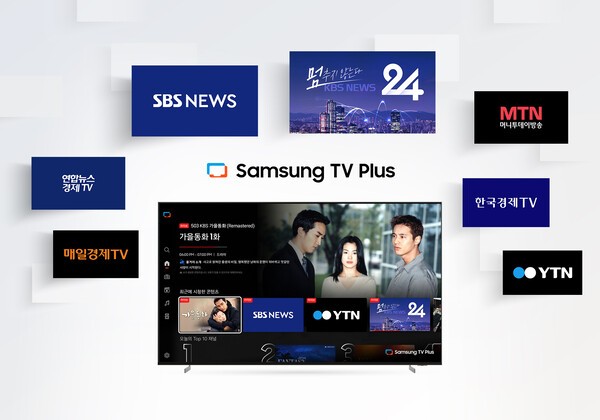
Samsung Electronics’ TV OTT platform ‘Samsung TV Plus’. /Photo = Samsung Electronics
출처 : KIPOST(키포스트)(https://www.kipost.net)
Samsung Electronics Officially Announces Suspension of Home Appliance and TV Sales in China
Samsung Electronics recently notified its distribution channels and partners in China of its plan to suspend sales of home appliances and TVs. Separately, the company plans to continue its high-value-added businesses in China, including mobile, semiconductor, and medical devices.
We plan to reorganize our local business through ‘selection and concentration,’ divesting from low-market-share businesses amidst the low-price offensive by Chinese companies while continuing to foster future growth and develop new technologies.
Q1 Smartphone OLED Shipments Exceed 200 Million Units
Chinese market research firm SigmaIntel announced on the 6th that global smartphone OLED shipments in the first quarter reached approximately 200 million units, a 4.7% increase compared to the same period last year.
Of these, flexible OLED shipments reached approximately 170 million units, a 19.3% increase year-on-year, leading the growth of the overall OLED market. This was driven by strong inventory-building demand from Apple and Samsung Electronics, as well as increased shipments from Chinese panel manufacturers targeting the smartphone replacement market.
On the other hand, as rigid OLEDs continued to be replaced by flexible OLEDs, shipments in the first quarter amounted to only about 36 million units, or 32.9% of the same period last year.
SoluM Supplies Smart Info Panels to AutoN… Applied to Kia PV5
SoluM announced on the 8th that it will supply vehicle smart info panels to AutoN, a mobility life company.
The Smart Info Panel features a 4.2-inch e-paper (EPD) display, providing visibility comparable to printed paper even in outdoor environments with strong direct sunlight or outside the vehicle. It utilizes the low power consumption characteristics of e-paper to enable continuous display. It uses the ‘Newton Pro Extreme 4.2’ platform, a high-durability outdoor electronic shelf label (ESL) product line.
This panel will be applied first to Kia’s next-generation Purpose-Based Mobility (PBV) model, the PV5.
Leave a Reply