

Intel Collaborates with Google Following Tesla
Intel announced on the 9th (local time) that it has signed a multi-year contract to supply key semiconductors, including its latest central processing unit (CPU) ‘Xeon 6’, to Google Cloud Server. Google has previously used Intel chips, and this marks an extension of the contract.
Intel emphasized that its Xeon CPUs have improved the performance and energy efficiency of Google’s infrastructure and lowered the total cost of ownership. The two companies also agreed to expand cooperation on the joint development of custom Infrastructure Processing Units (IPUs).
Earlier on the 7th, Intel announced that it would design, manufacture, and package ultra-high-performance chips on a large scale through the TerraFab project.
Hanmi Semiconductor to Launch 2nd Generation Hybrid Bonder by Year-End
Hanmi Semiconductor announced on the 9th that it is proactively responding to the demand for hybrid bonding, which will be applied to full-scale mass production in 2029.
Hanmi Semiconductor plans to launch a prototype of its ‘2nd Generation Hybrid Bonder’ for next-generation HBM production within this year and collaborate with clients. In addition, the company is preparing to begin operations at its hybrid bonder factory in the first half of next year. The 2nd generation equipment was developed by integrating the development experience and core technologies of the 1st generation to significantly enhance completeness, including nanometer-scale precision, process stability, and yield.
3A Logics Signs 11.4 Billion Won NFC Semiconductor Chip Supply Contract with SoluM
3A Logics, a near-field communication (NFC) fabless company, announced on the 10th that it has signed a supply contract worth 11.4 billion won with SoluM, a company specializing in electronic price tags (ESL), for NFC dynamic tag chips for ESLs in North America and Europe.
This amounts to 78.48% of last year’s sales, and the contract period runs from the 1st of next month to April 30th of next year. With this large-scale export achievement as a starting point, 3A Logics plans to improve performance and expand into global markets through four core pillars: ESL (Electronic Shelf Label), automotive, genuine product authentication & DPP (Digital Product Passport), and smart home appliances.
Samsung Electro-Mechanics Supplies FC-BGA Semiconductor Substrates for Vera Rubin’s ‘GROK3’ Chip
NVIDIA’s Groq 3 Language Processor (LPU) utilizes a Flip-Chip Ball Grid Array (FC-BGA) manufactured by Samsung Electro-Mechanics. The Groq 3 LPU is a dedicated inference chip integrated into NVIDIA’s next-generation AI semiconductor, ‘Vera Rubin’.
Samsung Electro-Mechanics has secured the status of a major supplier (first vendor) of FC-BGA for GROCK-3 LPU. It is reported that the company plans to begin mass production of the product as early as the second quarter of this year.
Amazon Sells Self-Developed Chips… “Competing with Nvidia and AMD”
Andy Jassy, CEO of Amazon Web Services (AWS), stated in his annual shareholder letter on the 9th (local time), “Demand for our chips is very high, so there is ample potential to sell them in bulk to third parties in the future.”
Amazon has previously used its application-specific integrated circuits (ASICs), such as Traynium and Graviton, exclusively in its own data centers. This means that the company is now selling these chips, which were previously used for Amazon’s domestic market, to the external market.
NVIDIA Rubin with HBM4 Expected to Have Launch Delayed
Market research firm TrendForce announced on the 8th that the shipment of Rubin, scheduled for release this year, may be delayed. This means that various technical challenges still remain, such as the time required for HBM4 verification, network chip changes, and power efficiency management. In this regard, TrendForce lowered the share of Rubin in NVIDIA’s high-end graphics processing units (GPUs) this year from 29% to 22%, while raising the share of Blackwell, the AI accelerator currently in active use, from 61% to 71%.
Earlier, US investment bank KeyBank also stated that it appears Nvidia has lowered its production target for Rubin this year from 2 million to 1.5 million.
SK Telecom Forms ‘Inference AI Server’ Alliance with Arm and Rebellion
SK Telecom is partnering with global semiconductor design firm Arm and domestic AI semiconductor startup Rebellion to develop next-generation inference servers for AI data centers (AI DCs). This move is interpreted as a strategic step to secure a low-power, high-efficiency infrastructure, moving away from a structure dominated by high-power Graphics Processing Units (GPUs), as the center of gravity in the competition for large-scale language models rapidly shifts from training to inference.
SK Telecom announced on the 10th that it has signed a strategic memorandum of understanding (MOU) with Arm and Rebellion to jointly develop a server solution combining Arm’s ‘Arm AGI CPU’ for data centers and Rebellion’s inference NPU ‘Rebell Card’.
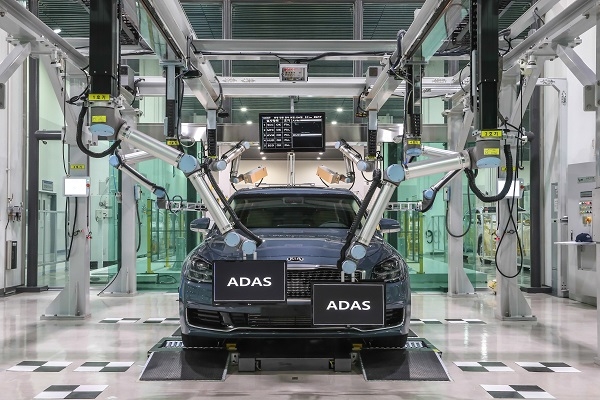
Electrical system intensive inspection system developed by Hyundai Motor and Kia. / Photo = Hyundai Motor and Kia
POSCO Holdings Secures Lithium for 70 Million EVs… Acquisition of Argentine Salt Lake Completed
POSCO Holdings announced on the 9th that it had completed the acquisition of lithium salt lake mining rights in Argentina on the 7th (local time). Including its existing mining rights, the company has secured approximately 15 million tons of brine lithium, a scale sufficient to produce batteries for 70 million electric vehicles.
POSCO Holdings announced in a press release on this day that it has “completed the 100% acquisition of the mining rights to the Hombre Muerto North salt lake owned by Canada’s Lithium South through its POSCO Argentina subsidiary.” POSCO Holdings stated that this finalizes the investment plan announced last November, and the acquisition price is $65 million (95 billion won).
Kia to Invest a Record-Breaking 49 Trillion Won Over 5 Years… Pouring 40% into Future Businesses
Kia plans to invest a record-breaking 49 trillion won by 2030, allocating over 40% of that amount—21 trillion won—to future businesses to lead the competition in the mobility market.
Due to the continued electric vehicle chasm (temporary stagnation in demand) and increased trade uncertainty, the mid-to-long-term sales target for 2030 has been lowered to 4.13 million units, 60,000 units fewer than originally planned.
The plan is to build a full lineup of eco-friendly vehicles by implementing region-specific strategies and continuously expanding the hybrid and electric vehicle lineups. Kia unveiled these mid-to-long-term business strategies at the ‘2026 CEO Investor Day’ held at the Shilla Hotel in Jung-gu, Seoul on the 9th.
Brazil Adds Chinese EV Maker BYD to ‘Blacklist’
According to the South China Morning Post (SCMP) on the 8th, the Brazilian Ministry of Labor newly added 169 companies, including BYD, to its latest semi-annual “dirty list” (blacklist).
As a result, BYD will remain on the list for at least the next two years, and it appears that it will be restricted from raising funds from state-owned banks and related financial institutions, as well as face limitations in participating in public procurement.
The investigation revealed that Chinese workers suffered from excessive labor, including working seven days a week and even on public holidays. It was also found that in some accommodations, over 100 workers’ passports were locked in lockers, restricting their free movement.
China’s Eve Energy Announces 5 Trillion Won Investment Plan in Two Weeks
According to Bloomberg on the 8th (local time), Eve Energy announced the previous day that it plans to build two new factories with a total investment of 11 billion yuan (approximately 2.3851 trillion won) to secure an annual battery production capacity of 110 GWh (gigawatt-hours).
Specifically, the plan is to establish a joint venture with another company in Fujian Province and jointly invest 6 billion yuan (approx. 1.309 trillion won) to build a 60 GWh factory, and in Jiangsu Province, invest 5 billion yuan (approx. 1.0841 trillion won) to build a 50 GW factory and produce electric vehicle batteries, etc.
Eve Energy previously announced on the 28th and 31st of last month that it would invest 6 billion yuan each in Guangdong and Hubei provinces to build 60 GWh-class plants.
CATL Unveils First Sodium Battery for ESS
ATL showcased a prototype of a next-generation sodium battery for ESS at the China Energy Storage International Conference (ESIE 2026), which began on the 1st. While the company is already mass-producing sodium batteries for electric vehicles and light trucks, this marks the first time it has unveiled a product for ESS. The goal is to commercialize the product this year.
The product was unveiled with specifications including a capacity of over 300Ah, 97% efficiency, and a charge-discharge lifespan of over 15,000 cycles. It is also characterized by support for utility storage devices and AI data center (AIDC) scenarios ranging from 2 to 8 hours.
Sodium-ion batteries have lower energy density compared to lithium-ion batteries, but raw materials are relatively easy to secure and have high price competitiveness.
L&F Halts Establishment of Anode Material Joint Venture with Japan’s Mitsubishi Chemical
L&F announced in a public disclosure on the 10th, “We had been reviewing a long-term and comprehensive entry into the anode material business, including a joint venture with Mitsubishi Chemical, but have suspended the review due to external policies and changes in market conditions.”
Mitsubishi Chemical had planned to strengthen its anode material supply chain in the North American market and increase localization rates by utilizing next-generation anode material technology, but it is understood that this decision was made as the electric vehicle chasm (temporary stagnation in demand) persisted, with sales of electric vehicles by U.S. automakers declining following the early expiration of the U.S. Inflation Reduction Act (IRA) tax credit last September.
WCP Secures ESS Separator Client… Presumed to be SK On
WCP announced on the 9th that it has confirmed the supply of separators for energy storage system (ESS) batteries, focusing on a new domestic customer’s North American renewable energy project.
The industry identifies SK On as the client in question. Last September, SK On signed a 1GWh ESS supply contract with Flatiron, a U.S. renewable energy company. The contract also left room to expand to up to 7.2GWh over four years through future negotiations. SK On plans to mass-produce lithium iron phosphate (LFP) ESS batteries in the second half of this year.
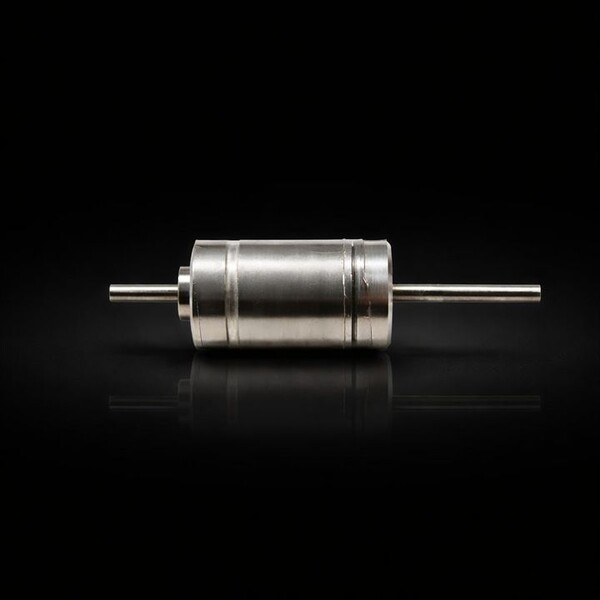
Prototype of an 8mm gearbox for humanoid robots by Korea PIM. / Photo = Korea PIM
Autonomous Driving Software ‘StradVision’ Files Securities Registration Statement… Begins KOSDAQ Listing Process
StradVision (CEO Kim Jun-hwan), a global AI recognition software company for automobiles, announced on the 10th that it submitted a securities registration statement to the Financial Services Commission on the 9th for listing on the KOSDAQ and has commenced the public offering process.
StradVision is a company that develops and supplies AI recognition software for automobiles, and has expanded its presence in the market by securing mass production references from global OEMs through its main product, the object recognition solution ‘SVNet’.
SVNet is a solution that analyzes camera-based video data in real time to recognize road objects such as pedestrians, vehicles, and lanes with high precision.
AtoZ, the world’s 7th largest autonomous driving company, jointly develops robotaxi with HL Clemove
Global autonomous driving company Autonomous A2Z (A2Z) announced on the 8th that it has signed a strategic memorandum of understanding (MOU) with HL Clemove for the development of core technologies for Level 4 autonomous vehicles.
Officials from both companies, including Autonomous A2Z CEO Han Ji-hyung and CTO Oh Young-cheol, HL Clemove President Lee Yun-haeng and CTO Hong Dae-geon, attended the signing ceremony held at Cheonggye Plaza in Seoul on the 7th. The Cheonggyecheon area is an urban demonstration zone where A2Z’s Level 4 autonomous shuttle ‘ROii’ is currently in operation.
Korea PIM Successfully Implements Optimal 8mm Reducer for Humanoid Robots
Korea PIM, a MIM (Metal Powder Injection Molding) company, announced on the 10th that it has completed the development of an 8mm ultra-small reducer prototype suitable for humanoid robots based on micro MIM technology.
According to the company, Korea PIM designed the prototype with a focus on reducing wear and noise as well as improving performance based on lightweighting, and optimized the material combination to simultaneously enhance durability and efficiency.
Starting with the development of this prototype, Korea PIM plans to proceed with commercialization for global humanoid robot companies after conducting internal tests. It has already established a precise measurement process based on various performance indicators and commenced testing procedures, aiming to complete testing and secure evaluation data within the first half of the year.
Cosmecca Korea Selected for Ministry of SMEs and Startups’ ‘Robot-based Manufacturing Innovation Support Project’
Cosmecca Korea, a global cosmetics OGM (Original Equipment Manufacturer) specialist, announced on the 9th that it has been finally selected for the ‘2026 Robot Utilization Manufacturing Innovation Support Project’ organized by the Ministry of SMEs and Startups.
With this project selection, Cosmecca Korea will carry out a robot automation system construction project worth a total of 530 million won for eight months until this November.
This project focuses on automating repetitive and high-intensity packaging tasks by establishing an intelligent palletizing system utilizing an AI-based mobile manipulator (MOMA).
China’s Unitree Imminent Global Launch of Lowest-Cost Humanoid Robot
On the 9th, the South China Morning Post (SCMP) in Hong Kong reported, citing sources, that Unitree plans to start overseas sales of the R1 next week through AliExpress, an e-commerce platform under Alibaba Group.
Launch regions include North America, Europe, Japan, and Singapore, and the release is expected to expand to other distribution channels later.
The R1 is a model unveiled in mainland China last year and is currently the cheapest among Unitree humanoid products. The selling price in China starts at 29,900 yuan (approximately 6.5 million won).
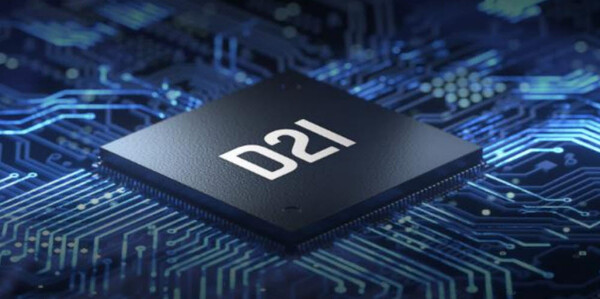
Wonik D2i Launches First Mass Production and Shipment of High-Spec OLED DDI
Wonik D2i announced on the 6th that it held a shipment ceremony at its headquarters in Seongnam, Gyeonggi Province on the 3rd to commemorate the first mass production and shipment of high-specification OLED DDIs.
According to the company, the product shipped this time is a high-spec driver chip to be applied to global OLED smartphone models. This mass production marks the first mass production achievement since the establishment of Wonik D2i, and is a case of commercialization achieved approximately four years after the commencement of collaborative development with a client.
Wonik D2i quickly passed the qualification (quality and reliability verification) process through design optimization and the advancement of development and verification processes, and based on this, secured both reliability and performance from customers.
Toprun Total Solution Supplies ‘Camera-Based Side Mirrors’ to BOE Affiliate
Toprun Total Solution announced on the 7th that it will supply camera-based side mirrors (CMS) to a new local customer, Hefei Ruihe Technology, through its Chinese subsidiary, Toprun China Nanjing.
Hefei Ruihe is a grandchild company of BOE. It primarily produces automotive displays.
The product ordered by Toprun Total Solution is a 6.94-inch side mirror based on left and right cameras. The monthly volume is approximately 6,000 units. The product lifecycle is 5 years. The total supply volume is about 360,000 units. Mass production is scheduled to begin in the third quarter of this year.
BOE Establishes Joint Venture with Okura Industries… Aiming for Material Localization
China’s BOE and Japan’s display materials manufacturer Okura Industrial are establishing a joint venture.
The capital amounts to 600 million yuan (approximately 13.4 billion yen, or 110 billion won). The equity stake in the joint venture is held by BOE at 66% and Okura Industries at 34%. The joint venture is located in Hefei, Anhui Province, China. Hefei is home to a concentration of Chinese materials, parts, and equipment manufacturers. The date for the incorporation of the joint venture has not yet been determined.
Okura Industry’s main businesses include display optical films and industrial and packaging films.
Leave a Reply