

Intel CEO Lip Bhu Tan: “Beginning to Build 1.0/0.7 Nano Process Roadmap”
Intel CEO Lip Vu Tan attended the ‘JP Morgan Global Technology, Media & Communications Conference’ held in Boston, Massachusetts, starting on the 18th (local time) and explained, “We have started work on the 1.0/0.7 nanometer fine process roadmap.”
The Intel 10A mentioned by CEO Lip Vu Tan corresponds to the ‘1.0-nanometer class,’ and the Intel 7A corresponds to the ‘0.7-nanometer class.’ Among these, the ‘Intel 10A’ process was revealed at the ‘Intel Foundry Direct Connect’ event held in late February 2024.
In the roadmap leaked at the time, Intel predicted that it would begin production of the Intel 10A process starting in late 2027. However, it is unknown whether the schedule disclosed at that time is still valid today.
NVIDIA “New Market Driven by Vera CPU Expected to Reach 300 Trillion Won… Mass Production to Begin in Q4”
NVIDIA predicted that its next-generation central processing unit (CPU), ‘Vera,’ would create a new market worth approximately 300 trillion won. It also projected that annual revenue from Vera in this market alone would reach 30 trillion won.
Nvidia stated during its first-quarter 2027 earnings conference call on the 21st (local time) that “a new market worth $200 billion (approximately 301 trillion won) that was previously inaccessible will open up through the Vera CPU,” adding that “we expect Vera CPU revenue alone to reach $20 billion this year.”
Nvidia explained on this day that the $20 billion forecast for the Vera CPU is based on standalone sales. This means it is a separate market from the existing Blackwell and Rubin graphics processing unit (GPU) platforms.
AMD Invests Over 15 Trillion Won in Taiwan’s Semiconductor Ecosystem
AMD announced on the 21st (local time) that it will invest more than $10 billion to expand partnerships across Taiwan and strengthen advanced manufacturing capabilities to meet the demand for AI computing. AMD plans to focus on advancing technologies that dramatically improve power efficiency and bandwidth between semiconductor chips by collaborating with major Taiwanese semiconductor back-end (packaging) companies such as ASE, SPIL, and Powertek (PTI).
Foreign media outlets, including Bloomberg, reported that AMD’s investment is an attempt to expand its presence in Taiwan, a key manufacturing hub for the semiconductor industry. The goal is to resolve supply chain bottlenecks and secure Taiwan’s robust semiconductor infrastructure to establish itself as a competitor to Nvidia, which currently dominates the AI chip market.
U.S. FTC Launches Antitrust Investigation into Arm… “Alleged CPU Licensing Monopoly”
According to a report by Bloomberg on the 16th (local time) citing multiple sources, the FTC is investigating whether Arm is attempting to illegally monopolize parts of the semiconductor market by refusing to provide central processing unit (CPU) design licenses or by lowering quality. The FTC notified Arm of the initiation of the investigation earlier this year and requested the preservation of relevant documents.
Arm, in which Japan’s SoftBank Group is the majority shareholder, has been selling licenses for “instruction sets,” which are code used for software to communicate with processors, along with chip designs, and major manufacturers such as Qualcomm and Apple rely on them.
However, Arm entered the business of selling its own chips directly by launching its self-developed artificial intelligence (AI) chip, the ‘AGI CPU,’ last March.
Green Optics Enters Global Semiconductor Client’s Front-end Process Ecosystem
Green Optics, a company specializing in ultra-precision optical solutions, has completed final quality certification from its clients for precision optical and sensor modules for the photolithography process—a core piece of equipment in the semiconductor front-end process—and has commenced mass production supply.
Green Optics announced on the 22nd that its product line is being installed in key photolithography equipment of major domestic semiconductor equipment companies, and that the equipment has been supplied to and is currently in actual operation on the advanced micro-process production line of global semiconductor company S.
The products being supplied consist of core modules responsible for operation within the lithography equipment. These include a ‘high-precision sensor module’ that detects the minute position and mounting status of the wafer in real time, and an ‘ultra-precision optical module’ utilized for applying photoresist (PR) to the outer edges of the wafer.
Broadcom and 5 Others Decide to Establish Semiconductor Research Hub
Five companies, including Meta, Broadcom, Applied Materials, GlobalFoundries, and Synopsys, have decided to invest $125 million to establish a “semiconductor hub” at UCLA’s Samueli School of Engineering, CNBC reported on the 21st (local time).
This partnership aims to accelerate research and talent development in artificial intelligence (AI) chip technology, while supporting overall innovation across chip design, equipment, software, manufacturing, and other sectors of the chip ecosystem.
This semiconductor research hub is scheduled to operate for the next five years.
Jusung Engineering Ships World’s First ‘ALG Semiconductor Equipment’
Jusung Engineering announced on the 18th that it has shipped the world’s first integrated ALG transistor equipment. The company explained that the equipment can achieve uniform thin film growth and deposition performance required for manufacturing next-generation transistors with a highly integrated vertical stacking structure.
Jusung Engineering emphasized that the ALG technology applied to this equipment enables the formation of uniform thin films and the securing of high yields even in high aspect ratio structures.
The explanation is that, unlike the conventional Atomic Layer Deposition (ALD) method which showed limitations in uniformity in complex structures, ALG enhances density and stability through a method in which atoms bond and grow on their own.
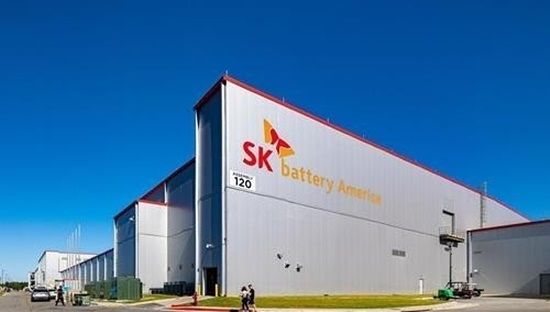
SK Battery America (SKBA), the U.S. subsidiary of SK On / Photo = SK On.
Ecopro Innovation Signs Supply Contract for Lithium Hydroxide Enough for 200,000 EVs
Ecopro Innovation supplies lithium hydroxide for approximately 200,000 electric vehicles to global automakers.
Ecopro Innovation announced on the 22nd that it has signed a four-year supply contract for 12,000 tons of lithium hydroxide with a global automaker. The specific name of the company was not disclosed due to a confidentiality clause.
This is the first time EcoPro Innovation has signed a contract to supply lithium hydroxide to a global automaker (OEM) rather than a battery cell manufacturer.
SK Signet Collaborates with U.S. Synergy EV on EV Charging Infrastructure
SK Signet announced on the 21st that it has signed a memorandum of understanding (MOU) for business cooperation with SynergEV, a U.S. electric vehicle (EV) charging infrastructure operator.
Synergy EV currently operates over 1,800 charging stations across 41 U.S. states and is undertaking approximately 20 EV charging hub construction projects, including a flagship hub in Texas. It is also expanding its business into the Mexican and Latin American markets.
Through this agreement, SK Signet plans to participate in a pilot project within the EV charging hub business being pursued by Synergy EV to verify product performance and operational stability in an actual operating environment.
POSCO International to Establish Integrated Rare Earth and Permanent Magnet Production Complex in the U.S.
POSCO International announced on the 22nd that it signed an agreement with the U.S. company Re-Element in Washington, D.C., on the 21st (local time) to pursue the establishment of a joint venture for the production of rare earth separation and refining.
The two companies plan to jointly invest a total of $200 million (approximately 301 billion won) to build a new rare earth separation and refining plant with an annual capacity of 6,000 tons in the United States and establish an integrated complex that will also produce permanent magnets in the future.
The separation and purification plant will establish a production system of 3,000 tons per year in the first phase, and then increase its production capacity to 6,000 tons per year through a second phase of expansion. It aims for formal mass production in 2028 following pilot production in the fourth quarter of 2027.
Stellantis to Launch 60 New Models, Including EVs, by 2030
Stellantis has unveiled ‘FaSTLAne 2030,’ a mid-to-long-term growth strategy worth 60 billion euros (approximately 105 trillion won). The strategy aims to simultaneously boost growth and profitability by 2030 by concentrating investments on core brands, next-generation platforms, and AI-based vehicle technology.
By 2030, more than 60 new vehicles will be launched, including 29 battery electric vehicles (BEVs), 15 plug-in hybrid and range-extended electric vehicles (PHEV/REEV), 24 hybrid electric vehicles (HEVs), and 39 internal combustion engine and mild hybrid vehicles (ICE/MHEV), and more than 50 facelift models will also be introduced.
Stellantis invests more than 24 billion euros, which is 40% of its total research and development (R&D) and capital investment, in next-generation platforms, powertrains, and new technologies.
China’s Dongfeng to Produce Electric Vehicles in France in Joint Venture with Stellantis
Reuters reported on the 19th (local time) that Stellantis and Dongfeng Motor have agreed to establish a joint venture. According to sources, Stellantis will hold a 51% stake in the joint venture.
The joint venture plans to produce electric vehicles for Dongfeng’s luxury brand Boya at its Rennes factory in France.
The Rennes plant, established in 1960, is one of Stellantis’s major production bases, having produced over 400,000 vehicles annually in the early 2000s. Through local production in France, Dongfeng has been able to circumvent European Union (EU) tariffs on Chinese electric vehicles.
SK On Launches Wholly Owned Battery Plant in Tennessee
SK On announced on the 21st that it has converted its existing battery joint venture with Ford, Blue Oval SK Tennessee, into ‘SK On Tennessee’ and entered into a sole operation system.
With this reorganization, SK On will exclusively own and operate the Tennessee plant. On the other hand, Ford will own and operate the two existing Kentucky plants under Blue Oval SK.
SK On expects that the termination of this joint venture structure will reduce its debt burden by approximately 5.4 trillion won.
Decision to delist Busan battery company Kumyang
Busan-based battery company Kumyang has been decided to be delisted by the Korea Exchange. The damage to Kumyang’s approximately 235,800 minority shareholders is expected to be significant.
According to the Financial Supervisory Service’s electronic disclosure system on the 20th, the Exchange held a Listing Disclosure Committee meeting on the same day and decided to delist Kumyang shares. Kumyang meets the requirements for formal delisting as it received a ‘disclaimer of opinion’ from its external auditor for two consecutive years in the 2024 and 2025 fiscal years.
Shinhan Accounting Firm, which served as the external auditor, stated, “Kumyang incurred an operating loss of 41.836 billion won and a net loss of 53.587 billion won, and current liabilities exceed current assets by 611.243 billion won,” adding that “this raises significant doubts about the company’s ability to continue as a going concern.”
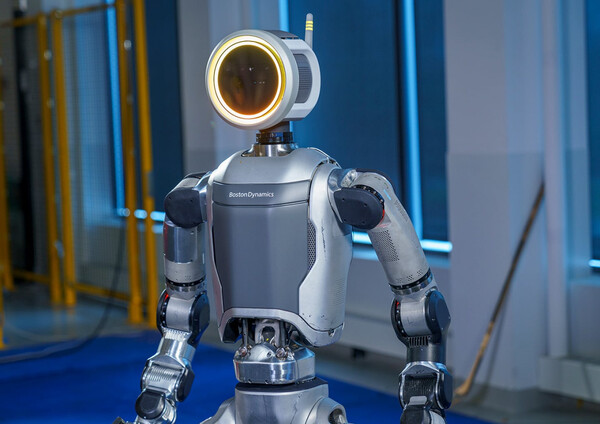
Boston Dynamics humanoid robot Atlas. /Photo = Boston Dynamics
Tesla Introduces Autonomous Driving Service in China… Urgent Hiring of Personnel
US economic media outlet CNBC reported on the 21st (local time) that Tesla revealed through its official X (formerly Twitter) account that China has been added to the list of countries offering its Full Self-Driving (FSD) service.
With this, the number of countries where FSD can be used has increased to 10, following the United States, Canada, Mexico, Puerto Rico, Australia, New Zealand, South Korea, the Netherlands, and Lithuania.
FSD is a technology in which artificial intelligence (AI) takes charge of driving, braking, and lane changes, and is considered a core competitive advantage of Tesla.
A to Z Announces Strategy for Commercialization of Autonomous Taxis in Japan
Autonomous A to Z (A to Z) announced on the 21st that it participated in the ‘X Taxi (Cross Taxi) Autonomous Driving Seminar’ held at TKP Garden City Premium Shinagawa Takanawa-guchi in Tokyo, Japan on the 20th and presented its strategy for the commercialization of autonomous taxis and the current status of its global business.
This seminar was hosted by ‘X Taxi,’ an incorporated association established to address the digital transformation and future mobility needs of the Japanese taxi industry, and was attended by approximately 100 representatives from the Japanese Ministry of Land, Infrastructure and Transport, major global mobility companies such as Mei Mobility, Didi, and Pony.AI, and the taxi industry.
LG Innotek Collaborates with Kakao Mobility on Autonomous Driving Solution Development
LG Innotek announced on the 20th that it has signed a Memorandum of Understanding (MOU) with Kakao Mobility, Korea’s largest mobility platform company, for cooperation in the development of autonomous driving solutions. Through this, the company will be able to accelerate its penetration of the physical AI sensing market.
Under this agreement, the two companies will combine LG Innotek’s unique sensing technology with Kakao Mobility’s autonomous driving data collection infrastructure and software capabilities to jointly develop autonomous driving solutions.
The autonomous driving solution to be developed will incorporate LG Innotek’s high-performance sensing modules, such as cameras, radar, and LiDAR optimized for Kakao Mobility platform services, along with Kakao Mobility’s software.
Is Robot Deployment Imminent? Hyundai Motor Group to Introduce 25,000 Atlas Robots
On the 18th (local time), Hyundai Motor Group held a robotics strategy investor relations (IR) briefing for overseas institutional investors at the Westin Boston Seaport District. During the event, Hyundai Motor Group announced an ambitious plan to introduce more than 25,000 units of Atlas robots to the production sites of Hyundai Motor and Kia. Although specific timing for the introduction was not specified, the industry believes that the robots’ deployment in the field is imminent.
To this end, Hyundai Motor Group plans to build a humanoid actuator production facility in the United States with an annual production capacity of over 350,000 units, aiming for operation in 2028. Actuators, which act as the joints of a robot, are considered a core component, accounting for 60% of the total manufacturing cost of a humanoid.
Neuromeca Selected as Joint Research Institution for National R&D Project on AI Surgical Robot
Neuromeca, a company specializing in artificial intelligence (AI) and robot automation, announced on the 21st that it has been selected as a joint research institution for the ‘AI-based surgical robot innovation lab establishment and utilization project (R&D)’ organized by Yonsei Medical Center.
According to the company, this project is a national strategic research and development (R&D) initiative that simultaneously promotes the AI advancement of domestic surgical robot technology and establishes a foundation for on-site hospital testing. Yonsei University Medical Center serves as the lead organization, while domestic surgical robot and medical device companies, including Neuromeca, participate as joint research institutions. The total project scale is up to approximately 10 billion won over five years.
Through this project, Neuromeca has secured a foundation for demonstrating the application of its collaborative robot, humanoid, and physical AI execution technologies to the medical field. In particular, based on the robot control and AI execution technology capabilities accumulated in industrial settings, the company plans to take charge of building a surgical assistance AI robot platform.
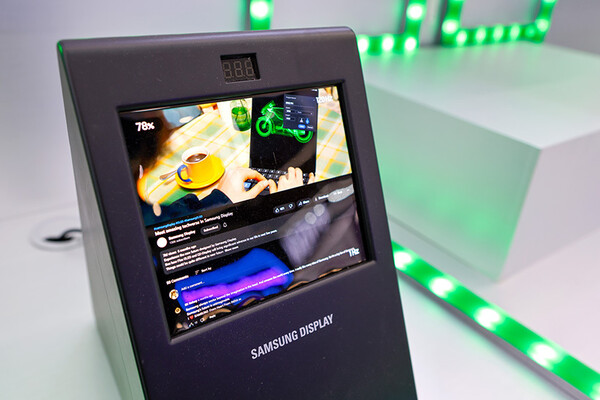
/Photo=Samsung Display
Smartphone OLED Demand ‘Fluctuates’ Amid Memory Semiconductor Shortage… Price Pressure on Materials and Components Rise
Japan’s Dainippon Printing (DNP) announced that smartphone production volume decreased due to a memory semiconductor shortage that occurred during the first quarter (the fourth quarter of fiscal year 2025 in Japan), and as a result, sales in its “Digital Interface” business unit, which is responsible for OLED fine metal masks (FMM), also contracted.
Specifically, sales in this business division recorded 900 million yen in the first quarter, down from 1.47 billion yen in the same period of the previous year.
Market research firm UBI Research estimated that the shipments of OLED panels for smartphones by major display panel manufacturers in the first quarter of 2026 totaled 190 million units. This represents a 12% decrease compared to the first quarter of 2025. South Korean display manufacturers Samsung Display and LG Display saw a 7% decline.
Display Association on EU PFAS Regulations… “At Least 12-Year Grace Period Needed”
The Korea Display Industry Association announced on the 21st that it has submitted a second opinion to the European Chemicals Agency (ECHA), stating that a grace period of at least 12 years is needed regarding the regulations on perfluorinated compounds (PFAS) scheduled to be implemented by the European Union (EU) starting in 2028.
PFAS are organic chemicals with excellent heat resistance and water and oil-repellent properties, and are widely used in display panel and module processes and equipment parts. However, they are classified as substances that do not decompose naturally and have high accumulation potential in the environment and within the body.
The industry is striving to minimize the use of PFAS, but the field of coatings and films for displays is difficult to replace as they are high-difficulty materials requiring simultaneous stain resistance and wear resistance, and it is explained that it will take at least 12 years to develop and commercialize alternative materials.
Samsung and Google Unveil ‘AI Glass’… Enjoy AI Experience Without a Display
Samsung Electronics and Google unveiled two types of AI glasses based on ‘Android Extended Reality (XR)’ on the 19th (local time). This marks the first time the two companies have revealed actual product designs since announcing collaborations with global eyewear brands such as Gentle Monster and Warby Parker last December.
Users can summon Google AI ‘Gemini,’ which is linked to their smartphone, to receive directions to their destination without looking at their phone, and perform tasks such as getting recommendations for nearby cafes or ordering drinks using only voice. In addition, the AI glasses provide real-time voice translation by reflecting the tone of the person on the other end of the call.
Source: Kipost.net
Leave a Reply