

Meta to Sell Surplus AI Computational Resources Externally… Considering Entry into Cloud Business
Bloomberg reported on the 1st (local time), citing multiple sources, that Meta is planning a cloud business model through its in-house project, ‘Meta Compute’.
If Meta enters the cloud market, it will compete with Amazon Web Services (AWS), Microsoft Azure, Google Cloud, and others.
Meta is reportedly reviewing two business models. The first involves running its latest proprietary AI model, ‘Muse Spark,’ on Meta’s infrastructure and allowing external developers to utilize it via Application Programming Interfaces (APIs). The second involves directly leasing the computing power of its data centers to external companies.
Google Cloud Launches AI Model Specialized for New Drug and New Material Research
According to Bloomberg on the 29th (local time), Google’s parent company, Alphabet, announced that it is adding specialized AI models from the AI and quantum technology startup Sandbox AQ to the Google Cloud Marketplace. The ‘AQ’ in Sandbox AQ is a combination of Artificial Intelligence (AI) and Quantum.
The model provided this time is an AI that Sandbox AQ calls a ‘Large Quantitative Model (LQM).’ Unlike Large Language Models (LLM) specialized for text generation, it is trained on numerical data to help solve problems in chemistry, biology, and physics.
Apple Negotiating Purchase of Chips from China’s CXMT & YMTC for Devices Sold in China
Bloomberg reported on the 1st (local time) that Apple is in negotiations to purchase chips from two Chinese memory semiconductor companies on the U.S. Department of Defense blacklist.
Multiple sources have reported that Apple intends to purchase memory components for devices sold in China from Changxin Memory Technology (CXMT) and Yangtze Memory Technology (YMTC). However, the sources added that negotiations are ongoing and nothing has been finalized yet.
Samsung to Capture Antropics… Discussing AI Chip Collaboration Following Nvidia and Tesla
The Information, a U.S. IT news outlet, reported on the 2nd (local time), citing multiple sources, that Antropic, the developer of the artificial intelligence (AI) model ‘Claude,’ is discussing the production of AI chips with Samsung Electronics.
According to reports, Antropic has started early-stage work on developing its own AI chip and is considering utilizing Samsung Electronics’ foundry (semiconductor contract manufacturing) division’s 2nm (nanometer; 1 nanometer is one billionth of a meter) manufacturing process and advanced packaging facilities.
Antropic announced that three major memory semiconductor manufacturers, including Samsung Electronics, participated as strategic infrastructure partners in the Series H investment round held last May.
Micron Signs Long-Term Supply Agreement with GM… Automakers Join ‘Memory Securing War’
Micron announced on the 1st (local time) that it has signed a Strategic Customer Agreement (SCA) with GM. Under this agreement, Micron will supply memory and storage products necessary for the production of GM’s next-generation vehicles on a long-term basis.
The products to be supplied are low-power DRAM (LPDRAM), NOR flash, and universal flash storage (UFS) NAND. Both companies plan to continue their cooperation in the development of next-generation memory technology, system optimization, and new product verification.
This contract is interpreted as a move by automakers to secure key semiconductors for the long term amidst tight memory supply due to the spread of AI.
Kioxia Ships Next-Generation NAND Flash… “Expanding Production Capacity”
NAND flash manufacturer Kioxia Holdings announced on the 3rd that it has begun shipping new low-power, high-capacity memory. The processing performance of the new 10th-generation NAND flash is 4.8GB per second, which is 30% higher than the previous generation. Power efficiency has also improved by 30%.
Kyodo News reported that Kioxia plans to mass-produce this product at the second manufacturing building of its Kitakami plant in Iwate Prefecture starting next year, and that the Kitakami plant’s production capacity will double once the second building is operational.
Hanmi Semiconductor Launches ‘2.5D TC Bonder 40’ for Next-Generation AI Semiconductor Packaging
Hanmi Semiconductor announced on the 30th that it has launched a new piece of equipment, the ‘2.5D TC Bonder 40,’ which supports 2.5D packaging of AI semiconductors, and will begin supplying it to global foundry and OSAT companies.
Among AI packaging technologies, the 2.5D process has established itself as a core technology as global big tech companies such as Nvidia and AMD actively adopt it for AI chip production. Representative 2.5D packaging technologies include Taiwan’s TSMC’s CoWoS and Intel’s EMIB.
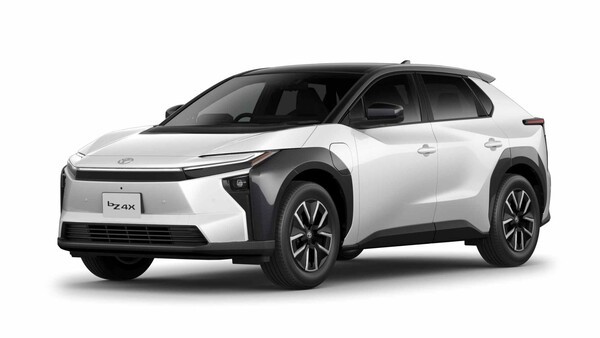
Toyota electric vehicle bZ4X. /Photo=Toyota
Lucid Replaces CFO Amid Sluggish EV Sales… Major Management Overhaul
Luxury electric vehicle manufacturer Lucid Group has embarked on a major management reshuffle, including replacing its Chief Financial Officer (CFO), following the announcement of production and delivery figures that fell short of Wall Street expectations.
On the 2nd (local time), Lucid announced the appointment of Alexander Devok as its new CFO. Devok will replace Tawfiq Bousaid following a transition period.
De Bock previously served as CFO at automotive parts supplier TI Automotive. This appointment is part of a management reshuffle that announced six new executives to oversee key functions including technology, engineering, and sales.
Solus Advanced Materials Expands Sales of Battery Foil Products… Strengthening Performance Base
Solus Advanced Materials announced on the 2nd that it is strengthening the foundation for battery foil performance growth by expanding sales of high-end battery foil products.
According to the company, the sales proportion of high-end battery foil, including high-strength, high-elongation battery foil ‘SR’ and medium-strength battery foil ‘MTS’, is expected to expand from 28% last year to approximately 40% this year. Battery foil is a key material used as a negative electrode current collector in electric vehicle batteries.
Toyota to compensate parts suppliers for losses over EV development halt… “Potential for hundreds of billions of won”
The Nikkei reported on the 3rd that Japan’s Toyota Motor Corporation has decided to compensate parts manufacturers for part of the capital investment losses resulting from the suspension of electric vehicle development. The newspaper stated that the scale of the losses could amount to tens of billions of yen (approximately hundreds of billions of won).
Toyota announced on May 29 that it would discontinue the development of the ‘LF-ZC’, a sedan-type electric vehicle for its luxury car brand Lexus.
DS Danseok Supplies First Commercial VMR to Trafigura… Battery Recycling Business Launched in Full Swing
DS Danseok announced on the 29th that it shipped approximately 50 tons of PbAg bullion produced at its Gunsan Plant 1 to Trafigura on the 26th. This supply marks the first commercial supply for the VMR project.
VMR is a new business initiative by the Battery Recycling Division that produces lead precious metal alloys by recovering valuable metals such as silver and gold from metal processing byproducts. The supplied lead precious metal alloys are recovered as high-purity precious metals through an additional refining process.
Precious metal alloy lead contains not only lead but also silver and gold, so it is considered a product with higher added value than ordinary recycled lead.
CIS Chemical and L&F Attract Strategic Investment… Embark on Battery Supply Chain Innovation
CIS Chemical, a company specializing in the refining and recycling of key battery minerals, announced on the 30th that it is accelerating the internalization of the battery supply chain and the establishment of a circular economy by attracting strategic investment from L&F, a leading domestic company specializing in cathode materials.
The two companies plan to establish a cooperation framework covering the entire battery materials industry, including collaboration on lithium iron phosphate (LFP) and nickel-cobalt-manganese (NCM) battery recycling, the supply of lithium raw materials, the joint development of precursor raw material technology, and the cathode material additive business. In particular, amidst increasingly fierce competition for raw materials, the two companies plan to build a cooperation model that connects the entire battery value chain, from securing key minerals to recycling, precursors, and cathode materials.
Shareholders backlash over EcoPro BM’s surprise 1.2 trillion won capital increase… FSS review is key
According to financial authorities on the 2nd, the Financial Supervisory Service (FSS) is currently reviewing the securities registration statement regarding the paid-in capital increase submitted by EcoPro BM. The effective date of the securities registration statement is the coming 15th, and the FSS may request corrections to the statement before it becomes effective if necessary.
Previously, on the 30th of last month, EcoPro BM announced that it would raise a total of 1.2 trillion won by issuing 9,900,990 common shares through a shareholder allocation followed by a public offering of unsubscribed shares. This amounts to approximately 10.1% of the total number of existing issued shares.
Since last year, the Financial Supervisory Service has been significantly strengthening its review of securities registration statements for paid-in capital increases that pose a risk of impairing shareholder value.
S&K Polytech Acquires ‘Seonjin Engineering,’ a Specialist in Automotive Components
S&K Polytech announced on the 29th that it is acquiring Sunjin Engineering, a company specializing in electronic components for electric vehicles.
According to the company, Sunjin Engineering is a partner of Hyundai Motor Group and primarily produces busbars and terminals for electric vehicles (EVs). Busbars are metal products that transmit high-voltage current and play a crucial role in EV efficiency as essential components connecting batteries and motors.
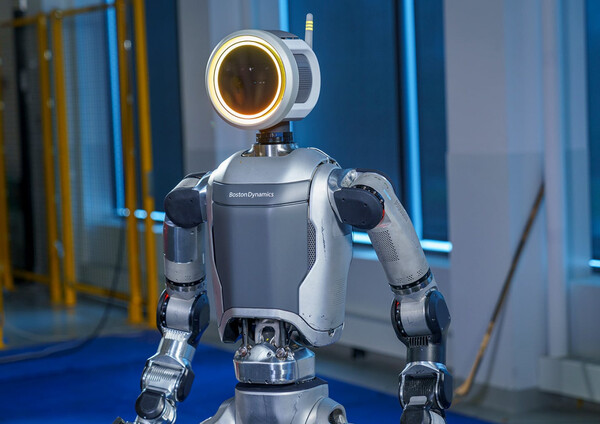
Atlas, a humanoid robot developed by Boston Dynamics. /Photo = Boston Dynamics
RiDiflux and Hanjin Launch Korea’s First Autonomous Cargo Transportation
RideFlux announced on the 1st that it has launched the first paid cargo transportation service using autonomous trucks in Korea in partnership with Hanjin Express.
The route is a one-way 116 km section starting from the Gunsan Express Cargo Customs Clearance, passing through the Jeonju Hanjin Express Center, and ending at the Daejeon Mega Hub Center. It operates regularly twice a week during daytime hours, utilizing Tata Daewoo Maxsen 25-ton heavy-duty trucks to transport up to 11 tons of parcel cargo at a maximum speed of 90 km/h. To ensure safety, a professional safety officer is stationed in the driver’s seat.
Everybot Signs MOU with FPA for Humanoid/AI Autonomous Driving Robot Technology
Everybot, a company specializing in physical AI robots, announced on the 30th that it has signed a Memorandum of Understanding (MOU) with FPA, a company specializing in smart factories and industrial automation. The company plans to expand the demonstration and application of AI autonomous robot platforms, including humanoid robots, at manufacturing sites.
Through this agreement, the two companies will pursue the joint development and expanded demonstration of humanoid and AI autonomous driving robot technologies applicable to manufacturing sites. In particular, they plan to introduce next-generation robot automation solutions optimized for various industrial sites by combining Everybot’s AI-based autonomous driving technology and robot control technology with FPA’s experience in building smart factories and manufacturing process automation capabilities.
Korea Startup Forum Launches ‘Physical AI Council’
The Korea Startup Forum announced on the 29th that it has officially launched the ‘Physical AI Industry Council’ to foster the physical AI industry and revitalize the ecosystem.
Eleven innovative startups leading the physical AI ecosystem have joined this council. The participating companies include Real World, Megazone Cloud, Bear Robotics, Bon AI, Brain Commerce, Seoul Robotics, Agmo, SOS Lab, Elice Group, Persona AI, and HyperExcel.
Going forward, the council plans to focus on policy recommendations and regulatory improvements, expanding inter-industry cooperation, identifying opportunities for proof of concept (PoC), linking investment and commercialization, and supporting entry into global markets.
StradVision Signs Contract with Automaker for Mass Production Development of E2E Autonomous Driving Technology
StradVision announced on the 29th that it has signed a contract with a vehicle manufacturer for the mass production development of next-generation autonomous driving technology based on end-to-end (E2E) technology and has commenced development.
This project is an E2E-based autonomous driving technology development initiative in which an AI (artificial intelligence) model integrates and performs the entire process, from the stage where the vehicle perceives its surrounding environment to driving judgment and decision-making. StradVision plans to proceed with the project with the goal of developing next-generation E2E-based autonomous driving technology for mass production and applying it to customer mass production in the second half of 2027.
Global SM Selected as Partner for Global Company’s Quadruped Robot Project
Global SM, a precision metal manufacturing company, announced on the 3rd that it has been selected as a primary partner for a quadruped robot development project by a global automotive and robot parts company.
According to the company, Global SM has been supplying precision fastening components primarily for automobiles and electronic devices, and this project marks the first application of this technology to the robotics market. Robot fasteners are small screws with specifications smaller than the company’s existing flagship automotive screws, comprising a component group with higher precision requirements, such as wrench and socket heads and set screws.
The initial order volume for the project is approximately 6,000 sets, and the delivery of prototypes is scheduled for this coming October.
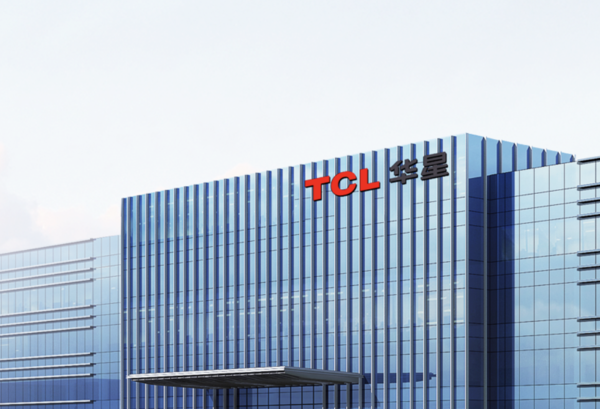
TCL CSOT Headquarters. / Photo = TCL CSOT
ETRI, Duksan Neolux, and Kosan Tech Secure Single-Substrate Stacked QD-OLED Integration Technology
The Electronics and Telecommunications Research Institute (ETRI) announced on the 2nd that it has developed a ‘single substrate stacked QD-OLED’ panel technology using an industrial inkjet printing process in collaboration with Duksan Neolux Co., Ltd. and Kosan Tech Co., Ltd.
The research team applied a process in which a thin-film encapsulation (TFE) layer was formed on a blue OLED, followed by the Black Pixel Definition Layer (Black PDL) and QD color conversion layer being stacked directly on top of it.
Through this, the possibility of a new process was confirmed to continuously fabricate the OLED light-emitting layer and the QD color conversion layer on a single substrate without attaching a separate QD substrate.
DMS Supplies 67.7 Billion Won Worth of Equipment to China’s CSOT 8th Generation OLED Line
DMS, a company specializing in display equipment, announced on the 29th that it has signed a supply contract worth 67.7 billion won for OLED manufacturing equipment with CSOT, a major Chinese panel manufacturer.
This contract involves the supply of display manufacturing equipment for CSOT’s T8 factory’s 8th-generation OLED production line. The contract value is approximately 67.7 billion won, which is a significant amount among the single orders recently secured by DMS.
Apple’s Next-Generation OLED Achieves Wider Color Gamut… MacBook Pro Expected to Be Applied as Well
It is predicted that Apple will apply OLED displays capable of expressing a much wider color gamut than before to its major product lines, including the MacBook Pro, iPad Pro, and iMac.
IT media outlets 9to5Mac and MacRumors reported this on the 29th (local time), citing the latest report from market research firm TrendForce.
According to the report, Apple plans to gradually adopt OLED panels capable of implementing 95% of the BT.2020 color gamut, an international standard for ultra-wide color gamut, in the future for MacBook Pro, iPad Pro, iMac, etc.
Source: Kipost.net
Leave a Reply