

Accelerates 54 Trillion Won Debt Deal Including Apollo… “To Secure Google Chips from Antropics”
Bloomberg reported on the 28th (local time) that Apollo Global Management and Blackstone, two prominent private equity firms, are accelerating a $36 billion (approximately 54 trillion won) debt financing deal to secure artificial intelligence (AI) chips for use by Antropic.
According to reports, Apollo and Blackstone are seeking additional investors for a debt financing deal. The funds raised from this transaction will be used entirely to purchase Google’s AI chips, the Tensor Processing Units (TPUs). These TPUs will be provided to Antropic on a lease basis.
If the deal is finalized, it is expected to be the largest debt financing ever for AI chip procurement.
Boss Semiconductor, Sales with Former Intel Senior Vice President Hong Hao as Advisor
Bose Semiconductor announced on the 29th that it has recruited Hong Hao, former Senior Vice President of Intel Foundry, as a Strategic Advisor. The company explained that it plans to further strengthen its competitiveness in AI semiconductor technology and global business strategy through this move.
Senior Vice President Hong Hao is an industry expert with over 30 years of experience in semiconductor design, foundry business, and global customer collaboration. Until recently, he served as Corporate Vice President at Intel’s Foundry business unit, overseeing global customer collaboration and business development to lead the expansion of Intel’s foundry business.
SoftBank-led ‘Japan AI National Alliance’ includes 30 companies including materials firms
According to the Nihon Keizai Shimbun on the 28th, approximately 30 companies, including chemical and materials firms Asahi Kasei, Yaskawa Electric, and Fujitsu, as well as heavy industry and transportation giants, are considering investing in “Japan AI-based Model Development,” an initiative led by SoftBank. Initially, around 10 companies are expected to decide on their investments in June, with small contributions of tens of millions of yen anticipated from each company.
Currently, four key companies—SoftBank, NEC, Honda, and Sony Group—are participating in the development of AI-based models in Japan, each holding a stake of more than 10%. The three major mega-banks, including Mitsubishi UFJ Bank, as well as Nippon Steel and Kobe Steel, are also participating in minority investments.
Jensen Huang to Visit Korea Next Week… Discussions on Semiconductor and AI Cooperation Expected
According to the semiconductor and IT industry on the 28th, CEO Huang is reportedly scheduled to visit Korea after completing key events at NVIDIA’s annual AI conference, ‘GTC Taipei 2026,’ to be held in Taipei, Taiwan next week.
GTC Taipei will be held from the 1st to the 4th of next month, and CEO Huang is scheduled to deliver a keynote speech on the first day to introduce NVIDIA’s next-generation AI semiconductors and AI infrastructure strategy.
The industry is paying close attention to the possibility that discussions on high-bandwidth memory (HBM), next-generation AI accelerators, and foundry cooperation with domestic semiconductor companies such as Samsung Electronics and SK Hynix could take place during CEO Hwang’s visit to Korea next week.
Cancellation of existing contracts during ‘semiconductor crisis’… EU introduces production order rights
The European Union (EU) has come up with extreme measures to prepare for a semiconductor supply crisis. It has decided to pursue a plan to force domestic chip manufacturers to cancel existing contracts and prioritize the production of products designated at the EU level. This move stems from the fact that semiconductors have become critical components across all industries, from automobiles to data centers, thereby increasing their importance to national security.
According to the Financial Times (FT) on the 29th, the European Commission plans to announce detailed measures for the amendment to the semiconductor law (Chips Law) next month. The core of the proposal is to designate semiconductors as “crisis response essential” items, along with weapons, medical devices, and digital infrastructure.
National Growth Fund invests 800 billion won in AI semiconductor company ‘FuriosaAI’
The National Growth Fund announced on the 28th that its Fund Management Deliberation Committee approved a direct investment of 370 billion won from the Advanced Technology Fund (approximately 800 billion won from the National Growth Fund) in Furiosa AI. On this day, the committee approved a total of five projects (4.14 trillion won).
Furiosa AI, which is receiving direct investment, is a domestic AI semiconductor fabless company. It has significantly expanded production of its second-generation AI semiconductor (NPU) ‘Renegade,’ which began mass production last January. It is also planning to develop a third-generation semiconductor utilizing 2nm HBM4/4E.
Search and seizure operations conducted at three materials, parts, and equipment companies suspected of price-fixing in semiconductor materials
Prosecutors have launched a forced investigation into suppliers suspected of colluding on the prices of key materials supplied to major semiconductor manufacturers, including SK Hynix.
According to legal circles on the 29th, the Seoul Central District Prosecutors’ Office’s Criminal Proceeds Recovery Division (Chief Prosecutor So Jeong-su) has been conducting search and seizure operations since the previous day on the corporations and residences of executives and employees of three semiconductor materials, parts, and equipment (Sobujang) companies, including MK Electronics, LT Metal, and Duksan Hi-Metal.
The three companies targeted for search and seizure are key suppliers to SK Hynix. These companies are suspected of colluding in advance on the supply prices and volumes of essential materials used in semiconductor processes.
Separator manufacturer SK IETechnology suspends operations at Jeungpyeong plant and sells China plant
SK IE Technology announced on the 27th that it will suspend operations of all production lines at its Jeungpyeong plant in North Chungcheong Province starting November 30. The Jeungpyeong plant, which produces lithium-ion battery separators, recorded sales of 117.73682 billion won last year, accounting for 45% of the company’s total revenue. The company explained, “The Jeungpyeong plant has operated as an initial production base for about 15 years, and its facilities have become outdated,” adding that it plans to “develop it into a center for research on future separator materials.”
SK IE Technology also announced on the same day that it is selling its Jiangsu, China plant (SK Hi-Tech Battery Materials) to local firm Semcorp. The sale price is 88.8 billion won.
SK On CEO Lee Seok-hee Resigns… Lee Yong-wook to Lead as Sole Executive
SK On CEO Lee Seok-hee (pictured) is stepping down from his position. Consequently, SK On will transition from a co-CEO system with Lee Seok-hee and Lee Yong-wook to a sole CEO system with Lee Yong-wook as the CEO.
President Lee announced his intention to resign in a letter sent to employees on the 28th, stating, “I intend to conclude my duties as CEO of SK On at the end of May.”
An SK On official explained the background of President Lee’s resignation, stating, “He is resigning for personal reasons.”
First Entry of Chinese Electric Vehicles into Canadian Market
Bloomberg reported on the 29th (local time) that Chinese electric vehicles (EVs) have begun entering the Canadian market for the first time. Bloomberg explained that this follows the bilateral trade agreement announced by Canadian Prime Minister Mark Carney during his official visit to China last January, where he held a summit with President Xi Jinping.
An industry official, who requested anonymity, reported that hundreds of electric vehicles produced at Tesla’s Shanghai factory have started entering Canada in recent days under a new low-tariff regime.
Toyota Halts Development of Next-Generation Lexus EV
Toyota of Japan has decided to halt the development of its next-generation Lexus electric vehicle, which was scheduled for release in mid-2027. This is believed to be due to the slowdown in global demand for electric vehicles.
According to the Japanese newspapers Yomiuri Shimbun and Nihon Keizai Shimbun (Nikkei) on the 29th, the model whose development has been discontinued is the Lexus ‘LF-ZC’, Toyota’s premium passenger car brand.
Toyota first unveiled a prototype vehicle at the Japan Mobility Show in October 2023. At the time, the typical driving range of electric vehicles was around 500 km, but the LF-ZC garnered attention by setting a target of 1,000 km.
LG Ensol Sells Building of Honda Joint Venture US Battery Plant for 3.7 Trillion Won
LG Energy Solution has completed the disposal of all buildings and building-related assets, excluding land and equipment, from its joint venture (JV) with Japanese automaker Honda, ‘LH Battery Company,’ to Honda’s U.S. development and production entity.
LG Energy Solution disclosed on the 26th that it has completed the disposal of building assets of LH Battery Company in Ohio, USA, to Honda’s U.S. development and production subsidiary for 3.7416 trillion won.
This figure is about 480 billion won lower than the planned disposal amount of 4.2243 trillion won originally disclosed at the end of last year.
Hyundai Sungwoo Solite Invests 32.2 Billion Won in AGM Battery Plant in Gyeongju
Hyundai Sungwoo Solite, an automotive battery company, is expanding its factory in the Geoncheon 1 Industrial Complex in Gyeongju.
On the 27th, North Gyeongsang Province and Gyeongju City signed a Memorandum of Understanding (MOU) for an investment worth 32.2 billion won with Hyundai Sungwoo Solite and pledged mutual cooperation. The event was attended by North Gyeongsang Province Vice Governor for Economic Affairs Yang Geum-hee, Gyeongju Acting Mayor Choi Hyeok-jun, and Gyeongju Plant Manager Shin Chang-ho, among others.
The company will expand its factory by June of next year with a site area of 2,799 square meters and a building area of 2,184 square meters to establish an AGM battery production line. It will increase annual production from 1.2 million units to 2.25 million units and hire 10 new employees.
Donghwa Electrolyte Wins Order from Global Battery Company… Supplying North America
Dongwha Electrolyte, a subsidiary of Dongwha Enterprise, announced on the 27th that it has secured a new client by signing an electrolyte supply contract with a global battery cell manufacturer.
Details such as the client’s name and the contract size were not disclosed in accordance with a confidentiality agreement between the two companies. Dongwha Electrolyte has secured a stable raw material infrastructure through an annual production capacity of 86,000 tons in the United States, as well as a purchase contract for lithium hexafluorophosphate (LiPF6, lithium salt) with a domestic company
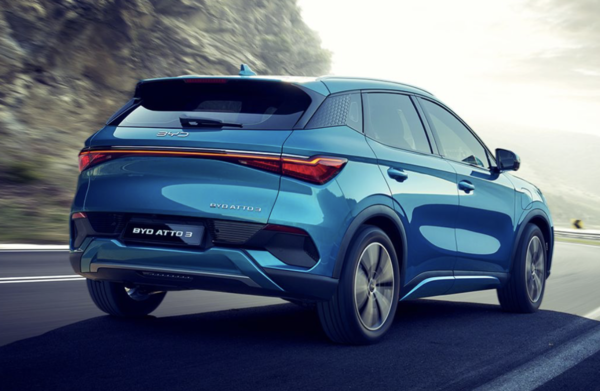
BYD electric SUV ‘Ato3’. /Photo=BYD
Full compensation in the event of an autonomous driving accident”… BYD’s confidence
BYD Chairman Wang Chuanfu held a presentation at the company’s headquarters in Shenzhen, China on the 28th and announced that the price of the company’s advanced driver assistance system (ADAS), ‘God’s Eye,’ is only 12,000 yuan (about 2.65 million won).
“This system allows the driver to drive with their hands off the steering wheel,” he added, promising that “BYD will fully cover the costs of traffic accidents that occur while the technology is activated.”
FortyTwoDot Hires Former NVIDIA Autonomous Driving Executive… Accelerates Technology Internalization
On the 26th, Park Min-woo, CEO of FortyTwoDot and President of Hyundai Motor & Kia’s AVP Division, announced the recruitment of new Senior Vice President Lee Hee-seok, also formerly of NVIDIA, via his LinkedIn profile the previous day. Lee, who led research on camera and radar-based obstacle recognition at NVIDIA, has been appointed as the group leader for FortyTwoDot’s Visual Language and Behavior (VLA) model research.
Executive Director Lee, who holds a Ph.D. from the Department of Electrical Engineering at Seoul National University and its graduate school, also has a history of participating in the development of camera perception technology for autonomous driving at Qualcomm.
A to Z Surpasses 1 Million km and 10,000 Passengers in Autonomous Driving
Global autonomous driving company Autonomous A2Z announced on the 27th that its cumulative autonomous driving distance has exceeded 1 million km and the cumulative number of passengers on its Level 4 unmanned autonomous shuttle, ROii, has surpassed 10,000.
The autonomous vehicles operated by A to Z achieved a cumulative driving distance of 1 million km domestically and internationally last April, and recorded 1,023,355 km as of the 15th of this month. On the same day, the cumulative number of passengers on Roy exceeded 10,132.
A to Z has once again broken the longest autonomous driving record in Korea by surpassing 1 million km this year, following 200,000 km in 2022 and 500,000 km in 2024, after obtaining its first temporary operating permit for autonomous vehicles in 2018.
KohYoung Technology Demonstrates Medical Robot for Brain Surgery at American Neurosurgical Society
Koh Young Technology announced on the 29th that it will participate in the American Society of Functional Stereotactic Neurosurgery (ASSFN), which will be held in Ohio, USA, from the 31st to the 2nd of next month.
ASSFN is a globally renowned academic event in functional neurosurgery that attracts a large number of medical professionals, researchers, and global medical device companies from North America and around the world specializing in Parkinson’s disease, epilepsy, neuromodulation, and stereotactic neurosurgery. In particular, it is recognized as a leading conference where the latest research achievements and clinical applications in the field of functional neurosurgery, such as deep brain stimulation (DBS), next-generation neuromodulation technology, and AI-based surgical planning and precision brain surgery technology, are shared.
NC AI to Build ‘Brains’ for Defense Robots with Hyundai Rotem
NC AI announced on the 28th that the consortium it formed with Hyundai Rotem was selected as the final contractor for the national research and development project ‘Physical AI-based Integrated Simulator and Modular Robot System’ commissioned by the Agency for Defense Development (ADD).
This project aims to maximize the efficiency of hybrid manned and unmanned weapon systems in future battlefield environments by establishing a digital twin-based simulator and modular robot hardware that organically controls multiple types and types of unmanned robots and minimizes the gap between reality and the virtual world.
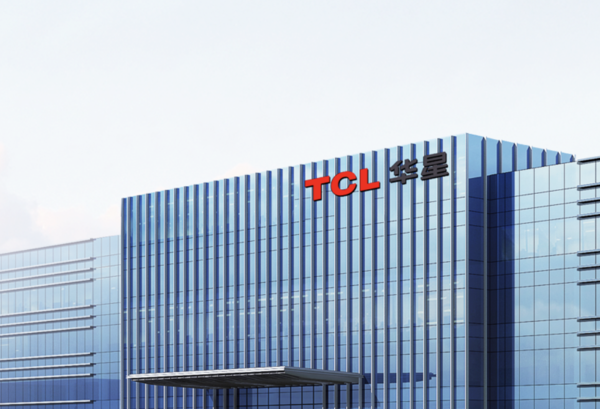
TCL CSOT Headquarters. / Photo = TCL CSOT
Wacker Chemie Korea Enters Silicon Material Market for AI Smart Glass
Wacker Chemie Korea announced on the 27th that it has developed a new silicon material applicable to AI smart glasses.
The silicon developed by Wacker Chemie Korea has improved upon the limitations of existing materials. There are four main technologies applied to the new material. These include thermally conductive thin film technology for heat management, encapsulation technology for protecting micro LEDs, curing technology for bonding and molding, and, in the optics and coating sector, ultra-low and ultra-high refractive index technology (PFAS-Free) applicable to wave guides.
Sunik Systems Signs Supply Contract for LG Display OLED Deposition Equipment
Sunik Systems announced on the 26th that it has signed a supply contract with LG Display for large-area deposition equipment for organic light-emitting diode (OLED) displays. The contract period runs until May 21 of next year. The contract amount was not disclosed at the request of trade secret protection.
It is analyzed that the 1.106 trillion won investment announced by LG Display last month has led to supply contracts.
Rising China’s TCL Chases 2.7 Percentage Points Over Samsung Electronics in Global TV Market
According to market research firm Counterpoint Research on the 29th, Samsung Electronics’ TV shipments in the first quarter of this year (January–March) increased by 8% compared to the same period last year. As a result, its market share rose by 0.7 percentage points from 16.1% in the first quarter of last year to 16.8%, maintaining its number one position.
However, the pursuit by second-place TCL intensified. TCL’s shipments surged by 22% during the same period, and its market share jumped 2.1 percentage points from 12.0% to 14.1%. The gap with Samsung Electronics narrowed by 1.4 percentage points over the past year, falling from 4.1 percentage points in the first quarter of last year to 2.7 percentage points in the first quarter of this year.
Source: Kipost.net
Leave a Reply