

Japanese Government Provides 560 Billion Won Subsidy for Sony Semiconductor Factory Construction
The Yomiuri Shimbun reported on the 17th that the Japanese government plans to provide a subsidy of 60 billion yen (approximately 557 billion won) to Sony Group’s image sensor semiconductor factory currently under construction in Koshi City, Kumamoto Prefecture.
The Ministry of Economy, Trade and Industry plans to provide subsidies up to the upper limit based on the Economic Security Promotion Act.
The recipient of the support is a factory being built by Sony Semiconductor Manufacturing, a subsidiary of Sony Group, with a total investment of 180 billion yen (approximately 1.671 trillion won) for the production of automotive image sensor semiconductors.
Intel, Embarking on ‘Foundry Rebuild,’ Hires Sales Executive from Samsung Electronics
Intel’s Foundry business unit announced on the 15th (local time) via its official X (formerly Twitter) account that Han Seung-hoon (Sean Han), Vice President of Samsung Electronics, will join the foundry division as Senior Vice President (SVP) and General Manager starting next month.
Vice President Han will report to Naga Chandrasekaran, Executive Vice President (EVP) who oversees Intel’s foundry business.
Vice President Chandrasekaran introduced Vice President Han, stating, “He has built valuable expertise in the semiconductor industry over 30 years at Samsung and recently oversaw sales operations at Samsung Foundry,” and added, “He has participated in the development of various logic process nodes since 1996 and possesses impressive technical insights.”
Quantum Computer Instability to be Tackled with AI… NVIDIA Unveils ‘Izing’
On the 15th (local time), Nvidia unveiled the quantum AI model ‘Ising’. Ising solves two key challenges for the commercialization of quantum computers: decoding errors and calibrating the state of quantum processors, which are the core devices that perform computations in quantum computers.
Unlike conventional computers that calculate using only 0 or 1, quantum computers perform operations in units of ‘qubits,’ where 0 and 1 exist simultaneously. Although their computational performance is significantly superior to that of conventional computers, instability, where their state can easily fluctuate, has been cited as a limitation. Ising monitors, corrects, and rectifies such vulnerable qubit states in real time.
SP Samhwa Mass Production of Semiconductor Packaging Material ‘EMC’
SP Samhwa announced on the 14th that it has fully launched a mass production system for epoxy molding compound (EMC), a key material for semiconductor packaging, and has begun supplying it to global top-tier mobile device components.
This achievement was accomplished seven years after SP Samhwa entered EMC R&D in 2018 and four years after establishing dedicated mass production facilities at the Ansan plant.
EMC is an essential material that protects semiconductor chips from external environments such as heat, moisture, and shock. Due to the very high technological barriers to entry, a small number of global materials companies have dominated the market for a long time.
Samsung Electro-Mechanics Invests 2 Trillion Won in Vietnam to Expand ‘Semiconductor Substrate’ Production
Samsung Electro-Mechanics has decided to invest $1.2 billion (approximately 1.8 trillion won) in its production subsidiary in Vietnam to expand production capacity for flip-chip ball grid arrays (FC-BGA), a high-performance semiconductor substrate. Recently, Samsung Electro-Mechanics received an investment registration certificate from the Vietnam Foreign Investment Agency regarding the production of FC-BGA for AI applications.
FC-BGA is a packaging method that combines the flip-chip method, where the chip is flipped over with the wiring facing downward and the chip is directly connected to the substrate, and the ball grid array method, which provides electrical connections by arranging small solder balls under the substrate.
Hansol Group Acquires Will Technology … Enters Semiconductor Inspection Equipment Market
On the 13th, Hansol Technics disclosed that it would invest approximately 177.2 billion won to acquire an 83% stake in Will Technology and incorporate it as a subsidiary. Hansol Technics stated, “We aim to enhance corporate value by pursuing entry into new markets in the semiconductor business sector and the advancement of our profit structure.”
Will Technology produces probe cards specialized for main chips (AP) and image sensor chips (CIS) installed in Samsung Galaxy mobile phones and the like. Currently, it holds the top position in both probe cards for Galaxy S series APs and probe cards for Samsung Electronics CIS. Probe cards are consumables used in the semiconductor testing process.
Musk’s TerraFab Team Asks Samsung Electronics for Support
Bloomberg reported on the 15th (local time), citing sources familiar with the matter, that Elon Musk’s ‘Terafab’ team, a project to build a massive semiconductor manufacturing plant, has contacted various semiconductor equipment manufacturers, including Applied Materials, Tokyo Electron, and Lam Research, in recent weeks.
The TerraFab team also requested support from its semiconductor production partner, Samsung Electronics, but it was reported that Samsung instead proposed expanding production capacity for Tesla at its foundry plant under construction in Taylor, Texas.

CATL Headquarters. /Photo by CATL
CATL Invests 4.4 Trillion Won in Mines … Directly Controls Battery Supply Chain
CATL announced on the 15th (local time) that it will invest 30 billion yuan (approximately 4.4 trillion won) to establish a wholly owned subsidiary that integrates and operates mining assets. The entity will serve as a new energy mining business platform engaged in mineral resource exploration, metal processing, and chemical product sales; it will integrate existing mining assets and pursue the securing of domestic and international resource projects. Through this, the company aims to secure a stable supply of key raw materials for batteries.
This investment is interpreted as a measure to respond to global energy shocks and escalating geopolitical risks. Amid growing supply chain uncertainty due to trade conflicts, tariff policies, and logistics disruptions, battery manufacturers are actively investing in mines to secure raw materials.
Ecopro Secures 6.4 Billion Won in Solid-State Battery R&D Funding from Canadian Government
Ecopro announced on the 12th that on the 8th (local time), Ecopro Lithium, a subsidiary of Ecopro Innovation, secured research and development (R&D) funding worth 6 million Canadian dollars (approximately 6.4 billion won) from the Canadian Department of Natural Resources.
Based on this funding, EcoPro Innovation is pursuing a demonstration project for the lithium metal anode process for next-generation batteries. Lithium metal anode materials have an energy density approximately 10 times higher than graphite, which is mainly used in conventional anode materials, and can dramatically increase the driving range of electric vehicles.
KNS to Commercialize 46-Pi and Immersion-Cooled ESS Next Year
KNS announced on the 17th that it is pursuing the development of next-generation battery module packs based on its proprietary Battery Module Assembly (BMA) technology and is set to enter the relevant market. To this end, the company recently completed the formation of a dedicated task force (TF) and aims to launch a prototype in the second half of this year and commercialize it next year.
According to the company, KNS has accumulated core process technologies, including cell stacking, laser welding, and inspection, while supplying BMA automation equipment to major domestic and international battery manufacturers. The company explained that by entering the module pack market, it plans to simultaneously achieve both vertical and horizontal business expansion, moving beyond its secondary battery equipment business.
EV Cathode Material Sales Up 4.8% Year-on-Year in January–February… China’s Dominance Solidified
According to market research firm SNE Research on the 14th, the total volume of cathode materials used in the global electric vehicle (EV), plug-in hybrid vehicle (PHEV), and hybrid vehicle (HEV) markets from January to February of this year was tallied at 159,000 tons.
By company, Sansan and BTR took the lead with 33,000 tons and 30,000 tons, respectively. Kaijin recorded a high growth rate with 21,000 tons, an 18.6% increase year-on-year. Shantai, Zhichen, and Xinzum also strengthened their positions within the top tier with increases year-on-year, reaching 16,000 tons, 13,000 tons, and 12,000 tons, respectively.
Looking at the breakdown by corporate nationality, the share of Chinese companies rose from the 93% range in the first quarter of last year to 96% in the fourth quarter.
POSCO Invests $2.5 Billion to Make Vietnam a Manufacturing Hub
According to industry sources on the 13th, POSCO Future M, a battery materials subsidiary of POSCO Group, has decided to invest a total of $400 million to build its first overseas anode material plant in Vietnam.
PocoFuture M will build an anode material plant with an annual production capacity of 55,000 tons on a 37-hectare site, equivalent to the area of 52 soccer fields, in the Song Cong 2 Industrial Park in Thai Nguyen Province, northern Vietnam. To this end, POSCO Group has decided to cooperate with Viglacera, Vietnam’s largest construction and real estate company.
The factory is scheduled to begin construction in the second half of the year and aims to start operations in 2028, supplying cathode materials to major electric vehicle and battery manufacturers in Korea, the United States, and the European Union (EU).
TCMMS Breaks Ground on New Factory in Gyeongsan to Produce Core Components for Secondary Battery Separators
TCMES, a secondary battery component company, held a groundbreaking ceremony for a new factory in Sinje-ri, Jinryang-eup, Gyeongsan-si, North Gyeongsang Province on the 10th. The company plans to produce core components for primary battery separators, production equipment, and next-generation materials (PI separators) at the new factory.
TCMES possesses total solution technology that encompasses core components and production equipment for the production of secondary battery separators, as well as next-generation materials such as polyimide (PI) separators.
Tesla Partners with China’s Xinwangda, Desperately Cutting Costs
Chinese media outlet 36Kr recently reported, citing multiple industry sources, that Xinwangda Power, a power battery subsidiary under Xinwangda, has been incorporated into Tesla’s global supply chain.
According to reports, the battery has already been shipped from the Yiwu factory in Zhejiang Province and is being installed in export vehicles produced at Tesla’s Shanghai factory. Tesla’s existing major battery suppliers are known to include CATL, Panasonic, LG Energy Solution, and BYD, and Xinwangda has joined as the fifth supplier.
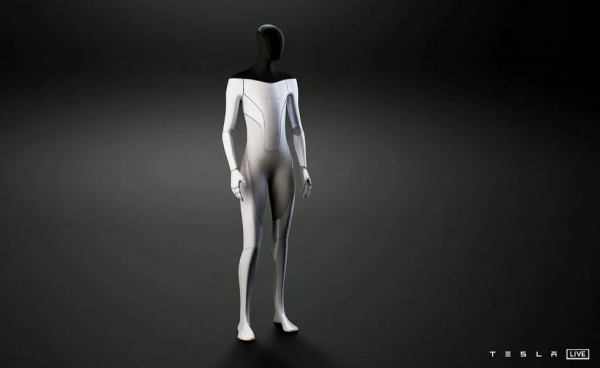
Tesla’s unveiled humanoid robot, ‘Tesla Bot’
Japan’s SoftBank, Sony, and Honda Form ‘AI Dream Team’ to Chase China
According to the Yomiuri Shimbun on the 12th, SoftBank, Sony, Honda, and NEC recently established a joint venture called “Nihon AI Base Model Development” and embarked on the development of AI with a parameter scale in the trillions of won. These four companies each hold a stake in the high teens.
Nippon AI-based Model Development ultimately aims to develop next-generation AI capable of driving robots. SoftBank and NEC are in charge of developing AI-based models, while Sony and Honda plan to utilize the developed AI in fields such as automobiles, robots, games, and semiconductors. Furthermore, the plan is to open the AI to Japanese companies across the board, allowing even non-invested companies to adapt and use it for their own specific purposes.
Hyundai Mobis Establishes SDV and Autonomous Driving Evaluation and Verification System
Hyundai Mobis announced on the 16th that it has established an evaluation and verification system capable of repeatedly testing software-defined vehicles (SDVs) and core autonomous driving control units (ECUs).
This system was developed based on data obtained from sensors mounted on test vehicles in actual driving and parking environments. The core of the system is to implement virtual environments that are difficult to replicate arbitrarily, including nighttime, rain, and unexpected situations. Hyundai Mobis plans to use this system to enhance the recognition performance and stability of its autonomous driving and Advanced Driver Assistance Systems (ADAS) technologies.
Coupang Invests in ‘Robotic Arm’ Startup… “Pilot Operations in Korean Logistics Centers, etc.”
Coupang announced on the 14th (local time) that it has invested in Contoro, a robot startup based in Texas, USA, to expand the use of AI-based autonomous robots and to explore plans for pilot operations at Coupang logistics centers in Korea and other regions.
According to a press release from Coupang, Contoro is a small AI robot startup founded in Austin, Texas in 2022 by Yoon Young-mok, originally from Korea, and has a total of 35 employees.
The robot produced by this company allows workers to remotely control the robot and unload cargo from trucks and containers. It is explained that the robot uses innovative gripping technology capable of handling boxes of various sizes and weights, achieving a 99% success rate in unloading operations.
Hyundai Motor Group-Google Collaboration Becomes a Reality… AI-Enhanced Quadruped Robots Roam the Field
Boston Dynamics released a demonstration video and technical achievements of Spot with Gemini applied on its YouTube channel and blog on the 14th (local time).
In the released video, Spot utilized its onboard camera and Gemini to independently recognize a task list written on a whiteboard and performed tasks such as organizing shoes, disposing of empty cans in the trash, and collecting laundry in sequence. Furthermore, it demonstrated the ability to go beyond simple command execution, such as walking a dog, by autonomously assessing the situation to carry out missions.
LG Chem logo. / Source: LG Chem
LG Chem launches patent offensive against SFC
LG Chem recently submitted an amended statement of claim in an ongoing civil lawsuit against SFC, a subsidiary of Japan’s Hodogaya Chemical Industry, alleging patent infringement related to OLED blue host materials. SFC is a joint venture between Hodogaya Chemical Industry and Samsung Display.
Through this amended statement of claim, which specifies the conditions for the first time since filing the lawsuit in 2024, LG Chem demanded damages in the tens of billions of won, as well as a ban on the production, sale, and import of the problematic products and the disposal of inventory.
The industry estimated that the amount of damages would be around 30 billion won, taking into account the sales volume of SFC’s products.
Visionox “Mass Production Shipment of VIP-Type Wearable OLEDs to Honor”
China’s Visionox announced that it has mass-produced and shipped ViP-type organic light-emitting diodes (OLEDs) that do not use fine metal masks (FMM) to Honor for wearable products. ViP is an OLED technology commonly referred to as “eLEAP” (JDI’s technology name) in the display industry. This marks the world’s first mass production of ViP-type OLEDs. However, there are also observations in Korea suggesting that “we still need to wait and see.”
ViP technology is a technique that patterns red, green, and blue (RGB) subpixels using a photolithography process after vacuum-depositing the emissive layer. It can reduce shadow effects caused by the use of FMMs, thereby increasing the aperture ratio and extending lifespan. However, it is not yet a technology whose mass production feasibility has been verified.
Leave a Reply