

Establishment of Integris Semiconductor Advanced Materials R&D Center in Ansan
Gyeonggi Province announced on the 18th that the US company Entegris established the Korea Technology Center (KTC), a semiconductor advanced materials research and development center, within the ERICA campus of Hanyang University in Ansan.
The establishment of this center stemmed from Governor Kim Dong-yeon’s first business trip to the U.S. in April 2023. Through KTC, Entegris plans to integrate and strengthen its R&D functions in Korea and accelerate the development of customer-tailored technical support and future semiconductor technologies.
KTC conducts research and development and application technology analysis of advanced materials related to core semiconductor processes, such as advanced deposition materials, wet chemical processes, CMP slurries, liquid filtration, and purification.
AI semiconductor startup Semifive applies for preliminary review for listing
SemiFive, a company specializing in custom semiconductor (ASIC) design, announced on the 18th that it has entered into full-fledged initial public offering (IPO) procedures by submitting a preliminary examination application for KOSDAQ listing to the Korea Exchange on the 17th.
The lead underwriters are Samsung Securities and UBS Securities. Founded in 2019, SemiFive has attracted a total of KRW 240 billion in cumulative investment from major investors such as Pavilion Capital under Singapore Temasek, Mirae Asset Venture Investment, Korea Investment Partners, Industrial Bank of Korea, and Doosan Tesna. Last year, it achieved annual sales of KRW 111.8 billion in just five years since its founding, ranking first in sales in the system semiconductor sector among Samsung Electronics’ official design solution partners.
OCI Holdings enters the semiconductor polysilicon market
OCI Holdings’ subsidiary OCI Terrasus is joining hands with Japanese chemical company Tokuyama to establish a polysilicon plant for semiconductors. This is being evaluated as a ‘strategic choice’ to expand its business into areas that Chinese technology cannot surpass.
OCI Holdings announced on the 17th that OCI Terrasus and Tokuyama held a groundbreaking ceremony for a joint semiconductor polysilicon plant at the Samalaju Industrial Complex in Sarawak, Malaysia the previous morning.
The shares of this joint venture plant (OTSM) will be held 50:50 by OCI Terrasus and Tokuyama. The total investment is 445 million dollars (600 billion won). Tokuyama, the joint venture target, is the world’s third-largest producer of polysilicon for semiconductors.
SK Key Foundry Strengthens Cooperation in Automotive Power Semiconductor Sector
SK Key Foundry announced on the 15th that it has jointly developed next-generation packaging (post-process) technology for automotive semiconductors that can withstand extreme environments with LB Semiconductor, a semiconductor packaging and testing specialist.
The company, a subsidiary of SK Hynix Foundry (semiconductor consignment manufacturing), secured 8-inch-based direct RDL (redistribution layer) technology through this collaboration. RDL is a technology that forms metal wires and an insulating layer for electrical connection on top of a semiconductor chip, and by using this technology, it is possible to increase connectivity between the chip and the substrate and minimize signal interference.
US Nvidia H20 Chip Sales Approval… “China’s Rare Earth Weaponization Victory”
The Donald Trump administration’s approval of the export of Nvidia’s artificial intelligence (AI) semiconductor H20 chip to China is an early sign that US-China relations are heading in the right direction, Hong Kong’s South China Morning Post (SCMP) reported on the 17th.
The SCMP reported, citing expert analysis, that the move comes ahead of the summit between US President Trump and Chinese President Xi Jinping in a few months.
President Trump and Chairman Xi are expected to hold a summit on the sidelines of the Asia-Pacific Economic Cooperation (APEC) summit to be held in Gyeongju, South Korea, around the end of October.
Industrial Bank of Korea invests 10 billion won in Furiosa AI
IBK Industrial Bank of Korea announced on the 14th that it will invest 10 billion won in Furiosa AI, a major artificial intelligence (AI) semiconductor fabless (design) company. Furiosa AI is drawing attention as a symbol of domestic technological independence, having rejected an acquisition offer from a U.S. Big Tech (large information technology company) and pursuing independent development and mass production of AI chips.
The Industrial Bank of Korea explained that it decided to make the investment in order to strengthen the foundation for self-reliance in cutting-edge technologies and enhance the global competitiveness of future strategic industries in line with the government’s policy of fostering ultra-gap national strategic technologies.
Advanced Materials Company Air Liquide to Expand Molybdenum Materials Plant in Hwaseong
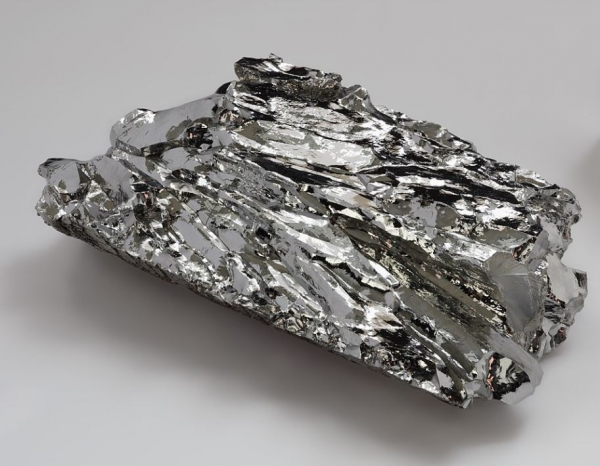
Air Liquide Advanced Materials (ALAM), a subsidiary of industrial gases company Air Liquide, has expanded its production facility for high-purity molybdenum, a next-generation semiconductor deposition material, in Hwaseong, Gyeonggi Province.
This expansion is the second large-scale investment since ALAM Korea was established in 2012, following an investment of 13 billion won by 2018, and is expected to be a significant turning point in securing domestic production of semiconductor materials and a stable supply chain.

End of the Chasm?… Electric Vehicle Exports Rebound in June for the First Time in 16 Months
According to the June automobile industry trends announced by the Ministry of Trade, Industry and Energy on the 17th, Korea’s automobile exports last month were tallied at $6.34 billion, up 2.3% from June of last year. This is the highest June performance ever.
Even in the electric vehicle chasm, exports of eco-friendly vehicles in June increased by 23.1% year-on-year to 75,706 units. In particular, exports of electric vehicles among eco-friendly vehicles increased by 21.4% to 22,324 units, turning to an upward trend for the first time in 16 months since January 2024.
Ecoproino to supply lithium hydroxide to SK On… enough for 100,000 electric vehicles
EcoPro Innovation will supply lithium hydroxide, a secondary battery raw material, to SK On starting in the second half of this year.
EcoPro Innovation announced on the 17th that it signed a lithium hydroxide supply contract on the 16th at SK On Green Campus in Jongno-gu, Seoul, with the attendance of EcoPro Innovation CEO Kim Yoon-tae and SK On Strategic Purchasing Director Park Jong-jin. This is the first time that EcoPro Innovation is supplying lithium hydroxide to SK On.
“US decides to impose 93.5% anti-dumping tariff on Chinese graphite, a key battery material”
Bloomberg reported on the 17th (local time) that the U.S. Department of Commerce has made a preliminary decision to impose a 93.5% anti-dumping duty on Chinese graphite, a key battery material.
According to the report, the U.S. Department of Commerce made the preliminary decision on imported graphite from China, believing that the Chinese government is unfairly subsidizing its own graphite industry, and that a final decision will be made by December 5.
Tesla’s ‘Model 3’ to be sold in China… LG Ensol batteries instead of CATL
On the 18th, Chinese economic media outlet Chailian reported that the information on the ‘Model 3 Plus’ released by China’s Ministry of Industry and Information Technology (MIIT) stated that it uses LG Energy Solution’s NCM battery.
Tesla currently sells the Model 3 in China in three trims: △Rear-Wheel Drive (RWD), △Long Range All-Wheel Drive (AWD), and △Performance AWD. Of these, only the top two trims are equipped with LG Energy Solution’s NCM batteries. The entry trim is equipped with CATL’s LFP batteries.
However, the Model 3 Plus, scheduled to be released in September, will be equipped with LG Energy Solution’s NCM battery instead of CATL’s LFP battery even in the entry trim RWD. This is interpreted as a plan to dramatically increase the driving range of the entry trim and boost local sales.
Daejin Advanced Materials Opens Joint Research Center for CNT for Battery at Gachon University
Daejin Advanced Materials announced on the 18th that it will open a corporate research institute at Gachon University and promote industry-academia cooperation for the development of next-generation battery material technology together with the research team of Professors Shin Young-jun and Chae Oh-byung of the Department of Chemical and Biomolecular Engineering.
With the opening of the research center, Daejin Advanced Materials will establish dispersion equipment at Gachon University for the development of highly dispersed carbon nanotube (CNT) slurries.
CNTs are attracting attention as a battery conductive material due to their superior electrical, thermal, and mechanical properties compared to existing carbon black. Due to their strong cohesive properties, homogeneous dispersion technology is considered key.
Kia to Install Chinese CATL Batteries in Domestic EV5
Kia will be installing ternary (NCM) batteries from China’s CATL in the domestic model of its compact electric sports utility vehicle (SUV) EV5. According to industry sources on the 16th, Kia is preparing to launch the EV5 domestically using Chinese NCM batteries. A Kia official said, “We took into consideration things like diversifying the battery supply chain.”
Hyundai Motor Group previously applied Chinese batteries to the Kona Electric and Niro EV. Both models were equipped with CATL NCM batteries.
Innometry to supply battery testing equipment to China’s BAK
Innometri announced on the 16th that it has finalized a contract to supply X-ray inspection equipment to Chinese battery manufacturer BAK Power.
Shenzhen-headquartered BAK is one of China’s top battery manufacturers, supplying batteries to Huawei, TCL, Dell, HP, Geely Automobile and Daihatsu Automobile.
This order quantity is for equipment to be used in the remodeling of the electric vehicle battery production line at the Zhengzhou plant. The company expects that additional supplies will follow in the future according to the line remodeling schedule.

Uber signs 6-year robotaxi contract with electric car maker Lucid… $300 million investment
Ride-sharing company Uber is partnering with electric car manufacturer Lucid and self-driving technology startup Nuro to operate robotaxis. Uber has signed a partnership with Lucid and Nuro to introduce more than 20,000 robotaxis over the next six years. Uber is investing $300 million in Lucid.
“We’re excited to bring the magic of self-driving technology to a wide audience in a safe and accessible way,” said Uber CEO Dara Khosrowshahi.
Nuro will develop autonomous driving technology and apply it to Lucid vehicles, which will then supply robotaxis to Uber. Nuro will also receive hundreds of millions of dollars in investment.
Advantech Joins Autonomous Driving Open Source Platform ‘Autoware Foundation’
Advantech, a global leader in edge computing and industrial automation solutions, announced on the 17th that it had officially joined the Autoware Foundation, an autonomous driving open source software platform, on the 10th.
Advantech is expected to actively participate in the spread of open source-based autonomous driving technology based on its edge computing technology and contribute to the creation of an ecosystem in the physical AI field.
The Autoware Foundation is a non-profit organization that promotes the commercialization and standardization of autonomous driving technology centered on the open source software ‘Autoware’ based on the Robot Operating System (ROS).
Nextchip, Stellantis Subsidiary Collaborate on Autonomous Driving ADAS Technology
Nextchip announced on the 15th that it has signed a technology collaboration agreement with aiMotive, a 100% subsidiary of global automotive group Stellantis, for an advanced driver assistance system (ADAS) solution that integrates next-generation autonomous driving software.
According to the company, AI Motive is an AI-based autonomous driving software company acquired by Stellantis in 2022. It is currently in charge of developing autonomous driving technology for the Stellantis Group.
ThorDrive Launches Autonomous Driving Robot for Indoor Logistics
ThorDrive, a company specializing in autonomous driving technology, announced on the 15th that it has officially launched the ‘T-RAX Indoor’, a low-floor autonomous driving robot (AMR) optimized for indoor logistics environments, and the operating platform (FMS) that integrates and manages it.
The T-Rex Indoor is the first product in the ‘T-RAX’ series (which stands for ‘ThorDrive – Robot AutonomousX-where’), a lineup of industrial autonomous robot products. It is an integrated solution that can automate logistics operations in various fields such as logistics warehouses and manufacturing facilities, and enhance productivity and safety at the same time.
Eugene Robot supplies 1.5t load ‘Gokart 1500’ auto parts transport robot
Eugene Robot, a company specializing in autonomous logistics robots and total smart factory solutions, announced on the 14th that it has supplied its autonomous logistics transport robot ‘GoCart 1500’, dedicated to heavy-duty transport, as an automobile parts transport robot.
The delivered ‘Go Kart 1500’ autonomously moved 950 kg of metal parts in an auto parts factory, replacing the work performed by existing workers and forklifts, doubling production. It also greatly improved efficiency by reducing costs by more than 15%.
Samsung Display Wins in ‘Trade Secret Dispute’ with China’s BOE
Samsung Display has won a victory in its ‘organic light-emitting diode (OLED) trade secret infringement lawsuit’ filed against its Chinese competitor BOE with the U.S. International Trade Commission (ITC).
According to industry sources on the 14th, the ITC decided through a preliminary ruling on the 11th (local time) that BOE and seven of its subsidiaries had infringed on Samsung Display’s trade secrets under Article 337 of the Tariff Act and that OLED imports should be banned. Accordingly, the ITC recommended two types of sanctions to BOE: a “limited exclusion order” and a “cease and desist order.”
Korea-led LTPO OLED to reach 80% market share in 2 years
Market research firm Omdia predicted that the share of low-temperature polycrystalline oxide (LTPO) OLED, a high value-added product in the smartphone OLED market, will increase from 60.2% last year to 70.1% this year. Omdia also forecasted that the growth of LTPO OLED will become steeper in the future, exceeding 80% in the smartphone OLED market in 2027 and approaching 85% in 2032.
On the other hand, the share of low-temperature polycrystalline silicon (LTPS) OLEDs led by China is expected to drop from 39.8% last year to 29.9% this year. It is also expected to drop to 19.7% in 2027 and 15.1% in 2032.
Source: kipost.net