

Waldex Expands Gumi Plant 2 to Ride the Semiconductor Supercycle
On the 30th, Waldex announced that it held a safety prayer ceremony for the expansion of its second factory in the Gumi National Industrial Complex 5 in Gyeongbuk and began full-scale expansion of its production capacity.
Waldex specializes in producing silicon and quartz components used in semiconductor etching processes, supplying key components and materials to approximately 110 global semiconductor companies, including Samsung Electronics and SK Hynix. This additional investment, made just three years after the company established its second plant in 2022, is valued at approximately KRW 8 billion, including expansion of the plant and equipment upgrades utilizing idle land.
Alibaba Unveils High-Performance AI Chip, Comparable to Nvidia’s H20
T-Head, a semiconductor company under China’s largest e-commerce company Alibaba, has unveiled its self-developed advanced AI chip, the ‘Parallel Processing Unit (PPU)’ ‘Zhenwu 810E’.
According to China Observer Network and other sources on the 29th, Pingtou Ge announced the successful development of the ‘Zhenwu 810E’ through its website.
The Jeonwoo 810E features 96GB of HBM2e memory and a chip-to-chip interconnect bandwidth of 700GB/s. It can be used for AI learning, AI inference, and autonomous driving.
YMC invests $1.4 billion in US semiconductor startups.
YMC, a company specializing in semiconductor and display materials and components, announced on the 28th that it has made a strategic investment of $1 million (KRW 1.4 billion) in Samba Solutions, Inc., a semiconductor equipment startup based in Silicon Valley, USA, to strengthen its future technological competitiveness.
Samba Solutions is led by semiconductor industry veterans with extensive experience at global equipment companies, and is attracting attention in the industry for its dry etching technology.
With this strategic move, YMC plans to preemptively secure promising technologies in the field of dry etching equipment for next-generation advanced packaging, such as high-bandwidth memory (HBM) and through-silicon via (TSV), while simultaneously expanding its global technology network.
Musk: “Samsung and TSMC alone will meet the chip shortage within 3-4 years. We need to manufacture semiconductors in the US.”
Musk stated during Tesla’s earnings conference call on the 28th (local time), “Even assuming the best-case scenario, the production capacity of key suppliers, including strategic partners like Samsung Electronics, TSMC, and Micron, is not sufficient.” He continued, “We need to build a Tesla Terra Fab (factory) to remove constraints that are likely to arise in the next three to four years.”
The Terra Fab Musk mentioned is a large-scale semiconductor production facility that includes logic, memory, and packaging, and is being considered for construction in the United States.
Meta signs $8 trillion optical fiber supply contract with Corning
Meta, the operator of Facebook and Instagram, has signed a contract worth $6 billion (approximately 8.7 trillion won) to supply optical fiber to expand its artificial intelligence (AI) data center infrastructure.
Meta and Corning, a U.S. specialty glass company, announced on the 27th (local time) that the two companies have signed a multi-year contract with these contents.
Fiber optic cables are essential components for massive data transmission and high-speed connectivity. Under this agreement, Corning will significantly increase production at its North Carolina facility and, in particular, expand its optical cable manufacturing facility in Hickory, which serves Meta as a key customer.
Microsoft Unveils Its First Commercially Available AI Chip, the Maia 200
Microsoft has unveiled a new artificial intelligence (AI) chip, marking a major move to reduce its reliance on Nvidia. The company announced on the 26th (local time) that it has launched the “Maia 200,” an AI chip designed to improve the efficiency of inference tasks.
The Maia200, built on TSMC’s 3nm process, features improved economic efficiency in generating ‘tokens’, which are the units of AI inference.
Furiosa AI begins full-scale mass production of its second-generation NPU.
Artificial intelligence (AI) semiconductor company Furiosa AI announced on the 28th that it has begun full-scale mass production of its second-generation AI inference neural network processing unit (NPU) ‘RNGD’ (Renegade).
RNGD is available in two forms: the ‘RNGD PCIe Card’, an AI accelerator that can be directly installed on existing servers thanks to its low-power design, and the ‘NXT RNGD Server’, a 4U rackmount server equipped with eight RNGD cards.
The first batch of 4,000 RNGDs manufactured by foundry partner TSMC will be shipped after going through ASUS’ card manufacturing process.
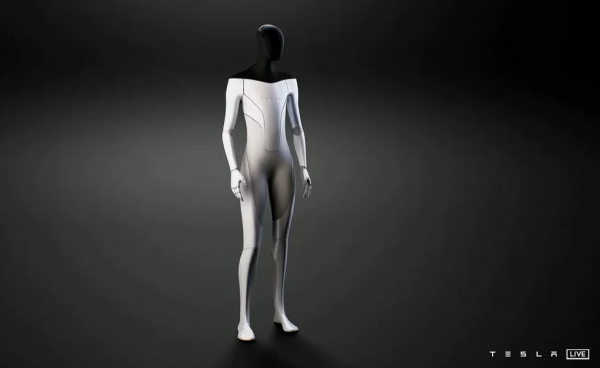
Tesla Bot, a humanoid robot unveiled by Tesla
Samsung SDI signs battery supply contract in the US, “a strong candidate for Tesla’s ESS.”
Samsung SDI announced on the 30th that its American subsidiary, Samsung SDI America (SDIA), had signed a battery supply contract.
The specific details, including the contract amount, contract partner, and contract period, were explained as “scheduled for disclosure after the end of the reservation period (January 1, 2030) due to the need to maintain business confidentiality.”
Industry insiders speculate that this announcement is likely a contract with Tesla, given that it was made in response to a public inquiry request from the Korea Exchange on November 3rd of last year.
SK Rent-a-Car and PM Grow Sign MOU for Electric Vehicle Battery Service
SK Rent-a-Car (CEO Lee Jeong-hwan, left in photo) announced on the 30th that it has signed a business agreement (MOU) with PM Grow (CEO Park Jae-hong, right), a company specializing in electric vehicle battery services, for business cooperation in the field of data-based electric vehicle battery safety and performance diagnosis.
The two companies plan to jointly utilize their capabilities, such as electric vehicle operation data from SK Rent-a-Car’s comprehensive vehicle management solution ‘Smart Link’ and PM Grow’s battery diagnosis and analysis technology, to discover new customers and diversify services, and through this, they plan to pursue cooperation to create and expand the electric vehicle battery service market.
Enchem and TDL Partner on All-Solid-State Battery Technology
Enchem, a secondary battery electrolyte specialist, announced on the 30th that it is accelerating the acquisition of next-generation battery technology by working with its all-solid-state materials subsidiary TDL to verify oxide-based all-solid-state electrolyte materials and process technology. This strategy aims to gradually internalize related technologies by securing material performance and process reproducibility, which are considered key elements for the commercialization of all-solid-state batteries.
Leveraging its experience operating a global supply chain, Enchem is also responding to the technological transition to all-solid-state batteries. Through its collaboration with TDL, Enchem plans to enhance the technological maturity of all-solid-state electrolyte materials and gradually verify their applicability to real-world batteries.
Shinsung E&G Secures Super Dry Room Technology for Mass Production of All-Solid-State Batteries
Shinsung E&G announced on the 29th that it has completed its ultra-low humidity SuperDry Room technology in preparation for the era of all-solid-state batteries, and is moving to secure leadership in the next-generation battery manufacturing environment market.
According to the company, all-solid-state batteries are extremely sensitive to moisture during production, requiring stricter humidity management than conventional liquid electrolyte batteries. The prevailing industry analysis is that mass production requires stable, ultra-low dew point conditions of -60°C or lower, and in some processes, -70 to -80°C.
Shinsung Engineering has secured the technology to design and operate a super-dry room capable of achieving an ultra-low dew point of -70℃ or lower, and has established a technology portfolio that can be expanded to an ultra-low humidity environment of -80℃ depending on process characteristics.
Ford Expands Battery Partnership with China’s CATL, US Congress Demands Explanation
The U.S. Congress has reportedly requested an explanation from Ford, the American automaker, after the company expanded its partnership with China’s CATL, the world’s largest battery manufacturer, for its energy storage system (ESS) business.
According to the Financial Times (FT) on the 28th (local time), Ford previously decided to produce electric vehicle (EV) batteries through a technical partnership with CATL at its Michigan plant in 2023, and announced last month that it would produce ESS products based on CATL technology at its Kentucky plant.
The FT reported that John Mulena (R-Mich.), chairman of the U.S. House Select Committee on U.S.-China Strategy and Competition, sent a letter to Ford CEO Jim Farley on the 27th, asking him to explain the nature of the recently expanding relationship between Ford and CATL.
LG Chem overcomes crisis by securitizing LG Ensol, saying it will lower its debt by 70%.
On the 29th, LG Chem CFO Cha Dong-seok announced in a 2025 Q4 earnings conference call that “over the next five years, we will gradually liquidate our stake in LG Energy Solution to around 70%, and use the resources secured through this to allocate to financial soundness and shareholder returns.”
LG Chem currently holds approximately 79.4% of LG Energy Solution. It held 81.8% at the end of last year, but used the remaining 2.5% to secure approximately 2 trillion won in funds through a stock return swap (PRS) agreement. LG Chem plans to further raise funds by leveraging a portion of its LG Energy Solution stake.
Tesla Model S and X Discontinued: “We’re Pulling Out Electric Vehicle Production Lines to Make Robots”
On the 28th, Tesla CEO Elon Musk said in a conference call that it was “time to give the Model S and X an ‘honorable discharge’” and that “Tesla is transitioning from being a car company to being a physical AI provider focused on self-driving cars and humanoid robots.”
Tesla’s Optimus robot, which will be deployed on its empty production line, is not simply a machine, but a “labor substitute.” The long-term goal is to produce one million units annually. The plan is to apply electric vehicle components and battery technology to the robot to secure price competitiveness and to implant FSD (Fully Self-Driving) visual data into the robot’s brain. The company plans to dominate this market during the manufacturing paradigm shift toward “dark factories,” where AI operates factories without humans. The company plans to establish a high-value-added service model, not only through hardware sales but also through subscriptions to robot operation software.
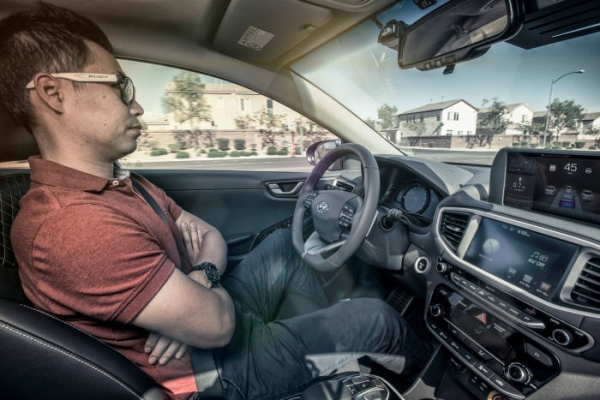
Han Ji-hyung, CEO of Autonomous A2Z, demonstrates the Ioniq EV autonomous vehicle technology while working at Hyundai Motor Company. / Hyundai Motor Company
Robotis officially launches robot hand… “It can pick up objects with its eyes closed.”
Robotis announced on the 29th that it will officially launch a robot hand (HX5-D20) that implements human-level freedom and the ultra-small finger actuator (XM335-T323-T) that drives it.
The most notable feature of the new robot hand (HX5-D20) is its “full-joint active drive” system. While existing robot hands used link-and-tendon drive, connecting some joints with wires to avoid weight and control complexity, Robotis incorporated its proprietary, ultra-small finger actuators into all joints.
Accordingly, it has the same level of freedom as a human, and can implement delicate movements that only humans can do, such as playing the piano or cutting with scissors, beyond simple grasping movements.
Nanosystems Launches Multimodal Sensor Fusing LiDAR and RGB
Nanosystems announced on the 28th that it has launched a new multimodal sensor that combines LiDAR, RGB camera, and inertial measurement unit (IMU) that will increase development efficiency for physical AI solution companies.
This new product features a groundbreaking improvement in the complex sensor fusion process, a chronic problem in the development of robotics and AI solutions. Previously, separate calibration of lidar and camera data was essential. This product integrates these processes, reducing development time and computational burden by over 50%.
Autonomous A2G aims to generate sales of 16 billion won by 2025.
Autonomous A2Z, an AI (artificial intelligence) autonomous driving company, announced on the 29th that it has recorded sales of 16 billion won in its 2025 financial statements, breaking its all-time sales record.
A2G’s 2025 sales are projected to reach approximately KRW 16 billion (based on the final accounting period), representing a roughly 50% increase from KRW 10.7 billion the previous year. This sales increase, achieved prior to the full-scale commercialization of autonomous driving services, was primarily driven by winning R&D projects from government and local governments, conducting demonstrations, and performing outsourcing projects. With this, A2G has achieved sales exceeding KRW 10 billion for two consecutive years, demonstrating its business prowess in the autonomous driving market, which attracts astronomical amounts of capital.
Hyundai Motor Company Accelerates Autonomous Driving… 42Dot Hires 50 Developers
42dot, a self-driving company under the Hyundai Motor Group, is hiring around 50 developers with experience in the autonomous driving field. This represents a simultaneous hiring of approximately one-tenth of the company’s 500 developers.
On the 26th, Forty2Dot announced that this hiring follows Hyundai Motor Group’s existing autonomous driving development roadmap. Specifically, Forty2Dot explained that the recruitment is aimed at advancing “Atria AI,” its proprietary end-to-end (E2E) autonomous driving technology. E2E is a method in which artificial intelligence (AI) learns driving data in its entirety and processes decision-making and control simultaneously.
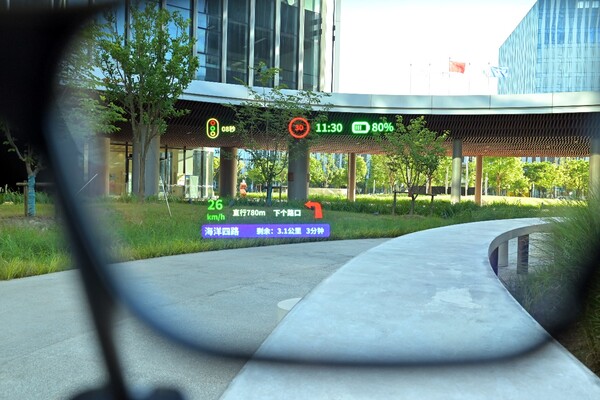
Smart glasses with full-color LEDoS. /Photo = JBD
SemiFive and Sapien Semiconductor Sign MOU for Collaboration on CMOS Backplane Technology
SemiFive, a company specializing in customized semiconductors (ASICs), announced on the 26th that it has signed a strategic memorandum of understanding (MOU) with Sapien Semiconductor, a company specializing in next-generation micro LED-display driver semiconductors (ASICs), to strengthen micro display technology competitiveness and collaborate on the development of complementary metal-oxide semiconductor (CMOS) backplane technology.
Through this agreement, the two companies will jointly pursue the design and technical review of ‘CMOS backplane’ technology, a core component of microdisplays.
LG Display: “Capital investment of KRW 2 trillion this year…Caution on 8.6th-generation OLED”
LG Display plans to increase its capital expenditure (CAPEX) to around 2 trillion won this year. However, the company plans to determine whether to invest in 8.6th-generation OLED (organic light-emitting diode) displays for IT applications after assessing market demand.
Last year, LG Display invested in facilities in the mid-1 trillion won range. This year, the company plans to increase its investment by more than double digits. It plans to invest approximately 700 billion won in its Paju plant and make additional investments in Vietnam, where its post-processing plant is located, to promote the application of new mobile OLED technologies and enhance production competitiveness.
Source: Kipost.net
Leave a Reply