

NVIDIA to Equip Servers with Smartphone Memory… Memory Prices Likely to Double
There are predictions that the price of high-end memory for servers will double next year as Nvidia equips AI servers with memory for smartphones instead of existing server memory.
Market research firm Counterpoint Research predicted on the 19th (local time) that memory prices will rise by 50% in the second quarter of next year due to a semiconductor shortage, and that high-end memory prices will double by the end of next year.
This memory price increase was also influenced by Nvidia’s change in memory policy. Nvidia equipped its AI servers with LPDDR, a smartphone memory, instead of DDR, a server memory.
Amkor invests KRW 270 billion to strengthen facilities in Songdo, Incheon.
Amkor Technology, the world’s second-largest semiconductor packaging (post-process) company, is expanding its testing facilities at its Songdo International City plant in Incheon.
According to the Incheon Free Economic Zone Authority on the 19th, Amkor Technology Korea began construction on expanding its semiconductor testing facilities at its Songdo plant within the Songdo International City Advanced Industrial Cluster.
Amkor Technology Korea plans to invest KRW 266.1 billion in foreign direct investment (FDI) in its Songdo facility to strengthen its production capacity in advanced semiconductor testing and high-performance packaging.
Iron Device Selected for the Ministry of Trade, Industry and Energy’s System Semiconductor Support Project
Iron Device, a fabless company specializing in mixed-signal semiconductors, announced on the 20th that it had been selected as a target company for the ‘System Semiconductor Demand-Linked Online Platform Support Project’ along with a global ceramic materials company.
Iron Device is developing a System-on-Chip (SoC) that can drive film-type ceramic actuators with high voltage and high precision, surpassing the driving voltage limits of existing chip ICs to implement display sound.
This chip can output a high voltage of 80Vpp and a maximum current of 8A, reliably driving capacitive loads of 10uF or more. It features a built-in protection circuit that protects the chip from overcurrent, overtemperature, and voltage drops.
Nissan cuts production at Kyushu plant again due to semiconductor chip supply disruptions.
Citing sources familiar with the matter, Reuters reported on the 18th (local time) that Nissan plans to reduce vehicle production at its Kyushu plant by an additional 1,400 units next week, as the supply disruption related to Chinese semiconductor company Nexperia continues to affect production in Japan.
This move follows last week’s reduction of 900 vehicles. The official said, “This reduction includes the Serena minivan and the Rogue SUV, known locally as the X-Trail.”
Arm adopts NVIDIA’s NVLink chip interconnect technology.
Arm announced on the 17th (local time) that it plans to apply Nvidia’s chip-to-chip connection technology ‘NVLink’ to its AI data center chip design platform ‘Neoverse’.
NVIDIA previously released NVLink under the name “Fusion,” allowing other hardware manufacturers to utilize the technology. With the expansion of AI data centers, interconnecting millions of central processing units (CPUs) and graphics processing units (GPUs) has become increasingly crucial. Arm’s adoption of NVIDIA’s NVLink technology would likely make it a de facto industry standard.
Former TSMC VP Moves to Intel, Allegedly Leaking Confidential Information: “Up to 80 Boxes”
On the 19th, Taiwanese media outlets such as Liberty Times and United Daily reported, citing sources, that Luo Weiren, Senior Vice President of Technology R&D and Corporate Strategy Development at TSMC, had copied and smuggled out confidential data related to cutting-edge process technologies such as 2㎚ (nanometer, one billionth of a meter) A14 (1.4㎚), and A16 (1.6㎚) ahead of his retirement at the end of July.
The source explained that former Vice President Luo had already returned to his former job at Intel last month.
Former Vice President Luo worked at Intel before joining TSMC in 2004, and is currently working on improving yield issues with the 18A manufacturing process that is being tested in Intel’s R&D division, the source said.
OpenAI Accelerates Data Center Expansion in the US, Collaborating with Foxconn on Hardware Design
OpenAI, the developer of ChatGPT, has partnered with Taiwan’s Foxconn (Hon Hai Precision Industry) to accelerate the construction of data centers in the United States. OpenAI announced on the 20th (local time) that it has partnered with Foxconn to develop data center hardware.
OpenAI will share information on hardware demand in the AI industry, while Foxconn will handle hardware design and manufacturing. However, this agreement does not include any purchase commitments or payment obligations. Foxconn will develop the hardware, and OpenAI will evaluate the results and retain the option to purchase the hardware based on its findings.
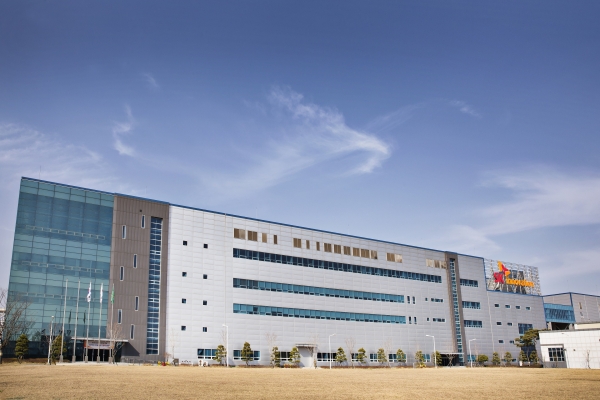
Taesung supplies composite copper foil materials to overseas battery companies.
Taesung announced on the 21st that it has decided to supply composite copper foil materials to overseas battery company B and conduct battery performance evaluations.
The company explained, “This supply is a signal for our full-scale entry into the global battery market, following domestic company A,” and “It will serve as an opportunity to strengthen our growth foundation by expanding cooperation with global customers.”
This material supply success is expected to have a positive impact on Taesung’s composite copper foil equipment business. The company stated, “While several Chinese customers have expressed interest in visiting to resume negotiations, we are currently coordinating the timing of these discussions to maximize profitability and strategic value.”
SK On and China’s EVE Energy to Part Ways to Remain Single-Factor Plants in China
SK On has agreed to swap shares in two Chinese factories it was jointly operating with Chinese battery company EVE Energy. SK On will operate the Yancheng plant exclusively, while EVE Energy will manage the Huizhou plant exclusively.
SK On announced on the 20th that it had entered into a spot transaction in which it would transfer a 49% stake in EUE, a joint venture with EVE Energy in Huizhou, Guangdong Province, China, in exchange for a 30% stake in SKOJ, a joint venture in Yancheng, Jiangsu Province, China. EVE will pay SK On an additional 200 million yuan (approximately 41.2 billion won) in cash to cover the difference in equity. Consequently, SK On now holds a 100% stake in the Yancheng plant, and EVE Energy holds a 100% stake in the Huizhou plant.
POSCO International Discusses Battery Supply Chain Collaboration with Australian Graphite Company
POSCO International recently met with Australian battery company Graphinex in Seoul to discuss potential collaboration. Attention is focused on what kind of collaborations the two sides will explore amidst the restructuring of the global supply chain.
According to industry sources on the 19th, Graphenex recently visited Korea and met with POSCO International and POSCO Future M to discuss the possibility of cooperation.
Graphenex stated, “We had constructive and forward-looking discussions based on friendly relations,” and added, “It was a meaningful opportunity to grow into a long-term partner that stably supplies high-quality graphite products.”
October cathode material exports plummet… Impact of the US electric vehicle subsidy abolition
According to export and import trade statistics released by the Korea Customs Service on the 21st, ternary cathode material exports reached 14,198 tons in October, a 23.4% decrease compared to September (18,547 tons). Export value for the same period also decreased by 22.3% from the previous month (US$432.19 million), reaching US$335.75 million. Export volume reached its lowest level since February 2021. Export value also reached its lowest level since March 2021.
The sharp decline in export performance is attributed to the termination of the US federal government subsidy, which offered a tax credit of up to $7,500 for electric vehicle purchases, effective September 30th. According to J.D. Power, US electric vehicle sales plummeted 53% in October, the first month after the federal subsidy program expired.
Stellantis to Charge Tesla’s Superchargers… Korea to Start in 2027
Stellantis announced on the 19th that it will transition its EV charging standards to the North American Charging Standards (NACS), developed by Tesla, to improve charging accessibility and convenience for its EV customers. As a result, some Stellantis EV customers will be able to use Tesla’s Superchargers, a total of over 28,000 in five countries, including North America, Japan, and South Korea.
The NACS standard will begin in North America early next year and expand to Korea and Japan in 2027. The Jeep Wagoneer S and Dodge Charger Daytona electric vehicles, both of which will be sold in North America early next year, will be the first to comply.
Toyota to Expand Hybrid Vehicle Production in the US, Investing 1.3 Trillion Won
Toyota Motor Corporation announced on the 18th (local time) that it will invest approximately 1 trillion won in its U.S. plant to expand hybrid vehicle production in North America.
Toyota Motor North America announced plans to invest a total of $912 million to expand hybrid vehicle production capacity at its manufacturing facilities in five states: West Virginia, Kentucky, Mississippi, Tennessee and Missouri.
The Mississippi plant will add production of the Corolla Hybrid, a vehicle not previously produced in the United States.

Google Waymo’s self-driving car. /Photo = Waymo
Tirobotics wins additional orders for AMRs to automate automotive parts processes in North America.
Robotics company Tirobotics announced on the 21st that it has received an additional order for autonomous mobile robots (AMRs) for automotive parts production processes in the Texas region of North America.
This contract follows additional orders received in December of last year and September of this year. The supply of AMRs, automated process machines for parts production at major North American automakers, is steadily expanding.
Tesla receives license to operate a ride-hailing service, accelerating the expansion of robot axis.
Tesla has received a license to operate a ride-hailing service in Arizona, U.S. business media outlet CNBC reported on the 19th (local time). Tesla applied for a “Transportation Network Company” license from the Arizona Department of Transportation on the 13th, as part of the process to operate a ride-hailing service similar to Uber.
This approval for the ride-hailing service is seen as a gateway to expanding robo-taxi (unmanned) services. Tesla will need additional approval to operate robo-taxi services using self-driving cars.
Domestically produced autonomous vehicles enter the UAE market… Autonomous A2Z joint venture launched.
Autonomous A2Z, a self-driving startup, announced on the 20th that it has established a local autonomous driving joint venture with artificial intelligence (AI) space tech company Space42 in Abu Dhabi, United Arab Emirates (UAE).
The two companies officially announced the establishment of the joint venture at the Korea-UAE Business Roundtable held on the 19th, in conjunction with President Lee Jae-myung’s state visit to the UAE. The two companies will jointly invest a total of $4 million (approximately KRW 6 billion) in the joint venture and jointly secure an $8 million (approximately KRW 12 billion) autonomous driving project in Abu Dhabi to advance the project.
KNS Vietnam Signs MOU for Development and Mass Production of Autonomous Mobile Robots
KNS, a company specializing in secondary battery automation equipment, announced on the 20th that its Vietnamese subsidiary signed a memorandum of understanding (MOU) with Modern System, a smart factory and machine vision company, to establish a joint development and mass production system for autonomous mobile robots (AMR).
According to the company, this collaboration is a strategic partnership that combines KNS’s precision manufacturing and equipment hardware capabilities with Modern System’s SLAM (Simultaneous Localization and Mapping) and ROS2 (Robot Operating System) vision-based autonomous driving technology to supply high-precision, high-reliability AMRs required in manufacturing sites at a competitive price.
Waymo to Significantly Expand Robotaxi Service to Texas and Florida by 2026
Waymo announced in a statement on the 18th (local time) that it will begin operating fully autonomous vehicles without human driver assistance in Dallas, Houston, San Antonio, Miami, and Orlando within the next few weeks. The official robotaxi service in these areas is slated to launch in 2026.
“Waymo has entered a new phase of commercial expansion,” said Saswat Panigrahi, Waymo’s chief product officer, in a statement. “We’ve doubled the number of cities where people are not riding.”
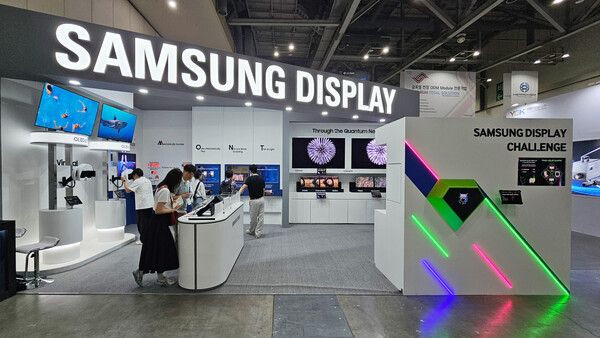
IT OLED shipments to more than double by 2029.
According to UBI Research on the 20th, global OLED shipments for IT use are expected to more than double from 24 million units this year to 53 million units in 2029.
By company, Samsung Display, the largest producer of OLED panels for laptops, tablets, and monitors, is expected to maintain a market share of over 60%. Following it are LG Display, Everdisplay, BOE, and Visionox, forming a competitive landscape.
Samsung Display secures a complete victory in the OLED patent battle, receiving royalties from BOE.
According to the U.S. International Trade Commission (ITC), BOE has announced that it is discontinuing its litigation with Samsung Display. The ITC announced the withdrawal on the 18th (local time), stating that BOE had already communicated this position.
The ITC was scheduled to issue a final ruling on BOE’s alleged infringement of Samsung Display’s trade secrets on the 17th. This decision was based on a preliminary infringement ruling made in July. Our investigation confirmed that the announcement of a stay of proceedings instead of a final ruling was due to a settlement reached between Samsung Display and BOE.
According to industry sources, the two companies have concluded negotiations on the condition that all lawsuits filed in the US, China, and elsewhere be dropped. While specific terms remain unknown, the gist of the agreement is that BOE will pay patent usage fees, or royalties, to Samsung Display.
Finetech signs a 15 billion won contract to supply OLED manufacturing equipment.
Finetech announced on the 17th that it signed a 15 billion won contract with Samsung Display Vietnam to supply OLED (organic light-emitting diode) manufacturing equipment.
Based on this supply contract, Finetech has secured a significant order, accounting for 81% of its first-half sales (KRW 18.5 billion), and is anticipating a significant performance improvement in the second half of the year. This order represents 21.16% of last year’s sales (KRW 71 billion), and the contract period ends on September 30th of next year.
Source: Kipost.net
Leave a Reply