

FuriosaAI Unveils 2nd Generation Chip to Compete with Nvidia… Subscription-based Launch in July
Furiosa AI has unveiled its second-generation artificial intelligence (AI) semiconductor, ‘Renegade (RNGD).’ Benchmarking results from overseas clients showed that RNGD can handle up to 7.4 times more users simultaneously compared to NVIDIA’s ‘RTX Pro 6000’ at the same power level.
The company also explained that based on a low thermal design power (TDP) of 180 watts (W) per chip, the total cost of ownership (TCO) of data center infrastructure can be reduced by approximately 40%.
Furiosa AI began the first mass production of 4,000 RNGD units in January of this year. This is considered a rare case in which a high-performance NPU equipped with High Bandwidth Memory (HBM) has reached the mass production stage.
NVIDIA Invests 3 Trillion Won in U.S. Semiconductor Company Marvell… Accelerating Expansion of AI Ecosystem
On the 31st, Marvell announced that it had entered into a strategic partnership to connect Marvell to the NVIDIA AI Factory and the Artificial Intelligence (AI)-Radio Access Network (RAN) ecosystem through NVIDIA’s ‘NVLink Fusion’ technology, and that NVIDIA had invested $2 billion (approximately 3 trillion won) in the company.
Marvell explained that it also plans to collaborate with Nvidia on “silicon photonics,” a technology known as optical semiconductor technology. Silicon photonics is a technology that transmits and receives data using light instead of electricity, which can maximize data transmission speed and power efficiency.
Intel Repurchases Stake in Ireland Fab Investment After 2 Years… “Signal for Revival”
Intel announced on the 1st (local time) that it has agreed to buy back a 49% stake in the ‘Fab 34’ joint venture, which it had sold to alternative investment firm Apollo Global Management, for $14.2 billion (approximately 21.4 trillion won).
The JV is a company that holds the rights to the semiconductor wafers produced at Fab 34. Accordingly, once this share repurchase is completed, Intel will be able to fully retain the revenue from the wafers produced by the fab.
Fab 34 is considered a key facility for producing Intel’s major central processing unit (CPU) product families, including Intel Core Ultra and Intel Xeon 6, as well as Intel 4 (7nm) and Intel 3 (3nm) process products.
Korea Advanced Materials signs technology transfer agreement with ETRI for ultra-high-speed semiconductor connectivity for optical communication
Korea Advanced Materials, a company specializing in optical communications, announced on the 3rd that it has signed a technology transfer agreement with the Electronics and Telecommunications Research Institute (ETRI) for ‘impedance-matching silicon interposer technology for 200 Gbs ultra-high-speed signal transmission.’
According to the company, this technology involves precisely designing the connection structure between semiconductor components to stably transmit electrical signals operating in ultra-high-speed environments.
Next-generation power semiconductor material provider IVWORKS raises 6 billion KRW in pre-IPO investment
IVWorks, a power semiconductor materials startup, announced on the 2nd that it has secured 6 billion won in pre-IPO (pre-listing equity investment).
Existing shareholders, including IM Investment Partners and Enlight Ventures, actively participated in this investment. IVWorks’ cumulative investment raised is approximately 45 billion won.
IVWorks, established in 2011, manufactures gallium nitride (GaN) epiwafers, a next-generation compound semiconductor material. Epiwafers are a core material in semiconductor manufacturing and are wafers grown by depositing a thin film with the same crystal structure onto a single-crystal substrate.
Taiwan Government Approves TSMC’s 3nm Semiconductor Production at Japan Factory
According to Japan’s NHK on the 1st, Taiwan’s Ministry of Economic Affairs announced that it had approved the production plan for 3-nanometer advanced semiconductors submitted by TSMC the previous day.
TSMC is currently producing semiconductors for automobiles and industrial machinery at its Plant 1 in Kumamoto Prefecture. 3-nanometer semiconductors are scheduled to be produced at Plant 2, which is currently under construction. Plant 2 will have a production capacity of 15,000 semiconductor chips per month and will begin mass production in 2028.
The Japanese government has already decided to provide subsidies of up to 732 billion yen (approximately 7 trillion won) to the second factory, and is considering additional support, viewing this plan as a significant opportunity to strengthen domestic semiconductor production capacity.
Japan’s Fujitsu Pushes for Development of Advanced AI Semiconductors… 1.4nm NPU Specialized for ‘Inference’
According to the Nikkei Shimbun on the 31st, Fujitsu plans to develop a 1.4-nanometer (nm; 1 nm = 1 billionth of a meter) neural network processing unit (NPU).
An NPU is a semiconductor for AI that is specialized in the ‘inference’ process where users receive answers from AI models, and its advantage is that it operates at lower power than Graphics Processing Units (GPUs), such as those represented by NVIDIA.
If Fujitsu succeeds in developing a 1.4nm NPU, it is also considering entrusting manufacturing to Rapidus, an advanced semiconductor company established under the leadership of the Japanese government.

Jeep’s first all-electric model, a brand under Stellantis. / Photo = Stellantis
Tesla’s Q1 EV Deliveries Again Fall Short of Expectations Amid Weak Sales
On the 2nd (local time), Tesla announced that it recorded 358,023 global deliveries in the first quarter. This represents a 6% increase compared to the same period last year. However, it fell short of the expert forecast of 372,160 units compiled by Bloomberg. This marks the second consecutive quarter that Tesla’s delivery performance has underperformed market expectations.
Model 3 sedans and Model Y accounted for 341,893 units of total deliveries in the first quarter. Vehicle production in the first quarter was recorded at 408,386 units.
Musk has recently emphasized that he is focusing on the AI business and that Tesla is restructuring its operations to produce the robotaxi CyberCap humanoid robot Optimus.
SK Signet and Plano, U.S. Seek Cooperation on North American EV Charging Infrastructure
SK Signet announced on the 3rd that the Mayor of Plano, Texas, and a delegation visited its headquarters and R&D center in Bucheon, Gyeonggi Province, on the 2nd. Key officials from the city of Plano, including Mayor John Muns, attended the visit to personally verify SK Signet’s R&D capabilities and ultra-fast charging technology.
Following this, both sides explored future directions for cooperation, focusing on plans to expand electric vehicle charging infrastructure in North America, including the Plano region, and measures to strengthen SK Signet’s local production capabilities.
Stellantis Discusses Production of Chinese EVs at Canadian Factory
Bloomberg reported on the 2nd, citing internal sources, that Stellantis, a national automaker, is discussing plans to produce Chinese electric vehicles (EVs) at its Canadian factory.
According to Bloomberg, Stellantis is exploring the possibility of manufacturing electric vehicles on idle production lines at its Brampton plant in the Toronto suburbs, together with its partner, Chinese electric vehicle manufacturer Leap Motor.
Although these negotiations are still in the early stages, if successful, it will mark the first large-scale investment in the Chinese automotive industry, and the repercussions are expected to be significant.
Xiaomi, ‘First EV Profit,’ Hires Tesla Executives One After Another
Xiaomi is accelerating the expansion of its electric vehicle business by successively recruiting former Tesla executives. Through this, the company plans to achieve its annual delivery target of 550,000 units.
According to local media outlets including China’s Hongxin News on the 2nd, Song Gang, who served as the Vice President of Production and Manufacturing at Tesla’s Shanghai Gigafactory, recently moved to Xiaomi.
Former Vice President Song Gang is set to work with Ji Guowei, who leads Xiaomi’s electric vehicle factory. Local media assess that Song’s joining Xiaomi is an important step toward achieving production scale and delivery targets.
Cosmo Chemical Registers Patent for Iron Phosphate Manufacturing Technology for LFP Batteries
Cosmo Chemical, a company specializing in secondary battery materials, announced on the 1st that it has completed the registration of a patent for a method of manufacturing iron phosphate used as a raw material for LFP (lithium iron phosphate) batteries.
This patented technology is a process for manufacturing iron phosphate using approximately 100,000 tons of iron sulfate generated during the titanium dioxide production process, characterized by its ability to convert existing byproducts into high-value-added LFP precursors. The company explained that this is expected to contribute to increasing resource efficiency while also securing cost competitiveness.
JaeSeNeungWon Completes 3rd Plant in Chungju… Annual Production of 70 Tons of Cathode Material
Jaese Energy Co., Ltd. announced on the 27th that it has begun full-scale operation of its third plant in the Chungju Megapolis district of North Chungcheong Province. The third plant, built with an investment of 358.7 billion won, began construction in June 2023 and was completed in 22 months. It has the capacity to produce 70,000 tons of cathode materials annually.
With the operation of this third plant, Jaeseonungwon has secured a large-scale cathode material production infrastructure capable of responding to the expansion of the global electric vehicle battery market.
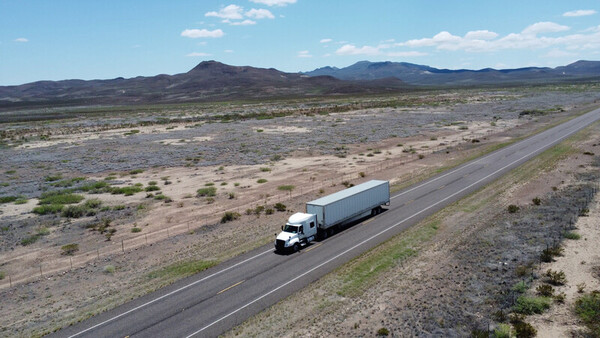
Mars Auto’s autonomous truck traversing the American continent. /Photo = Mars Auto
LG Innotek Partners with Autonomous Driving Software Firm ‘Applied Intuition’
LG Innotek announced on the 30th that it has signed a strategic partnership with Applied Intuition, a U.S. autonomous driving software company.
Applied Intuition’s core businesses are autonomous driving software and simulation tools. LG Innotek explained, “(Applied Intuition) is leading the physical artificial intelligence (AI) market,” adding that “it has secured 18 of the top 20 global automakers as clients.” It further added, “It is enhancing the completeness of its technology based on actual road driving data obtained by operating autonomous driving demonstration vehicles around the world.”
Autonomous driving startup Mars Auto crosses the US continent 3,379 km in 3 days… World’s longest record
Korean autonomous driving startup Mars Auto announced on the 31st that it has successfully completed a long-distance autonomous cargo transport covering a 3,379-kilometer (km) route from the Port of Long Beach in California, in the western United States, to Georgia in the eastern United States. This operation marks the world’s longest commercial autonomous transport route.
A 35-ton heavy truck equipped with Mars Auto’s autonomous driving system ‘MarsPilot’ departed from the Port of Long Beach, California, USA, fully loaded with semi-completed knockdown (CKD) automotive products for export. It then completed the long-distance route to Hyundai Mobis module plants in Alabama and Georgia in three days.
SWM & EDS Collaborate on Development of Physical AI-Based Autonomous Special Mobility Technology
SWM, an autonomous driving technology company, and EDS, a company specializing in special purpose vehicle modification, announced on the 1st that they signed a Memorandum of Understanding (MOU) on the 25th at the SWM headquarters for the “development of physical AI-based autonomous driving special mobility technology.”
This MOU was pursued with the aim of strengthening competitiveness in ‘Physical AI’-based autonomous special mobility by combining the technological capabilities and expertise of both companies. Both parties plan to expand the scope of cooperation beyond technological collaboration with the goal of joint commercialization and the creation of synergies.
VD Robotics and Korea Hokusho Collaborate on Autonomous Mobile Robot Logistics Automation
VD Robotics (CEO Ham Pan-sik) announced on the 3rd that it has signed a Memorandum of Understanding (MOU) with Korea Hokushō, a company specializing in logistics automation, for cooperation on logistics automation and smart projects based on autonomous mobile robots (AMR).
The purpose of this agreement is to combine the technological capabilities of both companies by having VD Robotics participate as a partner in the field of autonomous mobile robots in the automation and smartification project led by Korea Hokusho. Autonomous mobile robots are robots that carry goods while finding their own paths and avoiding obstacles in logistics and production sites.
The two companies agreed to cooperate in areas such as technical review, field application, and establishing operating models, starting from the initial planning stage of automation projects in industrial sectors including logistics, distribution, and manufacturing.
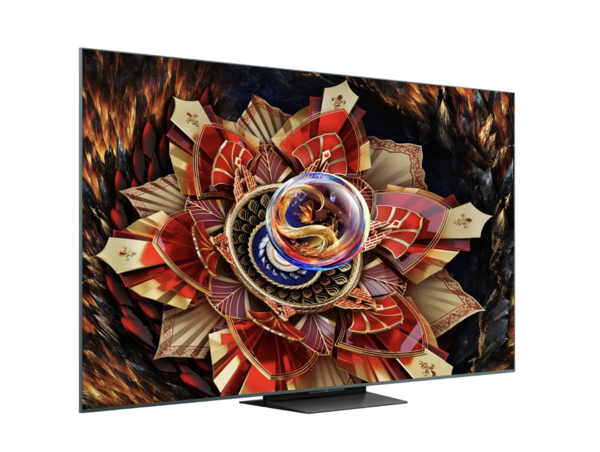
TCL’s QD MiniLED TV. /Photo=TCL
Mid-to-large OLED market projected to reach $20 billion by 2030… 14.8% annual growth
According to the ‘2026 Annual Report on Large and Medium-sized OLED Displays’ published by UBI Research on the 1st, revenue in the large and medium-sized OLED market is expected to grow at an annual average rate of 14.8%, from approximately $11.5 billion this year to approximately $20 billion in 2030.
While Liquid Crystal Displays (LCDs) still dominate the mid-to-large display market, the adoption of OLEDs is rapidly increasing due to growing demand for high resolution, high refresh rates, and high contrast ratios.
In particular, the monitor and automotive display markets are expected to establish themselves as key growth pillars.
TCL, Pressuring Samsung and LG TVs, Hits Record Earnings Again
TCL recorded annual revenue of HK$114.58 billion (approximately 22 trillion won) last year. This represents a 15.4% increase compared to the previous year. Gross profit also increased by 15.1% over the same period to HK$17.9 billion (approximately 3.45 trillion won).
TCL stated, “We have enhanced the profitability of our large display business through a mid-to-high-end strategy,” adding that it is “demonstrating market competitiveness in the premium display sector.”
According to market research firm Omdia, TCL ranked first in market share by shipment volume in the Mini LED TV market last year. It also ranked first in the markets for TVs 75 inches or larger and 98 inches.
S-Chem Secures New Research Base at Jecheon Natural Products Knowledge Industry Center
S-Chem, a company specializing in OLED synthesis and purification, announced on the 31st that it has established a new research base at the Jecheon Natural Products Knowledge Industry Center in North Chungcheong Province and is expanding its business in the fields of natural products and new materials.
According to the company, S-Chem plans to move into the Jecheon Natural Products Knowledge Industry Center located in the 2nd Bio Valley in Wangam-dong, Jecheon-si, North Chungcheong Province, to strengthen research on natural product-based materials and pursue business expansion into the field of new materials. S-Chem has secured a total of 1,570 square meters of space, including the 2nd and 5th floors of the center.
S-Chem plans to utilize two rooms on the second floor as a research base for natural products to promote research on natural product-based materials and the development of applied technologies, and to establish a laboratory and sublimation purification facility for the new materials business on the fifth floor.
Leave a Reply