

NVIDIA invests 29 trillion won to secure core AI chip technology for inference.
On the 24th (local time), Groc announced through its newsroom that it had signed a non-exclusive licensing agreement with NVIDIA for its inference technology. Key executives, including Groc’s co-founder and CEO Jonathan Ross and COO Sunny Madra, are also expected to join NVIDIA.
CNBC and other sources reported that Nvidia paid $20 billion (approximately 29 trillion won) in cash to secure Grok’s technology license and human resources. Founded in 2016, Grok is an AI semiconductor design startup that has focused on designing “language processing units (LPUs)” specialized in large language model (LLM) inference.
Huawei to Begin Selling AI Semiconductors in Korea Next Year
At ‘Huawei Day 2025’ held at The Plaza Hotel in Jung-gu, Seoul on the 26th, Huawei Korea announced its plan to make next year the first year of entering the Korean AI computing market.
“We will officially launch AI computing cards and data center solutions in Korea next year,” said Huawei Korea CEO Balian Wang. “Through this, we hope to provide Korean companies with a ‘second option’ other than Nvidia.”
The US postpones additional tariffs on Chinese semiconductors, maintaining the truce in the trade war.
On the 23rd (local time), the Office of the United States Trade Representative (USTR) published in the Official Gazette the results of its Section 301 investigation into China’s policies and practices to secure dominance in the semiconductor industry.
While the USTR concluded that a response, including tariffs, was necessary for Chinese semiconductors, its investigation determined that the immediate additional tariff rate would be 0%. Instead, it announced plans to increase the tariff rate starting 18 months later, on June 23, 2027, and announced that the specific increase would be disclosed at least 30 days prior to the tariffs’ implementation.
Fujitsu joins SoftBank in developing next-generation AI memory semiconductors.
According to the Nihon Keizai Shimbun (Nikkei) on the 26th, ‘PsyMemory’, established by SoftBank, will take on the role of command tower and oversee the development of high-performance memory that has a capacity 2-3 times larger than high-bandwidth memory (HBM), consumes about half the power, and is cheaper or at a similar price.
The goal is to invest approximately 8 billion yen in development by 2027, utilizing semiconductor technology from Intel and the University of Tokyo, to complete a prototype, and establish a system capable of mass production by 2029.
SoftBank will contribute approximately 3 billion yen through its investment in Cymemory, while Fujitsu and RIKEN will contribute a total of 1 billion yen. The Japanese government is expected to subsidize a portion of the development costs through programs such as the Next-Generation Semiconductor Development Support Project.
Hanmi Semiconductor records 71.2% market share in HBM TC bonders this year, becoming the world’s No. 1.
Hanmi Semiconductor announced on the 22nd that it recorded the highest market share this year in the global TC bonder market for HBM (high bandwidth memory).
According to the ‘HBM TC Bonder Market Report’ released by TechInsights, a global semiconductor market research firm, on the 19th (local time in the US), Hanmi Semiconductor recorded cumulative sales of $247.7 million (approximately KRW 366 billion) in the third quarter of this year, ranking first globally (market share of 71.2%).
The TC bonder is a key piece of equipment that precisely bonds memory chips under high temperature and pressure in the HBM manufacturing process.
SK Ecoplant Officially Appoints Semiconductor Expert Kim Young-sik as President and CEO
Kim Young-sik was officially appointed as the new CEO of SK Ecoplant on the 22nd. President Kim has been involved in semiconductor manufacturing for 35 years since joining Hynix in 1990. In 2017, he served as the head of photo technology at SK Hynix’s Manufacturing and Technology Division. In 2020, he was in charge of SK Hynix’s Icheon FAB, and in 2022, he was in charge of manufacturing and technology at SK Hynix.
Additionally, as SK Hynix’s Chief Product Officer (CPO) this year, President Kim contributed to establishing a mass production system for HBM and to SK Hynix’s leap forward as a leader in the global artificial intelligence (AI) memory market.
Qualitas Semiconductor to Supply 5nm Automotive Semiconductor IP
Qualitas Semiconductor announced on the 23rd that it has signed a contract to supply semiconductor design assets (IP) worth approximately 2.4 billion won with a domestic automotive semiconductor fabless company.
The company supplies a 5-nanometer (nm) process ultra-high-speed interface IP bundle solution including PCIe PHY IP to the automotive application processor (AP)-based system-on-chip (SoC) being developed by the customer.
Qualitas Semiconductor is a Samsung Foundry partner. It develops and supplies various IPs that fabless companies can use at Samsung Foundry.

CATL headquarters. /Photo = CATL
CATL to restart Korea’s largest lithium mine in February next year, drawing attention from the electric vehicle industry.
The world’s largest electric vehicle battery manufacturer, CATL, plans to restart its largest lithium mine in the country, the South China Morning Post (SCMP) reported on the 26th.
The SCMP reported that CATL is expected to receive approval from authorities to resume operations at its Jianshao mine in Yichun, Jiangxi province, around the Lunar New Year holiday in February next year.
Chaebi Selected as Seoul’s Electric Vehicle Rapid Charger Operator for Six Consecutive Years
Chaebi, the rapid charging infrastructure operator (CPO), announced on the 26th that it has been selected as the operator of the ‘2026 Seoul Metropolitan City Electric Vehicle Rapid Charging Facility Distribution, Installation, and Management Operation Private Sector Subsidy Project’ and will be responsible for building the rapid charging infrastructure in Seoul for the sixth consecutive year.
According to the company, Chaebi was the only company in the industry to receive a “very excellent” rating in a comprehensive evaluation. The Seoul Metropolitan Government manages operators based on a comprehensive evaluation of installation quality, operational stability, maintenance capabilities, and user satisfaction, and Chaebi received high marks in all categories.
Ford to scale back electric vehicle business and strengthen energy storage battery business with China’s CATL
According to Bloomberg News on the 25th (local time), Ford signed a lithium iron phosphate (LFP) technology licensing agreement with CATL as it expands its electric vehicle battery business in earnest in 2023.
Ford recently signed a two-year agreement to invest approximately $2 billion in the production of stationary energy storage batteries. The company will produce the batteries at its Kentucky plant, which it will now solely own and operate, following the liquidation of its joint venture with SK On, Blue Oval SK.
Taesung forms a technology alliance with major domestic battery companies and overseas companies for “composite copper foil batteries.”
Taesung, a company that manufactures equipment for composite copper foils for PCBs, glass substrates, and secondary batteries, announced on the 26th that it has signed a joint development agreement with a major domestic battery manufacturer, Company A, and an overseas battery company to develop high-performance battery technology equipped with composite copper foils for small mobility.
This agreement is a follow-up measure to the material supply contract with Company A last November, and the scope of cooperation has been upgraded beyond the simple supply of equipment and materials to the level of a “technology alliance” that includes the joint development of core manufacturing technologies.
SES AI and Top Material Jointly Develop Drone Battery
SES AI (hereinafter SES) and Top Material announced on the 23rd a collaborative plan to expand their battery cell manufacturing capacity for drones and urban air mobility (UAM) in Korea.
The two companies plan to collaborate primarily at SES’ Chungju, North Chungcheong Province, plant, established in 2021, to ensure that SES’s drone customers meet the country of origin and supply chain requirements of the U.S. National Defense Authorization Act (NDAA). The NDAA applies to contracts with U.S. federal agencies, recipients of federal grants and funding, and subcontractors of federal government contractors.
The two companies have currently entered into a non-binding agreement and aim to conclude the final contract in the first quarter of next year.
POSCO FutureM Signs Joint Venture Agreement with CNGR and Pino for LFP Cathode Materials
POSCO Future M announced on the 24th that it has signed a joint venture agreement (JVA) for lithium iron phosphate (LFP) cathode materials with CNGR and CNGR’s Korean subsidiary, Pino.
POSCO Future M established CNP Advanced Materials Technology, a joint venture with CNGR and Pino, last year to strengthen cooperation in the secondary battery materials business with CNGR and has been in discussions since then.
After holding a board meeting on the 15th and approving the plan to build an LFP cathode material plant through this joint venture, the company is accelerating its LFP cathode material business by completing the contract signing on the 23rd.
Nanosilicane establishes first-stage silicon anode material production facility… “NDA with three domestic battery companies”
Nanosilicane announced on the 22nd that it has recently entered into a non-disclosure agreement (NDA) with three major domestic battery cell manufacturers (global major companies) and entered into a practical collaboration phase.
The company stated, “This collaboration demonstrates that Nanosilicane’s technological capabilities meet global standards,” and added, “We are currently in discussions with three domestic companies to conduct sample testing as soon as possible.” They added, “The newly established mass production facility, with a capacity of 600 tons, is expected to be a significant milestone in securing a stable, large-scale supply.”

FutureLink, powered by Pony.ai technology, achieves 40,000 accident-free kilometers of Level 4 autonomous driving.
Futurelink, a mobility company specializing in autonomous driving, announced on the 23rd that it had achieved a cumulative 40,000 km of accident-free driving during day and night in domestic robotaxi test runs.
FutureLink leverages the core technology of Pony.ai, a global leader in autonomous driving. Pony.ai has accumulated tens of millions of kilometers of driving data in major cities around the world, and PonyLink, the domestic distributor of Pony.ai, is FutureLink’s parent company.
Cisco and HL Robotics Collaborate on Wireless Network Technology to Advance Self-Driving Parking Robots
Cisco announced on the 22nd that it signed a memorandum of understanding (MOU) with HL Robotics for wireless network technology collaboration for its autonomous parking robot, ‘Paki.’
Through this agreement, Cisco’s ultra-reliable, high-availability wireless backhaul solution, “CURWB,” has been officially adopted as Paki’s dedicated wireless communications standard. The two companies will collaborate to provide stable, high-quality services and lay the foundation for expanded commercialization.
Candy Optics Secures Pre-A Investment, Accelerating Mass Production of Autonomous Driving Optical Solutions
Candy Optics, a company specializing in autonomous driving mobility optical solutions, announced on the 24th that it has attracted pre-A investment from Gwangju United Technology Holdings, Chonnam National University Technology Holdings, Korea Angel Investment Association, Ensul Partners, Korea Credit Guarantee Fund, and JS Ventures.
Candy Optics is a total optical lens solutions company headquartered in Gwangju, with an R&D center and production facilities in Suwon, Gyeonggi Province. The company has established a one-stop system capable of performing all processes in-house, from optical lens design to development and manufacturing. The company develops and produces applied optical lenses for automotive, industrial, equipment, and smart mobility applications.
Waymo suspends San Francisco robotaxi service again amid Christmas storm warning
Waymo, the autonomous driving company under Google’s parent company Alphabet, suspended its robotaxi operations in San Francisco again on Christmas Day, the 25th (local time). This was due to a flash flood warning in effect.
Waymo announced today that it had temporarily suspended its autonomous ride-hailing service in the San Francisco Bay Area due to expected storms. The company’s driverless taxi app displayed a message stating, “Service temporarily suspended due to a National Weather Service flash flood warning.”
The outage comes just days after Waymo announced it would improve its vehicle systems to ensure robotaxis can operate more reliably during power outages.
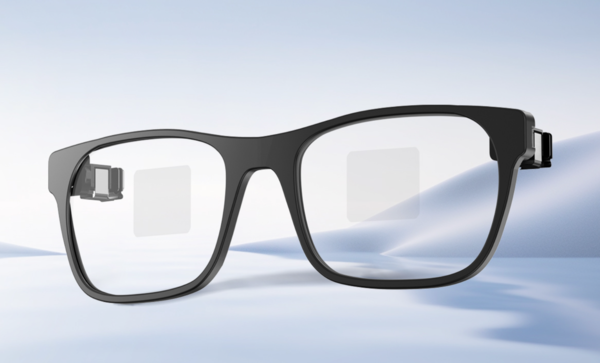
JBD’s ‘Hummingbird I’ smart glasses equipped with optical modules. /Photo = JBD
Sapien Semiconductor signs a 5.4 billion won contract with a global display company.
Sapien Semiconductor, which manufactures next-generation micro LED display driving ASICs, announced on the 25th that it has signed a contract with a global micro display solution company to develop and supply CMOS backplane products worth a total of 5.4 billion won.
This agreement marks the start of a new business venture, with a new global client and a joint development project for LEDoS (LED on Silicon) microdisplays, encompassing collaboration from product development through mass production. Through this partnership, both companies plan to actively explore product expansion and growth opportunities in the global AR smart glasses and microLED display markets.
The foldable iPhone’s external screen is smaller than the iPhone mini.
IT media outlet The Information reported on the 23rd (local time) that the external display size of the iPhone Fold, which unfolds like a book, will be only 5.3 inches. This is even smaller than the iPhone Mini (5.4 inches), which production was discontinued in 2022.
Content creator Ben Geskin created a mockup of the iPhone Fold based on the dimensions revealed by The Information and shared photos, giving us a glimpse into what the device will look and feel like in your hand.
Source: Kipost.net
Leave a Reply