

Texas Instruments, 80 trillion won investment in the US… Expansion of semiconductor facilities
TI announced on its website on the 19th that it would spend more than $60 billion (about 82 trillion won) to build and expand seven semiconductor manufacturing facilities in three locations in Texas and Utah.
TI said that this would create 60,000 jobs and that it was “the largest investment in U.S. history in the manufacturing of foundational semiconductors (which go into consumer electronics used in everyday life).”
TI had previously agreed to invest more than $18 billion (about 24 trillion won) in three semiconductor manufacturing facilities in Texas and Utah during the previous Joe Biden administration in December of last year and to receive $1.61 billion (about 2 trillion won) in subsidies under the Semiconductor Act.
Hanmi Semiconductor’s new plant to be dedicated to ‘hybrid bonder’
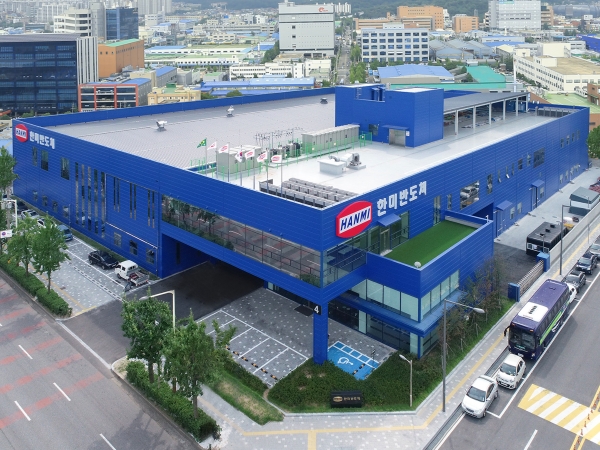
Hanmi Semiconductor announced on the 20th that it will invest 28.48 billion won to build a dedicated hybrid bonder plant in the Juan National Industrial Complex in Seo-gu, Incheon in August.
The company plans to complete construction of a factory on a 10,000-pyeong site by November next year and introduce production facilities to manufacture and supply hybrid bonders. The company previously spent about 30 billion won on purchasing the site.
Hybrid bonder is the manufacturing equipment required for high-layer HBM. It is expected to be used as essential equipment starting with the 20-layer product that will appear in HBM5. HBM is a product that improves data processing speed by vertically stacking DRAMs, and the higher the number of layers, the better the performance.
MS, AMD to Collaborate on Next-Generation Xbox Console Development… Joint Semiconductor Design
Microsoft’s gaming division Xbox has agreed to collaborate with AMD on the development of the next-generation Xbox console.
Sarah Bond, president of Microsoft Xbox, said on the 18th (Korean time) through the official YouTube channel, “We have signed a multi-year strategic agreement with AMD, and have decided to jointly design silicon (semiconductors) across a diverse portfolio of devices, including the next-generation Xbox console.”
DeepX-Hancom Academy “Edge AI Semiconductor Distribution Cooperation”
DeepX, an ultra-low-power on-device artificial intelligence (AI) semiconductor company, announced on the 20th that it has signed a strategic business agreement with Hancom Academy, an ICT education specialist, and will embark on a joint business including the distribution of DeepX’s products.
We are pursuing cooperation in various fields such as joint distribution and marketing of DeepX Edge AI semiconductors such as DX-M1 and DX-H1, planning technology-based education programs, product utilization seminars, and promotional activities.
In particular, we plan to establish a joint marketing and product supply system to widely spread DeepX’s latest AI chipset to the industrial and educational fields.
Chinese AI companies blocked from US semiconductors suspected of AI ‘expedition training’ in Malaysia
According to the Hong Kong-based English-language South China Morning Post (SCMP) on the 20th, the Malaysian Ministry of Trade, Industry and Energy mentioned in a statement released the previous day that Chinese corporate officials trained AI using servers equipped with AI development and operation semiconductors from the American semiconductor company Nvidia in Malaysia. The Ministry of Trade, Industry and Energy said that it was investigating the report and that it was “confirming with relevant agencies whether there were any violations of domestic laws or regulations.”
He continued, “While these acts may not clearly violate domestic law, we resolutely oppose any attempt to evade export controls or engage in illegal trade.”
Standard Energy and AI Semiconductor Company ‘Rebellion’ Develop Low-Power Data Center Model
Artificial intelligence (AI) semiconductor startup Rebellion and energy storage system (ESS) specialized startup Standard Energy announced on the 18th that they have signed a strategic agreement to jointly develop and commercialize energy solutions specialized for AI data centers.
The two companies plan to present the next-generation power model for AI data centers with high-efficiency, low-power AI semiconductors and ESS utilizing vanadium-ion batteries (VIB) that can produce high output without the risk of ignition. They have verified the technology, stability, and safety by configuring a system that links Rebellion’s NPU AI server rack equipped with the ‘Atom’ chip and Standard Energy’s VIB ESS to the power grid.
Data centers are equipped with uninterruptible power supplies (UPS) to protect against power outages. VIB ESS has also been confirmed to supply power within 0.003 seconds (3 ms).
Apalma Acquires FCCL Business Unit of Toray Advanced Materials
Private equity fund (PEF) management company Apalma Capital is acquiring Toray Advanced Materials’ FCCL (flexible copper clad laminate) division for approximately KRW 120 billion.
It is analyzed as part of a bolt-on (acquisition of a similar industry) following the acquisition of SK Nexilis’ thin film division last year. According to the investment banking (IB) industry on the 20th, Apalma Capital recently signed a stock purchase agreement (SPA) to acquire Toray Advanced Materials’ FCCL division. The acquisition price is approximately KRW 120 billion.
The competition authorities are currently reviewing the merger, and the transaction is expected to be completed as early as the third quarter of this year.

Some purchase subsidies suspended amid cutthroat competition in China’s electric vehicle industry
Reuters reported on the 18th that, based on an analysis of local government announcements, at least six local governments across China have suspended vehicle purchase subsidies this month.
According to Reuters, Zhengzhou and Luoyang in Henan Province announced that they had stopped paying subsidies because the first batch of support allocated by the central government had been exhausted. Shenyang and Chongqing also announced that they had stopped paying subsidies to improve financial efficiency. Xinjiang Uyghur Autonomous Region also stopped paying subsidies.
Lotte EVSIS Expands Global Electric Vehicle Charging Market
Lotte Innovation’s electric vehicle charging subsidiary EVSIS announced on the 17th that it is embarking on full-scale expansion into the global market with its self-developed PLC modem (power line communication) charger.
EVSIS has recently been exporting its self-developed PLC modem-based 240kW, 400kW ultra-fast chargers to the US market. The product is currently undergoing FCC certification, the US electromagnetic wave certification, and is expected to demonstrate differentiated technological prowess in the US market, where PLC modem-based chargers are not yet active.
GNT supplies electric vehicle converters to German companies
Auto parts manufacturer G&T announced on the 19th that it signed a 460 billion won electric vehicle converter contract with the German Pretl Group. The relationship that G&T formed with Pretl Group when it attended the World Korean Economic Conference held in Vienna, Austria in October of last year together with South Chungcheong Province has come to fruition.
GNT is a startup that manufactures electrical and electronic equipment for vehicles. It mainly produces converters for power conversion. The Pretl Group is a global automotive electronics company with annual sales of 4 trillion won and branches in 20 countries including Germany.
U+IT Registers Patent for AI-Based Electric Vehicle Charger Failure Prediction Technology
Uplus IT Co., Ltd. (CEO Sang-ha Kim) announced that it has registered a patent for a failure prediction technology using artificial intelligence (AI) in the electric vehicle charging infrastructure sector. The patent relates to a system and method that collects various status information of electric vehicle chargers in real time and predicts the timing and presence of failure through an AI model.
U+IT’s AI-based electric vehicle charging infrastructure integrated management solution is expected to minimize service downtime by detecting abnormal signs in chargers early, reduce maintenance costs, improve operational efficiency, and maximize profits for operators by minimizing operational manpower.
Chaebi, Ministry of Environment, Electric Vehicle Charging Facility Support Project Implementation Agency Selection
Chaebi, a rapid charging infrastructure operator (CPO), announced on the 16th that it has proven its public project reliability and market dominance by being selected as the project implementation agency for the Ministry of Environment’s electric vehicle rapid and slow charging facility support project for eight consecutive years.
According to the company, the Ministry of Environment’s electric vehicle charging facility subsidy project is a key government budget project for expanding public charging infrastructure. Participating companies are selected through a multi-faceted evaluation of various items such as management status, convenience of use, quality, and maintenance. This year’s subsidy project budget was set at a total of 618.8 billion won, and was focused on policy-oriented items such as expansion of smart control-type slow chargers and zero-emission vehicle conversion brand projects.
SK Nexilis Attracts 150 Billion Won in Investment from Toyota Tsusho… “Strengthening Partnership”
SKC announced on the 18th that it held an investment contract signing ceremony at its headquarters in Jung-gu, Seoul to transfer some of the shares of SK Nexilis Malaysia to Toyota Tsusho and attract an investment of approximately USD 110 million (KRW 150 billion).
Toyota Tsusho, a Japanese general trading company, is pursuing a business of procuring materials and parts for various products including automobiles, and has a global logistics network. Through this investment, the two companies are expected to solidify their strategic partnership. SK Nexilis plans to secure a stable operating base for the Malaysian plant and cooperate in securing additional customers.
IL, Accelerating the Commercialization of Small All-Solid-State Batteries for Humanoid Robots
IL announced on the 20th that it has produced samples ahead of mass production of high-stability cathode sheets for next-generation lithium metal battery pouch cells.
According to the company, IL has developed a protective layer technology that suppresses lithium dendrite formation based on its own surface treatment and deposition process technology and has also completed the application for an international patent (PCT). The technology is evaluated as a key element that can solve the biggest challenges of lithium metal anodes, which are the reduced lifespan and the risk of short circuits.
The cell using the actual lithium metal anode sheet of IL showed a lifespan of more than 300 cycles in coin cell-level self-tests, and also showed good cycle performance at a C-rate of 5C (5x charge/discharge speed within 1 hour), confirming the possibility of high-speed charging.

Amazon to start producing self-driving robotaxis
Amazon’s autonomous driving subsidiary Zoox announced on the 18th that it opened a robotaxi factory with an annual production capacity of 10,000 units in Hayward, California. Zoox plans to expand commercial services starting with San Francisco and Las Vegas in the future.
Zoox’s robotaxi is not a modified version of an existing car, but a fully autonomous vehicle designed with a gondola-style seating structure for four people facing each other without a steering wheel or pedals. “We are ready now,” Zoox CEO Aicha Evans said in a Bloomberg interview. “We will gradually increase production capacity and move toward commercialization.”
Google’s self-driving company Waymo’s robo-taxi is also operating in New York
On the 18th (local time), Waymo announced that it had submitted an application for a permit to the New York Department of Transportation to operate robo-taxi in New York. This is the first step toward operating robo-taxi in New York.
Waymo said it plans to launch a robo-taxi service in New York, but the exact timing of the launch has not been set. In addition, Waymo will operate the robo-taxi in New York with a trained professional in the driver’s seat. This is because New York State has laws that prohibit robo-taxi operations without a driver.
Son Jeong-ui to Promote $1 Trillion Robot Complex in the US
There are reports that SoftBank Chairman Son Jeong-ui is pushing for the creation of a $1 trillion (approximately 1,370 trillion won) artificial intelligence (AI) and robot industrial complex in Arizona, USA.
The project, codenamed “Project Crystal Land,” is intended to create a large-scale manufacturing hub in Arizona similar to Shenzhen, Guangdong Province, China, to attract advanced manufacturing, Bloomberg reported on the 20th, citing multiple anonymous sources. “AI-based industrial robot production lines could be included in the industrial complex,” the sources told Bloomberg.
HD Hyundai Samho Launches AI Robot Field Demonstration Training Center
HD Hyundai Samho announced on the 21st that it has opened and started full-scale operation of the ‘AI Robot Field Demonstration Training Center’ for improving automation and intelligence technology and fostering talent. A total of 1.67 billion won, including national funds such as the government’s support project for specialized complexes for root industries, was invested in the establishment of the center.
The center is an integrated space for total robot solutions encompassing robot development and verification, operator training, and maintenance. It is equipped with various collaborative robots, AI analysis equipment, and educational facilities, allowing for both theoretical and practical training.

Samsung D, 1st place in 2nd quarter foldable OLED shipment share thanks to ‘Galaxy effect’
According to market research firm UBI Research on the 20th, Samsung Display’s OLED shipments for foldable phones surged from 250,000 units in April to 1.78 million units in May and 1.53 million units in June, accounting for 52% of all foldable phone OLED shipments in the second quarter.
China’s BOE’s OLED shipments for foldable phones in the second quarter were 1.8 million units, while CSOT and Visionox recorded shipments of 900,000 and 500,000 units, respectively.
Samsung Display shipped only about 250,000 OLED panels for foldable phones in the first quarter, recording lower shipments than major Chinese panel makers such as BOE, CSOT, and Visionox. However, shipments increased rapidly as mass production of panels for the Galaxy Z Flip and Fold 7 series, which are scheduled to be released in the second half of the year, began in earnest in May.
Huawei Announces Upgrades to Next-Generation Trifold Phone
According to a comprehensive foreign news report on the 20th, Huawei plans to unveil its next-generation tripod phone, the Mate XT2, in September in the second half of this year. It is reported that the main specifications of this new product, such as the processor and camera, will be further strengthened.
Huawei previously introduced a new paradigm in the foldable market by introducing its first tri-fold phone, the Mate XT, in September last year.
As the first-generation Mate XT left some room for improvement in display durability despite its innovative structure, Huawei is expected to significantly improve durability in the next-generation model by introducing a new hinge structure and reinforced materials.
Source: kipost.net