

Korea Zinc develops rare earth mixture recovery technology… Transpiration of semiconductor sulfuric acid
Korea Zinc announced on the 18th that it is developing a technology to recover rare earth mixtures from waste motors and making efforts such as securing raw materials to produce them as rare earths that can be sold.
Korea Zinc conducted research on the development of rare earth technology centered on the Onsan Smelter Technology Research Institute and the technical team of the headquarters, and achieved this result in about three years.
Korea Zinc also announced that it plans to complete the expansion of Korea’s largest semiconductor sulfuric acid production line in the second half of the year to expand its annual production capacity to 320,000 tons.
Sim Platform Expands DB Hi-Tech’s Semiconductor Process AI Platform
Sim Platform, an industrial AX (artificial intelligence transformation) platform company, announced on the 19th that it will expand the application of the artificial intelligence (AI) platform applied to the semiconductor manufacturing process to the Sangwoo factory in cooperation with DB Hi-Tech, and begin process intelligence in earnest.
According to the company, this expanded application is based on the performance of the AI platform operating at the existing Bucheon plant, and the key is to advance the data-based operating system throughout the semiconductor manufacturing process. Sim Platform is continuing to cooperate with DB Hitech to expand the scope of AI use based on process data and improve the precision and stability of the process operation environment.
ADI Builds OSAT Advanced Plant in Thailand… Expanding Analog Semiconductor Production
ADI officially opened a high-tech manufacturing facility (B2) with an area of approximately 51,100 square meters in the Chonburi area of Thailand. Considering that the existing facility, B1, was about 18,580 square meters, the total facility is 3.75 times larger in terms of area.
This new facility will be linked to the existing factory and function as a global packaging and testing hub. The large-scale cleanroom and manufacturing space have been significantly increased to strengthen post-processing capabilities. It will mainly be operated with a focus on post-processing (OSAT) such as △wafer-level process △chip-scale packaging △final integrated circuit testing.
‘Helium shock’ masturbation… K Semiconductor pays close attention
As Iran attacked the Ras Rafan gas facility on Qatar’s northern coast on the 18th (local time), domestic industry is concerned that the airstrike will lead to a “long-term failure” of Qatar’s LNG supply chain. Lasraphan had already stopped LNG production from the 2nd of this month.
In particular, the helium production facility in Rasraphan has also been shut down, and the semiconductor industry is also closely monitoring the situation. This is because helium is an essential material used to remove refrigerants and impurities that control temperature in the semiconductor manufacturing process, and Qatar accounts for about 30% of the world’s supply. In particular, South Korea imported 65% of its total helium from Qatar last year, making it highly dependent on Qatar.
“Localization of ultra-high purity PM for semiconductor materials”… Established a 20,000-ton production plant
Ulsan-based high-tech fine chemical company K&JPM will establish a large-scale production facility in Ulsan to localize ultra-high purity cleaning agents for semiconductor and display processes.
On the 17th, Ulsan City signed a memorandum of understanding (MOU) for the establishment of a new ultra-high-purity PM (organic solvent combining propylene glycol and monomethyl ether) production plant in the presence of Ulsan Mayor Kim Doo-gyeom and K&JPM CEO Seo Seong-joon at the mayor’s office on the 7th floor of the main building of City Hall.
K&J PM will invest a total of 55 billion won to build a new ultra-high-purity PM production plant with an annual capacity of 20,000 tons on a 7,038㎡ site in the Onsan National Industrial Complex in Ulsan. Construction of the plant is scheduled to begin in June and be completed in May next year.
Miko succeeds in localizing silicon nitride ceramic powder
MiCo Co., Ltd. announced that it has established the first mass production system in Korea by localizing and developing ‘silicon nitride (Si₃N₄) powder’, a high-performance ceramic material that has been dependent on overseas companies such as Japan, and plans to expand production capacity (CAPA) through gradual expansion of facilities in the future.
Silicon nitride is known as a representative engineering ceramic material with high strength, heat resistance, and wear resistance, which is widely used in various high-tech industries such as semiconductor equipment parts, power semiconductor substrates for electric vehicles, heat dissipation materials, bearings, and aerospace structural parts.
Life Alliance launches new drug development with Furiosa AI and NPU-based AI
On the 13th, Life Research Institute signed a business agreement with the National Preclinical Trial Support Center and Furiosa AI to establish a research cooperation system for the development of new AI drugs based on neural network processing units (NPUs).
The core of the agreement is to actively utilize Furiosa AI’s second-generation NPU Renegade (RNGD), which has recently begun mass production, for digital AI cells (virtual cells) and digital bio platforms.
Kia President Song Ho-sung: “Launch 13 electric vehicle models in 2030”
Kia President Song Ho-seong said at the regular general meeting of shareholders held at Kia’s headquarters on the 20th, “By 2030, we will launch 13 electric vehicle (EV) models to strengthen EV competitiveness by improving EV marketability along with a lineup of electric vehicles that can meet various customer needs.”
President Song proposed three strategies for the era of ‘popularization of electric vehicles’, including ▲launching 13 electric vehicle models in 2030, ▲expanding charging infrastructure, and ▲diversifying production bases.
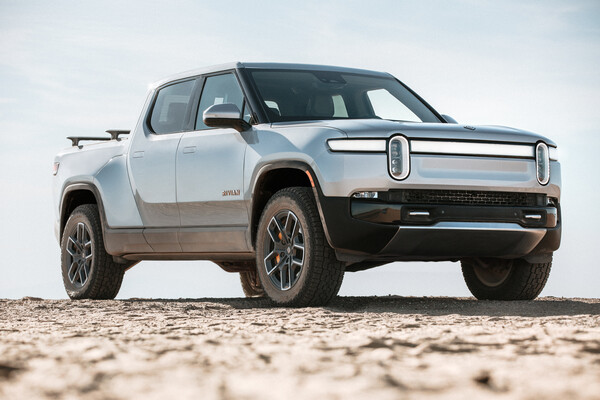
Uber invests up to 1.9 trillion won in electric vehicle Rivian
Uber, a ride-hailing service company, has agreed to invest up to $1.25 billion (approximately 1.9 trillion won) in U.S. electric vehicle manufacturer Rivian and purchase up to 50,000 self-driving vehicles, the Financial Times (FT) reported on the 19th (local time).
According to the FT, Uber said in a statement on the same day that it will initially invest $300 million (about 450 billion won) and expand its equity investment to up to $1.25 billion by 2031 if Rivian achieves its self-driving-related technology goals.
The deal includes 10,000 robotic (driverless) taxis in Rivian’s new R2 SUV version, with Uber and its vehicle partners having the option to purchase an additional 40,000 units starting in 2030, the FT said.
Polestar to install 400 electric vehicle chargers by 2030
Swedish premium electric vehicle brand Polestar announced on the 19th that it plans to install 40 electric vehicle chargers, ‘Polestar Charging Stations’, in 40 locations in Korea by 2030.
The main locations where charging stations are scheduled to be set up include The River Mall Gangdong, Yeongdeungpo Times Square, and Jongno Tower. Polestar explained that it selected these locations by analyzing customers’ vehicle usage patterns and charging frequency. Polestar plans to cooperate with Tmap Mobility and iParking to install chargers.
K battery over the barley pass, R&D investment increased
Last year, LG Energy Solution, Samsung SDI, SK On, and other companies had a total R&D expenditure of 3.0605 trillion won, an increase of about 15% from last year.
LG Energy Solution invested 1.3275 trillion won last year, an increase of 22% from a year ago, and Samsung SDI also invested 1.4209 trillion won in R&D last year, an increase of 9% from a year ago. SK Ondo also increased by more than 12% to 312.1 billion won.
LG Energy Solution is researching a new battery using sodium instead of lithium-ion batteries, which are a trend in the market. SK On is focusing on liquid immersion cooling technology.
Eugene Technology, battery washing and transfer equipment supply contract
Eugene Technology, a company specializing in precision molds and automation equipment for secondary batteries, announced on the 18th that it has signed a contract with Company S, a large domestic battery manufacturer, to supply battery washing and transfer equipment.
Apart from this contract, the company explained that quotation proposals and technical consultations are underway for multiple equipment projects. In addition, equipment project consultations are continuing with various global industry customers in addition to battery manufacturers, and the equipment business portfolio is expected to expand.
Choi Joo-seon, president of Samsung SDI, “Goal of turning a profit in the second half of the year… Securing mid- to long-term growth momentum”
Samsung SDI President Choi Joo-sun said at the ’56th Regular General Meeting of Shareholders’ held at the Eliena Hotel in Gangnam-gu, Seoul on the 18th, “The global battery market will accelerate its growth starting this year due to the expansion of front-line industries such as the AI field.”
President Choi, chairman of the shareholders’ meeting, said, “We will focus not only on improving short-term performance but also on securing a foundation for medium- to long-term growth,” and introduced major promotion strategies for each business, such as the preparation of lithium iron phosphate (LFP) and mid-nickel (Mid-Ni) products, the development of ultra-high-power and ultra-lightweight small batteries, and the development of semiconductor packaging materials and OLED materials.
SK On· Following SKIET, SKC also voluntarily retired… Aftermath of the battery recession
SKC will accept applications for voluntary retirement for all employees for more than one year from the 16th to the 20th. The applicant was informed that 50% of his annual salary would be paid as a consolation money.
SKC will implement voluntary retirement for the first time in 10 years since 2016. It is analyzed that the company has started to reduce its workforce as its financial health deteriorates, such as recording an annual operating loss of more than 200 billion won since 2023. In particular, among the main businesses, the petrochemical and battery material copper foil business continues to be sluggish.
Kakao Mobility accelerates the transition to ‘physical AI’… Recruitment of 4 key autonomous driving R&D talents
Kakao Mobility announced on the 20th that it has established a new ‘Physical AI’ tab on its recruitment page and has started hiring experienced positions for the four core jobs of the autonomous driving system.
This recruitment is based on hardware, electrical and electronic equipment (HW· E/E) to software (AI· SLAM), and is aimed at experts with more than 5 years of experience.
Motional, Uber and Pilot Service Started
Hyundai Motor Group’s autonomous driving joint venture, Motional, announced on the 15th that it will launch a robotaxi pilot service using the IONIQ 5 robotaxi with Uber in Las Vegas, USA.
The operating areas include designated hotels around Las Vegas Boulevard, such as ‘Resort World Las Vegas’, downtown, and the Town Square business district. Motional plans to continue to expand the areas where it can be used in the future.
The Motional Ioniq 5 robotaxis will be automatically dispatched when the route of the customer who called a ride through the Uber app is included in the service operation area.
Hyundai Motor Company’s autonomous driving command tower Park Min-woo creates an SDV strengthening organization
Park Min-woo, general manager (president) of Hyundai Motor Group’s Advanced Vehicle Platform (AVP) and CEO of Fortytwodot, decided to form a so-called ‘regression test organization’ on the 19th to internalize technologies such as autonomous driving and software-centric vehicles (SDVs) into the group. He also expressed his ambition to advance future mobility technology and not fall behind the United States and China, which are leading autonomous driving technology.
Park, a former engineer who oversaw autonomous driving development at Tesla and Nvidia, announced the plan at a town hall meeting held at the Namyang Research Institute, the R&D headquarters of Hyundai Motor and Kia, saying, “I think Hyundai Motor Group can play the most important role in the era of physical artificial intelligence (AI).”
Hyundai E&C, robot· Building a ‘smart residential complex’ combined with AI… Hyundai Motor and Kia Cooperation
Hyundai E&C announced on the 18th that it had signed a memorandum of understanding for cooperation in the advancement of service robot-based residential complexes on the 19th.
The agreement was signed with Hyundai Motor Company, Kia Robotics Lab, and Suprema, a company specializing in artificial intelligence (AI)-based integrated security solutions. This is to jointly develop a new housing model that combines robot-based living services and security management systems.
Hyundai E&C is promoting the introduction of robot services in apartment complexes. It is necessary to establish a stable linkage and communication system with major facilities such as security gates, automatic doors, and elevators.
Amazon acquires delivery robot startup… 150 trillion won AI manufacturing fund promotion
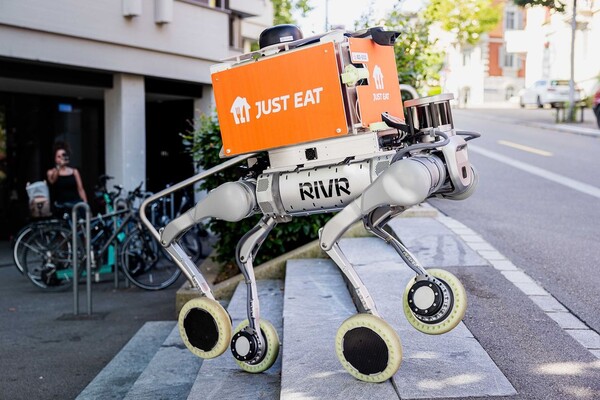
Amazon has acquired ‘River’, a robot startup headquartered in Zurich, Switzerland, The Information reported on the 19th (local time).
Amazon recently announced that it will be able to test the integration of robot technology into its delivery operations by informing contractors in charge of last-mile delivery.
River’s robot is characterized by its ability to move around distances and climb stairs using four legs and wheels. Last year, some startups conducted pilot deliveries using River’s robots.
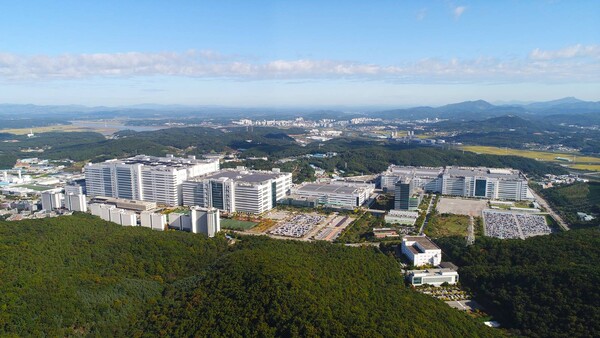
LG Display Paju Plant./Photo=LG Display
출처 : KIPOST(키포스트)(https://www.kipost.net)
Solus Advanced Materials, Iksan OLED material factory completed
On the 18th, Solus Advanced Materials announced on the 19th that it held a completion ceremony for the Hamyeol OLED factory in Hamyeol, Iksan City, Jeollabuk-do, attended by key executives and employees, including Solus Advanced Materials President Kim Tae-hyung, Jeollabuk-do Vice Governor Kim Jong-hoon, and Iksan Mayor Jeong Heon-yul.
The Hamyeol plant is a new production base created through the relocation and expansion of the existing Iksan plant, and will serve as a base for the integrated production of OLED light-emitting materials (organic materials) and non-light-emitting materials (polymer materials). It was built on a site of about 19,969 square meters (6,050 pyeong) in the Hamyeol Agricultural and Industrial Complex in Iksan City, Jeollabuk-do, and consists of a utility building, a synthetic building, a refining building, and an office building.
The OLED monitor market is growing ‘alone’… Samsung· LGD Captures the Early Market
The global organic light-emitting diode (OLED) monitor market is rapidly growing this year following last year. Although the overall monitor market growth is slowing down, only the OLED field is expected to grow rapidly.
Ubi Research predicts that OLED monitor shipments last year were about 3.2 million units based on panels, an increase of 64% compared to 2024 (1.95 million units), and will grow by more than 50% this year as well. AVC Revo, a Chinese market research company, predicts a growth rate of 63% from 3.3 million units last year to 5.4 million units this year.
LGD “Last year’s large OLED first operating surplus”
At the 41st Annual General Meeting of Shareholders held at its headquarters in Paju, Gyeonggi on the 19th, LG Display said, “Last year, the large-scale OLED business recorded a single-digit operating profit margin unlike in the past,” and “cost improvement and volume expansion were the main reasons.” He added, “This year’s goal is to match or exceed last year’s level.”
Although LG Display did not announce it on the same day, the depreciation of the OLED factory in Guangzhou, China, will end between the second and third quarters of this year. The production capacity of the Guangzhou plant was 8.5 generations of glass discs, and the depreciation of 60,000 out of 90,000 per month ended in July last year. The remaining 30,000 monthly depreciations will be completed this year. The depreciation of the Paju OLED factory has already ended.
Leave a Reply