

A gang was arrested for attempting to leak SK N Pulse’s core semiconductor technology to China.
The Gyeonggi Southern Provincial Police Agency’s Industrial Technology Security Investigation Unit announced on the 26th that it had indicted three people, including Mr. A (50s), without detention on charges of violating the Industrial Technology Protection Act.
Person A, who previously worked at SK N Pulse, is accused of stealing data on the “blank mask,” a core technology in SK N Pulse’s semiconductor wafer manufacturing process, after leaving the company last year and attempting to pass it on to China.
The two people who conspired with Mr. A also had a history of working at SK Npulse, and it was revealed that they participated in the crime to help Mr. A establish a semiconductor company in China.
Samyang Corporation and Sepratechn have partnered on a degassing membrane business for ultrapure semiconductor water.
Samyang Corporation (145990) announced on the 26th that it had signed a business agreement with Sepratech on the 25th for cooperation in the MDG (Micro-Dry Gas Degassing) business for semiconductor ultra-pure water.
A degassing membrane is a device that removes dissolved gases, such as oxygen, nitrogen, and carbon dioxide, that are dissolved in water but invisible to the naked eye. Ultrapure water, an essential ingredient in semiconductor production, must undergo a degassing process to drastically reduce dissolved gas concentrations, as even minute ions or gases can cause defects.
Sepratech is the only domestic company specializing in degassing membranes that has developed a degassing membrane module for industrial semiconductor ultrapure water. Through a specially manufactured membrane, dissolved oxygen in ultrapure water can be removed to less than 1 ppb (one part per billion).
Doosan and Swedish semiconductor powerhouse Sievers are developing next-generation satellite communications technology.
Sibus and Doosan Electronics Business Group (BG) recently signed a development contract worth $1.5 million (approximately 2 billion won). Under the agreement, the two companies will jointly develop a Ka-band (26.5-40 GHz frequency band) electronic beam steering antenna (ESA) panel.
In this process, Doosan will manufacture antenna panels and verify the system using advanced materials and precision manufacturing technology. Sibus will provide next-generation radio frequency chips featuring high-output and low-noise characteristics.
CMTX signs MOU to expand semiconductor silicon plant, investing 36.3 billion won.
Gyeongbuk Province and Gumi City signed a memorandum of understanding for investment worth 36.3 billion won with CMTX Co., Ltd. on the 25th.
CMTX Co., Ltd. plans to expand its facilities and factory for the production of core semiconductor process consumable components, such as silicon electrodes and silicon rings, on a 11,000-pyeong site within the Gumi National Industrial Complex No. 5. Previously, in 2023, CMTX invested 37.4 billion won in Gumi, the only “semiconductor specialized complex” outside the metropolitan area, to expand facilities.
SoftBank acquires US fabless company for $8.5 billion, aiming to strengthen its Arm design capabilities.
SoftBank Group, led by Chairman Son Jeong-ui, announced on the 26th that it has completed the acquisition of American semiconductor design company Ampere Computing for $6.5 billion (approximately 9.5 trillion won), making it a wholly owned subsidiary.
SoftBank Group announced in a press release on the same day, “We have acquired all of Ampere’s shares through our subsidiary SB6,” and “Through strategic collaboration, Ampere can integrate its expertise in chip development, etc., by complementing the design capabilities of Arm Holdings, an existing group subsidiary in the UK.”
Semi AI, a company focused on increasing semiconductor yields, secures investment from Kakao Ventures.
Semiconductor AI startup Semi AI announced on the 26th that it has secured seed investment from Kakao Ventures. Semi AI is developing “SMILE,” an AI-based software that helps improve semiconductor yields.
Through the creation of virtual fab data, a core technology, sensor, equipment, and wafer data generated throughout the entire semiconductor process are verified in a virtual environment. This allows for a comprehensive understanding of past, present, and future defects occurring in the actual semiconductor process, and fundamentally improves yield by interpreting causal relationships between semiconductors.
Nota Signs Physical AI Technology Collaboration Agreement with Telechips
Nota announced on the 24th that it has signed a contract with Telechips, a fabless automotive semiconductor company, for collaboration on physical AI technology.
Through this collaboration, Nota will apply lightweight and optimized technologies to ensure that AI models for facial recognition run efficiently within Telechips’ Dolphin 5 AP environment. Nota is focusing on optimizing AI models for facial recognition to fit the Dolphin 5 NPU architecture, enabling fast and stable recognition even in limited computing environments.

CATL’s skateboard chassis ‘Bedrock’. /Photo = CATL
Solus Advanced Materials Secures Supply Chain Stabilization Fund for Canadian Battery Foil Plant
Solus Advanced Materials announced on the 28th that it plans to receive approximately $140 million (approximately KRW 248 billion) in supply chain stabilization funds starting at the end of this year for the construction of a battery foil production facility currently underway in Quebec, Canada.
The Supply Chain Stabilization Fund is a government-wide policy fund established to address global supply chain risks. Pursuant to the “Framework Act on Supply Chain Stabilization Support for Economic Security,” it supports the stable securing of overseas procurement capabilities and production bases for key products. Launched in the second half of 2024, the fund aims to strengthen supply chains for key national industries, including secondary batteries, automobiles, and semiconductors, and foster new industries. It will be managed by the Export-Import Bank of Korea.
Hyundai Motor Group to Launch ‘V2G’ Service, Connecting Electric Vehicles to the Power Grid
Hyundai Motor Group announced on the 28th that as part of the ‘Business Agreement for the Creation of a Green Hydrogen and Distributed Energy Ecosystem’ signed with Jeju Island in September, it will begin recruiting service participants in early December and launch a V2G pilot service in Jeju Island at the end of December.
V2G is a technology that not only charges electric vehicle batteries through dedicated bidirectional chargers, but also supplies power from the electric vehicle to the power grid, utilizing the electric vehicle as a power storage device.
EcoPro Begins Mass Production of High-Voltage Mid-Nickel
EcoPro announced that it has recently completed technology verification and is now building a production line for HVM (High Voltage Mid Nickel) to meet the demand for lower cathode material prices from automotive OEMs.
Mid-nickel cathode materials, unlike high-nickel materials (with a nickel content of 90% or more) used in high-capacity electric vehicle batteries, have a nickel content of around 60%. Nickel, the main raw material for ternary cathode materials, accounts for around 70% of the cost, so lowering the nickel content could lower cathode material prices.
“1.5 trillion won worth of electrolyte supply to CATL”… Will Enchem’s ‘big deal’ come to fruition?
According to battery industry sources on the 27th, Enchem is reportedly close to signing a contract to supply 70,000 tons of electrolyte annually to a global battery company, presumed to be CATL. Enchem stated, “We cannot confirm the contract subject.”
The supply period is 2026-2030, with a total supply of 350,000 tons. The total order value is expected to reach 1.5 trillion won. Electrolyte is a key material in secondary batteries, acting as a medium that facilitates the smooth movement of lithium ions between the anode and cathode.
Lithium prices are beginning to rebound, and cathode material companies are expected to see improved profitability.
Hana Securities analyzed on the 24th, “Lithium prices are believed to have entered the initial stages of a gradual rebound,” and “the profitability of cathode material companies will improve.”
Kim Hyun-soo, a researcher at the securities firm, said, “If we look at the current lithium price forecasts for next year from market research firms, major companies, and global investment banks, they are at the range of $9 to $25 per kg.” He added, “Goldman Sachs has projected an average annual price of lithium carbonate at $8.90, which is at the bottom, while major companies such as POSCO Holdings and Albemarle are suggesting prices around $15.”
Hyundai Motor to halt electric vehicle production again next month due to declining demand
Hyundai Motor Company will temporarily halt its electric vehicle production line at its Ulsan plant next month. This marks the tenth shutdown this year due to stagnant demand for electric vehicles. The assessment is that the company is once again scaling back production as demand for electric vehicles declines due to the depletion of domestic electric vehicle subsidies.
The expansion of electric vehicle production in the United States also contributed to the decline in domestic electric vehicle production.
Siri Energy, a cathode materials company founded in a lab, wins the Edison Award.
The Korea Institute for Advancement of Technology (KIST) announced on the 26th that Siree Energy, a cathode materials company, won the Edison Award, considered the most prestigious invention award in the United States. Siree Energy is developing a next-generation lithium metal cathode material with high capacity, stability, and long lifespan.
CEO Jeong Gyeong-jin, who completed his doctoral course in the Department of New Materials Engineering at Chungnam National University, founded the company through laboratory startup support and is currently working on commercializing secondary battery materials through his participation in Texcore in 2022.

Lotte Innovation files trademark application for autonomous shuttle brand “MUVU.”
Lotte Innovation announced on the 28th that it had applied for a trademark for its autonomous shuttle brand, “MUVU.” The company explained that it selected a brand name that is both intuitive and globally applicable.
Lotte Innovation added that for the brand design, it was inspired by the roads on which autonomous vehicles drive and the routes of shuttle buses, and visualized various mobility services being connected to daily life in a curved shape.
Kia becomes the first Korean company to successfully drive a vehicle on public roads without a driver, ensuring safety.
On the 27th, Kia held a ‘Remote Driving Demonstration Results Sharing Meeting’ in Jeju Island with the attendance of key officials including Kia, Socar, autonomous driving startup SUM, KT, the Ministry of Land, Infrastructure and Transport, Jeju Special Self-Governing Province, the National Police Agency, and the Korea Transportation Safety Authority, and disclosed the current status of remote driving technology development.
Remote driving is a technology that allows driverless vehicles to be operated and controlled from an external control center using 4G or 5G wireless networks. The technology’s high level of sophistication allows for rapid service introduction and offers the potential for use as an alternative technology in the event of a breakdown or malfunction in autonomous vehicles.
TYM and Samsung C&T’s Resort Division Begin Full-Scale Development of a Self-Driving Lawn Mower
TYM announced on the 27th that it signed a final contract with Samsung C&T’s Resort Division for the development of an “autonomous mower” at Anseong Benest Golf Course in Anseong, Gyeonggi Province, on the 26th. This marks the beginning of the actual development phase, approximately eight months after the signing of a memorandum of understanding (MOU) in March.
This collaboration is the result of both companies’ strategic goals aligned to commercialize an autonomous turf management solution specifically tailored to golf course operating environments. Around ten officials, including Jang Han-ki, CTO of TYM’s Central Technology Research Center, and Kim Sung-min, Head of the Golf Business Team at Samsung C&T’s Resort Division, attended the event to discuss development directions.
California Significantly Expands Waymo’s Self-Driving License Areas
According to the California Department of Motor Vehicles (DMV) website on the 23rd (local time), California expanded the area where Waymo’s autonomous driving was permitted, which was previously limited to San Francisco and Silicon Valley, to the entire Bay Area, including the state capital, Sacramento, and the northern part of the state.
California also expanded its autonomous driving permit area in Southern California from around Los Angeles to San Diego, the southernmost part of the state.
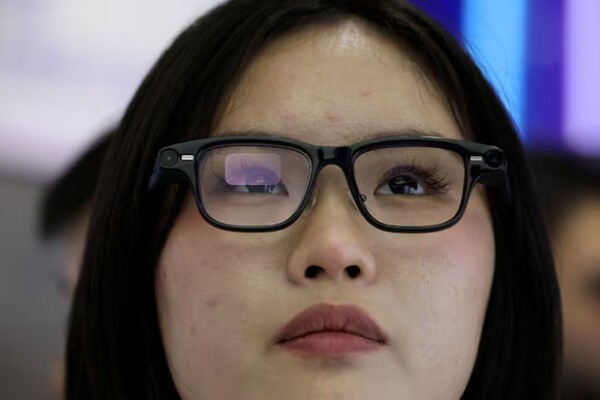
Alibaba Launches AI Glasses, Featuring a Removable Battery
Foreign media outlets, including CNBC and The Verge, reported on the 27th (local time) that China’s Alibaba has entered the AI-based smart glasses market by launching AI-powered smart glasses called ‘Quark’.
First unveiled in July, Quark AI Glass comes in two models: the S1 and the G1. The flagship S1 model is priced at 3,799 yuan (approximately 780,000 won), while the lifestyle-focused G1 model is priced at 1,899 yuan (approximately 390,000 won).
Both products feature a bone conduction microphone, a built-in camera, and a replaceable dual battery system that provides up to 24 hours of battery life.
The OLED-equipped iPad mini will be released in the second half of next year.
Foreign media outlets, including Apple Insider, cited IT tipster Instant Digital on the 26th (local time) and reported that the next iPad mini will be the first model to feature OLED, other than the iPad Pro.
Instant Digital predicted that the OLED iPad mini would be released “as early as the third or fourth quarter of next year.” The outlet added that there are no signs yet of Apple adding OLED to the iPad Air.
South Korea widens its lead over China in smartphone OLED production
According to market research firm Omdia on the 27th, Korean companies’ market share in the small and medium-sized OLED market for smartphones (including smartwatches) reached 63.4% in the first three quarters of this year, up 1.3 percentage points (P) from the same period last year. Samsung Display and LG Display’s market shares were 45% and 18.3%, respectively.
The market share gap between Korean and Chinese companies has widened again, driven by the strong performance of Korean companies. The gap between Korean and Chinese companies, which stood at 43.2 percentage points in the first three quarters of 2023, narrowed to 23.8 percentage points last year, but widened to 27 percentage points this year.
Source: Kipost.net
Leave a Reply