

Google Expands Capital Increase from 123 Trillion Won to 130 Trillion Won… Reflecting Strong Demand
Google’s parent company, Alphabet, increased the size of its paid-in capital increase to expand investment in artificial intelligence (AI) infrastructure from $80 billion (approx. 123 trillion won) to $85 billion (approx. 130 trillion won).
The Financial Times (Ft) reported that Alphabet expects the size of its capital increase to reach $84.75 billion, including the sale of Class A and Class C common shares and $10 billion allocated to Berkshire Hathaway, in a filing submitted on the 3rd (local time).
Speculation is emerging that if Alphabet succeeds in its paid-in capital increase, its big tech competitors will follow suit.
Meta Delays Launch of AI Model Developer Tool… “Monetization Setbacks”
Meta has repeatedly postponed plans to release developer tools for its AI model ‘Muse Spark,’ which was launched in early April, and has not yet set a specific schedule, the U.S. daily Wall Street Journal (WSJ) reported on the 4th (local time), citing multiple sources.
To utilize non-open (open source) AI models, developers must use API (Application Programming Interface) tools that enable communication with other programs, unlike ‘chatbots’ aimed at general users.
AI model development companies provide such API tools and generate revenue by measuring the number of tokens used by developers and charging them.
Broadcom AI Outlook ‘Disappointing’
U.S. semiconductor stocks plummeted as Broadcom failed to meet market expectations for artificial intelligence (AI) revenue forecasts, and the repercussions spread across Asian tech stocks.
According to CNBC on the 4th (local time), Tokyo Electron and Advantest fell by more than 6% and 5%, respectively, on the Japanese stock market. Electronic component manufacturer Murata Manufacturing dropped 4.8%, and industrial robot manufacturer Fanuc fell 4.1%.
Broadcom CEO Hock Tan stated last March that he expected AI semiconductor revenue to significantly exceed $100 billion by 2027, but he merely repeated the same forecast in this earnings announcement.
Green Resource Issues 30 Billion Won Worth of CBs and BWs… Expanding Semiconductor and Eco-friendly New Businesses
Green Resource, a company specializing in ultra-high-density coating for semiconductor process equipment, announced on the 4th that it has decided to issue convertible bonds (CB) and bonds with warrants (BW) worth a total of 30 billion won. The company aims to invest in expanding its new semiconductor and eco-friendly businesses through this issuance.
According to the company, Green Resources plans to use the funds raised to respond to new global semiconductor projects, provide operating funds for purchasing eco-friendly energy raw materials, and expand the production capacity of its subsidiaries, with the goal of completing a comprehensive semiconductor value chain.
LG Innotek Launches First Semiconductor Substrate Factory in Vietnam… “3 Trillion Won in Revenue Within 4 Years”
LG Innotek is building its first semiconductor substrate factory in Vietnam. Through the diversification of production sites, following its factory in Gumi, North Gyeongsang Province, the company plans to grow its package solution business to a scale of over 3 trillion won in revenue by 2030.
On the 4th, LG Innotek signed a Memorandum of Understanding (MOU) with Hai Phong City, Vietnam, regarding investment in the expansion of a semiconductor substrate factory at LG Science Park in Magok, Seoul.
Foxconn Forms AI Infrastructure Alliance with Intel… “Joint Development of Next-Generation Systems”
According to Reuters and other sources, Foxconn announced in a statement on the 4th (local time) that it is embarking on the development of next-generation AI systems targeting the surging demand for AI computing, based on strategic cooperation with Intel.
Foxconn explained that this collaboration focuses on combining Intel’s semiconductor technology with its own manufacturing and system building capabilities.
The two companies plan to jointly develop server equipment for AI data centers by utilizing Intel’s Xeon processors and AI semiconductors. In particular, they will jointly advance the technology for building server racks for data centers that operate multiple AI servers together.
SoftBank Surpasses Toyota for First Place in Market Cap After 22 Years
On the 1st, SoftBank Group (SBG) surpassed Toyota in market capitalization to reach its highest level in Japan. Toyota has relinquished the top spot for market capitalization for the first time in about 22 years. This is being interpreted as a sign that the era of manufacturing led by the automotive industry in Japan is coming to an end, and the era of the software industry centered on artificial intelligence (AI) is dawning.
On the 1st, SBG’s share price in the Tokyo stock market rose 15% from the previous weekend to 8,626 yen, setting a new all-time high. Its market capitalization surpassed 49 trillion yen, overtaking Toyota.
China’s DeepSeak Seeks to Raise 50 Billion Yuan from CATL and Tencent
Reuters and CaiLian reported on the 3rd that Chinese artificial intelligence (AI) startup DeepSeek plans to raise 50 billion yuan in funding from Chinese big tech company Tencent and battery giant CATL.
Citing anonymous sources, Reuters reported that DeepSeak founder Wenpeng Liang is discussing an investment of 20 billion yuan from his personal funds, while Tencent is discussing 10 billion yuan and CATL 5 billion yuan. If this investment is finalized, Tencent and CATL will become DeepSeak’s largest external investors. Furthermore, DeepSeak’s corporate value is projected to reach 350 billion to 400 billion yuan.
IL Secures Key Patents for Lithium Metal Solid-State Batteries
IL announced on the 2nd that it has completed the domestic patent registration for its lithium metal anode-based all-solid-state battery manufacturing technology and has also completed the PCT (Patent Cooperation Treaty) international application process to secure overseas rights.
This patent relates to ‘a three-dimensional (3D) current collector and lithium anode structure with selective surface treatment and all-solid-state battery manufacturing technology,’ and focuses on controlling the formation of lithium dendrites, which have been cited as a key challenge in the commercialization process of next-generation lithium metal batteries.
L&F’s ‘LFP Cathode Material’ Subsidiary Confirmed to Receive 220 Billion Won in Support from National Growth Fund
L&F announced on the 4th that its subsidiary, L&F Plus, was finally selected by the National Growth Fund Management Deliberation Committee to receive 220 billion won in long-term, low-interest loan support.
This support from the National Growth Fund is intended for the construction of Korea’s first and largest dedicated lithium iron phosphate (LFP) cathode material plant. L&F Plus is a subsidiary established by L&F for the production of LFP cathode materials.
With this selection, L&F Plus will be provided with a total of 220 billion won in funds, including 170 billion won from the Advanced Strategic Industry Fund, in the form of a long-term, low-interest loan with a 12-year maturity.
Korea Paper “Expands New Nanocellulose Business”
Korea Paper announced on the 4th that it will participate in ‘2026 Nano Korea,’ which will be held at KINTEX in Goyang, Gyeonggi Province from July 8 to 10, and showcase new nanocellulose-based technologies and eco-friendly materials.
The company has been pursuing research and development of nanocellulose since 2018. Currently, it is expanding the scope of application to various high-performance material fields, such as special coating additives, cellulose composites, secondary battery materials, and electromagnetic shielding sheets.
Nanocellulose is a material produced by processing cellulose fibers, the raw material for paper, into nanometer scales, characterized by its ability to achieve dispersibility, viscosity control, film formation, and reinforcement effects.
BYD Overtakes Toyota and Honda in Korea Sales
It was found that Chinese electric vehicle manufacturer BYD sold more cars in the Korean market last April than Japanese automakers such as Toyota, Lexus, and Honda.
According to the Korea Automobile Importers & Distributors Association (KAIDA) on the 1st, 2,023 Chinese cars were sold in Korea in April, surpassing Japan (1,974 units) for the first time. This ranks third, following Europe (16,385 units) and the United States (13,611 units).
All Chinese cars sold domestically in April were BYD vehicles. By brand, this is double the level of Lexus (1,079 units). The gap with BYD has widened for Toyota (829 units) and Honda (66 units).
Amazon Invests 18 Trillion Won in Europe… Automating Warehouses with Conversational AI Robots
Reuters reported that Amazon held the ‘Delivering the Future’ event at its Dartford logistics center in east London, UK, on the 4th (local time) and unveiled its next-generation ‘Proteus’ robot.
The existing Proteus was limited to transporting carts weighing up to 400 kg and was operated only in unloading areas within logistics centers. It is currently deployed at 25 logistics hubs in the United States.
The next-generation Proteus has expanded its operational scope to cover the entire warehouse. In addition to unloading areas, it is deployed throughout the logistics center for tasks such as container transfer and supporting movement between workstations. Notably, the robot independently determines priorities, routes, and timing when employees issue instructions in everyday language, without the need for technical commands.
NC AI Supplies AI Brains for Autonomous Welding Robots on Hanwha Ocean Merchant Ships
NC AI announced on the 4th that it has won the project from Hanwha Ocean, “Development of Vision Recognition-Based Welding Model and Collaborative Robot-Based Autonomous Welding Model,” and has established a collaboration system between the two companies.
This project was established to integrate advanced AI vision recognition and precision robot control technology into welding operations that previously relied on the know-how of skilled workers. NC AI and Hanwha Ocean aim to realize an ‘Autonomous Welding Physical AI Solution’ that goes beyond the limitations of existing automation, which simply repeats a fixed trajectory, enabling robots to independently recognize and determine the welding area to perform the welding.
With the winning of this project, NC has expanded its physical AI business into the shipbuilding sector, following the defense sector.
IL Launches Industrial Autonomous Quadruped Robot ‘ILBot L1 Max’
IL announced on the 1st that it has officially launched the ‘ILBOT L1 MAX’, an autonomous quadruped robot for industrial sites.
According to the company, the IL-Bot L1 Max is a hybrid drive platform that combines the off-road driving capabilities of existing quadruped robots with the high-speed mobility performance of wheeled robots. It can move at a maximum speed of 28 km/h on flat terrain and can switch to quadruped mode on stairs, slopes, or obstacle sections to operate stably in various industrial environments.
KNS Secures First Order for Industrial Robots from Vietnam Subsidiary
KNS announced on the 4th that its Vietnamese subsidiary has signed a supply contract for automated guided vehicles (AGVs) for global company S.
Under this contract, KNS Vietnam plans to supply industrial AGVs through contract manufacturing. KNS Vietnam serves as KNS’s global robotics base. It manufactures and sells various advanced industrial automation equipment, as well as robot foundries and autonomous robots. In particular, it is rapidly expanding its business capabilities in the robot foundry service sector.
Hyundai Home Shopping Introduces Robotic Arms and Singulators… Reduces Shipment Time by 20%
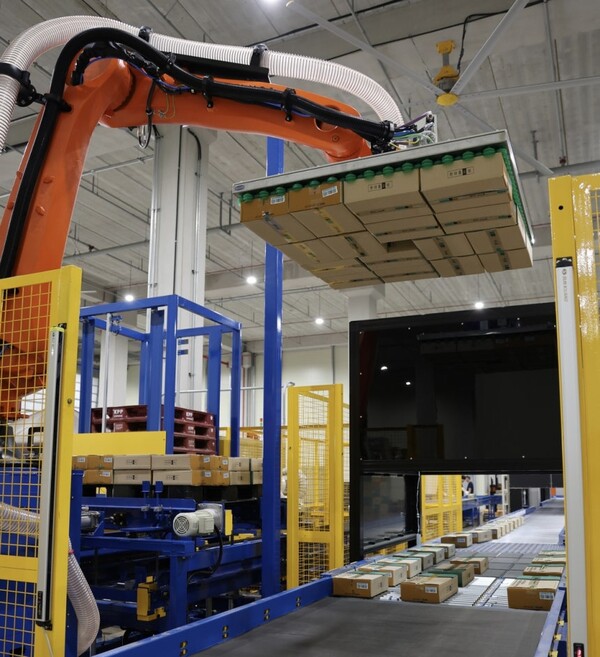
Hyundai Home Shopping announced on the 4th that it has introduced automated logistics equipment, ‘robotic arms’ and ‘singulators,’ to its logistics center in Hwaseong, Gyeonggi-do.
The robotic arm is equipment that picks up multiple items at once and moves them to the unloading conveyor belt. It can move up to 24 boxes at a time. It is optimized for the home shopping logistics environment, where orders for the same product are concentrated during specific time periods. The singulator is equipment that automatically aligns products on the conveyor belt to support their dispatch one by one.
With the introduction of this equipment, the hourly processing capacity of the Hwaseong Logistics Center will be expanded to a maximum of 4,000 orders. The overall dispatch time is also expected to be reduced by up to 20% compared to the existing level.
Toprun Total Solution Supplies Automotive Display Backlights to Guangzhou Automobile Group
Toprun Total Solution, a company specializing in automotive electronic displays, announced on the 29th that it will supply automotive display backlights manufactured at its Nanjing subsidiary to vehicles of China’s Guangzhou Automobile Group (GAC).
This supply will be carried out through VIKEER Electronics, a company based in Ningbo, China, specializing in automotive electronics and smart cockpit displays. The product is a backlight for a 15.6-inch CID (Center Information Display) and is scheduled to be installed in Guangzhou Automobile Group vehicles.
Nine Tech Signs 25.4 Billion Won Display Equipment Supply Contract
Nine Tech announced on the 2nd that it has secured an order for display equipment worth 25.4 billion won.
With this contract, NineTech has established itself as a key infrastructure supplier for large-area inkjet OLED lines, which are garnering attention as next-generation displays. The company explained that this is particularly significant as it demonstrates simultaneous recognition of its technological capabilities and market potential in the display sector, following its success in secondary batteries.
Inkjet OLED is a technology that overcomes the limitations of the conventional metal mask method, enabling uniform quality even on large screens by precisely spraying liquid light-emitting materials to the required locations.
Seoul Semiconductor Supplies Opto-Semiconductor Chips to Global Top 4 Automakers
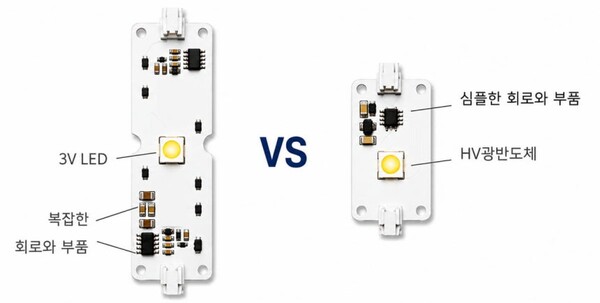
Seoul Semiconductor, a global technology company specializing in opto-semiconductors, announced on the 1st that its ‘HV (High Voltage) opto-semiconductor’ technology, developed for the first time in the world, has begun mass production at four top global automakers in the U.S., Europe, and Asia, and is expected to expand to 10 models within the year.
This technology combines a technology that miniaturizes opto-semiconductor chips to enable 12V driving on a single chip, rather than the existing 3V LED, with high-voltage (HV) driver technology. Through this, the number of driver-related components used in hybrid or electric vehicles can be reduced by more than 10%, and power consumption can be lowered by approximately 10%. The company explains that this can also contribute to cost reduction and the simplification of electronic systems.
Source: Kipost.net
Leave a Reply