

The birth of the world’s second-largest power semiconductor alliance?’ Japan-Rome, Toshiba, and Mitsubishi integrated consultation
Japan’s three companies, ROM, Toshiba, and Mitsubishi Electric, announced on the 27th that they will begin consultations to integrate the power (power) semiconductor business. If the integration is realized, the world’s second-largest coalition will be born, accounting for 10% of the global market share on a simple combined basis.
The integration targets are the semiconductor business of ROM and Toshiba’s subsidiary Toshiba Device & Storage, and Mitsubishi Electric’s power device business.
In the announcement, the three companies said that through this business integration, “we will be able to secure a competitive business scale and technology foundation in the global market and maximize the corporate value of the integrated corporation.”
SK hynix purchases 12 trillion won semiconductor manufacturing ‘EUV equipment’
SK hynix announced on the 24th that ASML has decided to invest a total of 11.9496 trillion won to introduce EUV scanners. This is the amount of 6.9 billion euros converted into the previous day’s exchange rate, which is equivalent to 9.97% of total assets as of the end of 2024. The transaction will take place over two years until December 2027.
SK hynix did not specify how many EUV scanners it will introduce, but considering that the price of one advanced EUV is about 500 billion won, it is estimated that it has ordered about 20 additional units.
US Supermicro co-founder smuggles NVIDIA AI chips to China
According to foreign media such as Bloomberg News on the 23rd, three company officials, including Supermicro co-founder Wally Liao, were handed over to trial for smuggling servers equipped with NVIDIA AI chips worth $2.5 billion (about 3.7613 trillion won) into China.
However, Supermicro Corporation was not prosecuted, and it was investigated that Nvidia was not involved.
Supermicro was found to have falsified its ledgers and used a Southeast Asian company to avoid investigation by the authorities, as well as removing serial numbers with a hair dryer.
‘NAND Three Musketeers’ Kioxia, SanDisk, and Solidigm jointly invest in Nanya
Kioxia, SanDisk, and SK hynix’s subsidiary Solidigm have jointly invested in Taiwanese DRAM company Nanya Technology to secure the memory supply chain. According to the Nippon Keizai Shimbun (Nikkei) and Nanya announcements on the 25th, the three companies will participate in Nanya’s third-party allocation of capital increase.
Along with this investment, a contract was also signed to receive long-term supply of DRAM installed in SSDs from Nanya. The simultaneous participation of multiple companies is interpreted as an example of major customers directly securing the supply chain in response to DRAM supply and demand instability.
Speeding up the localization of BMS semiconductors… Anabatic Semi attracts 15 billion won in follow-up investment
Anabatic Semi, a startup specializing in battery management system (BMS) semiconductors, announced on the 25th that it has attracted a total of 15 billion won in follow-up investment.
Established in 2024, Anabatic Semi has completed the development of the analog front-end (AFE) IC ‘ABS8210’, a key component that monitors and balances the status of energy storage systems (ESS) and battery cells for electric vehicles in real time, and is about to go into mass production. In particular, it is attracting attention as a representative player who will lead the localization of the BMS market, which is dominated by overseas companies, by introducing a solution that integrates core functions for the first time in Korea.
Founder CEO Jeong Se-woong is an expert in the semiconductor and battery fields who led the development of the mobile application processor (AP) ‘Exynos’ at Samsung Electronics and oversaw Samsung SDI’s mid-to-large battery division.
“China, AI GPU self-sufficiency rate by 2030 is 76%… Accelerating semiconductor independence”
According to Chinese media outlets such as the Science and Technology Times and Kuaikeji on the 25th, US investment bank Morgan Stanley predicted in a recent report that China’s AI GPU self-sufficiency rate could rise from 33% in 2024 to 76% in 2030. This is more than doubled in six years.
It is analyzed as a result of China’s acceleration of technology internalization after the tightening of export controls by the United States. Not only existing Chinese giants such as Huawei and Alibaba, but also start-ups such as Cambricon and Moorethread are also expanding their ecosystems by entering GPU development one after another.
Manufacturing capabilities are also improving rapidly. It is observed that the monthly production capacity based on the 12nm or lower process will expand from 8,000 sheets in 2024 to 42,000 sheets in 2028 and 50,000 sheets in 2030.
QRT enters the European defense market… First supply of RF semiconductor test equipment
On the 25th, QRT announced that it has started supplying high-temperature operating life assessment (HTOL) equipment for RF devices to defense customers in Europe. HTOL is a test method that verifies the long-term reliability of semiconductors in high-temperature environments, and RF HTOL equipment is considered a key infrastructure in the fields of defense, space, and communications.
This supply is significant in that it is the first time that QALT has entered the European defense supply chain, which has high barriers to entry. The company explained that through this order, it has proven that its technology is at a level that meets the Global Defense Standards (MIL-STD). However, specific information such as customer names was not disclosed in accordance with security and contract conditions.
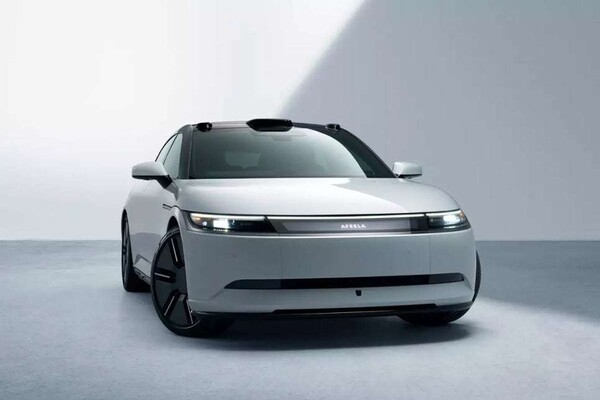
Honda, electric vehicle loss ‘snowball’… Joint development and sales with Sony are also suspended
According to the Nihon Keizai Shimbun, Asahi Shimbun, NHK, etc. on the 26th, Honda and Sony announced on the 25th that they will suspend plans to develop and sell the next model of the electric vehicle ‘Apila 1’, which has been promoted through the joint venture ‘Sony and Honda Mobility’.
Honda and Sony have been promoting the development of electric vehicles equipped with autonomous artificial intelligence (AI) and advanced driving assistance functions, and applying Sony’s movie and game content to realize the interior of the vehicle as an entertainment space. Apilla 1 began delivery in California, USA this year, and was scheduled to be supplied in Japan from the first half of next year.
Intellivix-S&Inno, ‘electric vehicle battery safety’
Intellivix announced on the 27th that it had signed a ‘Technology Development Business Agreement (MOU) for Electric Vehicle Battery Fire Prevention and Abnormal Situation Detection’ with S&Inno at its headquarters in Bangbae-dong, Seoul on the 24th.
Based on their respective technologies, the two companies plan to create synergy in areas with high fire sensitivity, such as electric vehicles (EVs), energy storage systems (ESS), and industrial sites. In particular, through Intellivix’s intelligent artificial intelligence (AI) fire detection technology, it will build an ‘AI-based active fire prevention system’ that detects battery temperature in real time and responds immediately when abnormal signs occur.
Electric vehicles that have succeeded in improving their constitution… Xiaomi and Xiaofeng’s first surplus
According to the industry on the 26th, Xiaomi posted an operating profit of 900 million yuan (about 200 billion won) in the electric vehicle and artificial intelligence (AI) sector last year. This is a surplus after two years of entering the electric vehicle business. Sales in this segment increased by 223.8% year-on-year to 106.1 billion yuan (about 23 trillion won). Electric vehicle sales were 411,082 units, nearly tripling from the previous year.
Xiaofeng, known as the ‘Tesla of China’, recorded sales of 76.7 billion yuan (about 17 trillion won) last year. This is an increase of 87.7% compared to the previous year. Sales were 429,000 units, an increase of 125.9% compared to a year ago. In the fourth quarter of last year, it made an operating profit of 380 million yuan (about 82.8 billion won). This is the first quarterly surplus since its founding.
Hyundai Motor Group and SK On confirm the mission of the US joint venture ‘HSBMA’…”Full-scale production speed”
Hyundai Motor Group and SK On’s North American battery joint venture has confirmed its name as ‘HSBMA (HyundaiSK Battery Manufacturing America)’. As competition in the electric vehicle market intensifies, it seems that it is speeding up the establishment of a full-fledged production system.
Hyundai Motor Group-SK On Joint Venture announced on its official LinkedIn on the 26th (local time) that it has changed its name from ‘HSAGP Energy’ to ‘HSBMA’.
HSBMA is a North American battery cell joint venture that SK On and Hyundai Motor Group decided to establish in April 2023. The two companies have jointly invested a total of $5 billion, with each holding a 50% stake.
Chaebi, working with UAE infrastructure companies… Targeting the Middle East EV Charging Market
Chaebi (formerly Daeyoung Chaebi), the No. 1 electric vehicle fast charging infrastructure operator (CPO) company in Korea, has signed a business agreement (MOU) with Emirates Electric Engineering (EEE), an energy infrastructure company in the United Arab Emirates (UAE), to target the Middle East market. The two companies have completed the demonstration of local charger linkage in Dubai and will promote the supply of a total of 1,000 electric vehicle chargers (approximately $5.5 million) over the next two years.
Currently, the Middle East EV charging market is growing rapidly based on strong infrastructure investments led by the government. According to market research firm NMSC, the market size is expected to expand from about $247 million in 2022 to about $1.44 billion in 2030.
Toyota announces $1 billion investment in two U.S. factories… Strengthening hybrid and electric vehicles
Japan’s Toyota Motor Corporation announced that it will invest $1 billion (about 1.5 trillion won) in its U.S. plant to strengthen production capacity such as hybrid vehicles. According to Japan’s public broadcaster NHK and Jiji News Agency on the 24th, Toyota announced this plan the day before.
Specifically, it plans to invest $800 million in its plant in Kentucky in the southern United States and $200 million in its Indiana plant in the Midwest. The Kentucky plant will strengthen its hybrid vehicle production capacity and prepare for mass production of new electric vehicles, which are scheduled to begin production in 2028. In addition, the Indiana plant will strengthen its production capacity for SUV vehicles.
SMAC launches multi-channel battery inspection automation equipment
SMAC, a company specializing in machine tool and robot automation solutions, announced on the 27th that it has launched a multi-channel electric vehicle battery inspection automation facility to target the global electric vehicle battery inspection equipment market. The company held a new product demonstration at the Daegu Hyunpung factory on the same day and unveiled related technologies.
According to the company, this new product is a precision inspection equipment that combines machine tool and robot automation technology with AI (artificial intelligence) and 5G specialized network-based communication technology. By applying the self-developed reverse algorithm, electric vehicle BMS (battery management system) data is collected in real time with OBD (On Board Diagnostics) terminals, and cloud· Through AI analysis, it is possible to test and diagnose within a minimum of 30 minutes and a maximum of 2 hours.
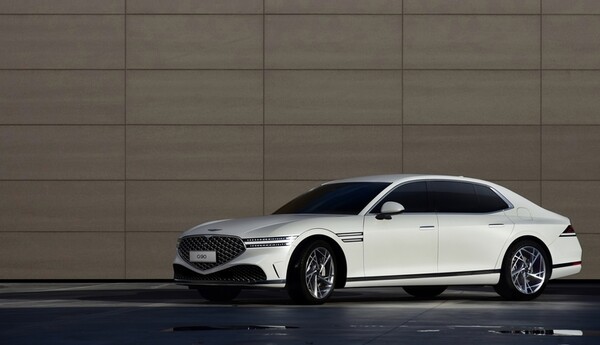
Hyundai Motor Company “Applying ‘Level 2+’ autonomous driving technology from the G90 released this year”
Hyundai Motor Company has decided to apply ‘Level 2+’ autonomous driving technology when driving on highways starting with the Genesis G90 partially modified model scheduled to be released this year. Even if the driver takes his hand off the steering wheel on the premise that he is looking ahead, the car will have the function of driving itself.
Currently, only the ‘Advanced Driving Assistance System (ADAS)’, which runs at a certain distance from the vehicle in front without leaving the lane, is being applied to the next level. Hyundai Motor Company is evaluated as lagging behind Tesla and others in this field, so it intends to speed up technology development.
Samsung Electronics’ Harman invests 230 billion won in Hungary… Strengthening R&D for autonomous driving
According to the Hungarian Investment Promotion Agency (HIPA) on the 27th, HARMAN will invest a total of 131.18 million euros (about 230 billion won) to promote research and development (R&D) and production capacity enhancement projects. Through this project, Harman will develop software and hardware to support autonomous driving functions at the Budapest R&D Center.
At Sekespeherbar, research and development related to autonomous systems and vehicle information management solutions for Mercedes-Benz models will be carried out.
HL Group, autonomous driving, robots, Selecting startups to work with AI
HL Group announced on the 26th that it will launch an open recruitment of promising startups to promote ‘open innovation’ to create new growth engines by utilizing external technology and internal resources.
Receptions are scheduled to be accepted by the 6th of next month, and the final three companies will be selected. The recruitment fields are mobility, autonomous driving, robotics, artificial intelligence (AI), smart construction, and logistics.
HL Group plans to maximize collaboration synergy with selected startups by considering linkages with key affiliates such as HL Mando, a leading software-oriented vehicle (SDV) company, HL Clemove, an autonomous driving solution company, HL Robotics, a robot-specialized company, HL D&I Halla, a smart construction company, and HL Holdings, a logistics service company.
Amazon acquires humanoid robot startup Fauna
Amazon acquired Fauna Robotics, the startup that developed the humanoid robot ‘Sprout’, last week, Bloomberg News reported on the 24th (local time). The specific size and conditions of the acquisition were not disclosed.
Sprout is a 42-inch humanoid robot. You can talk to people, walk with them, hold things, and dance. It has been in trial operation since January and is priced at about $50,000.
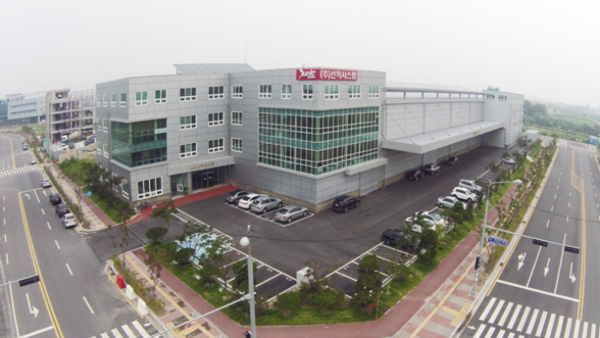
Sunwing System Receives Additional Orders for Micro OLED Deposition Equipment from China’s Seaya
Sunik Systems announced on the 27th that it has received an additional order for deposition equipment for the mass production of micro organic light-emitting diode (Micro OLED) displays from Chinese display company SeeYA Display.
Sunik System has already signed a contract with China’s Jinan Goerpixel in January this year to supply deposition equipment worth about 41 billion won. Then, in February, it signed a contract with Anhui HongxiWeixian to supply micro-OLED deposition equipment worth approximately 20.6 billion won, rapidly expanding its presence in the market.
“Foldable iPhone comes later than iPhone 18 Pro”
Bloomberg’s Mark Gurman said in a real-time Q&A session on the 27th (local time) that the foldable iPhone will not be delivered to customers on the same September release schedule as the iPhone 18 Pro and iPhone 18 Pro Max. However, it did not mention a specific release schedule.
Previously, this month, Tim Long, an analyst at investment bank Barclays, also predicted in a report that the foldable iPhone will not be released at the same time as the iPhone 18 Pro, and predicted that the release date would be in December.
F&Stech “Expectation of mask cleaning following Big Tech foldable production”
FNS Tech announced that it plans to stably support the parts cleaning business following the production of Big Tech foldable organic light-emitting diodes (OLEDs) this year. In the cleaning process, contaminants and foreign substances are removed. FNS Tech’s main focus is on cleaning open metal masks (OMM), which are used for common layer deposition in the OLED manufacturing process.
In the recently released corporate value enhancement plan, FNS Tech said that its plans for this year’s display field include ▲ 8.6th generation IT OLED equipment orders ▲ Big Tech foldable OLED equipment orders ▲ mass production of IT OLED and stable supply of parts cleaning (business) due to the increase in Big Tech foldable OLED production.
Leave a Reply