

SemiFive Wins 18 Billion Won Order to Develop Next-Generation AI NPU
SemiFive announced on the 13th that it has signed a turnkey design contract worth approximately 18 billion won (12.5 million dollars) to develop a neural network processing unit (NPU) based on Samsung Electronics’ 4nm (SF4X) process in cooperation with an AI semiconductor fabless company.
The goal of this project is to develop an AI NPU optimized for ‘on-premise’ environments, where AI computations are performed directly on the device without a network connection. The design is intended for applications involving the real-time processing of large-scale data, such as high-resolution vision AI processing and Large Language Model (LLM) inference. The core design direction involves introducing next-generation memory interfaces to reduce data bottlenecks and improve Power, Performance, and Area (PPA) efficiency.
Hanul Materials subsidiary JKM begins operation of Sejong semiconductor materials plant
JKM held a completion ceremony for its newly constructed ‘Sejong Campus’ in Jeonui-myeon, Sejong Special Self-Governing City on the 12th and officially announced the operation of its semiconductor material production facility.
JKM plans to expand its raw materials business for the semiconductor photolithography process, centering on this factory. The photolithography process is a core step in semiconductor manufacturing that forms circuit patterns on wafers, utilizing various materials such as photoresist (PR), anti-reflective coatings (BARC), and hard masks. Key raw materials, such as photocatalytic converters (PAGs) and polymers, which determine the performance of these materials, are in a sector with high dependence on Japanese companies.
Rohm and Toshiba Consider Power Semiconductor Integration… Strategic Response Amid Denso Acquisition Offer
Japanese semiconductor company Rohm is considering integrating its power semiconductor business with Toshiba, Nihon Keizai Shimbun (Nikkei) and others reported on the 13th.
According to reports, the two companies are discussing details such as the method of integration and are reportedly considering options such as establishing a joint venture to transfer their respective power semiconductor businesses.
Rohm previously received an acquisition offer last month from Denso, a major auto parts supplier for Japan’s Toyota Motor Group. Denso reportedly offered 1.3 trillion yen (approximately 12.1 trillion won) as the acquisition price.
YC Chem invests 16.4 billion won to expand Plant 5 in Seongju
Seongju County, North Gyeongsang Province, announced on the 12th that it has signed a Memorandum of Understanding (MOU) with semiconductor materials company YC Chem and has begun cooperation for the expansion of its 5th factory within the Seongju General Industrial Complex. This investment project, aimed at expanding YC Chem’s production capacity, amounts to a total of 16.4 billion won. Of this amount, 13.8 billion won will be invested in construction and facilities, excluding land acquisition.
YC Chem is a mid-sized company in the semiconductor materials sector headquartered in Seongju-gun that produces photoresist and semiconductor wafer cleaning agents.
Meta, having extensively adopted external chips, also unveils proprietary AI chip… dispelling rumors of development difficulties
Meta unveiled four of its own AI chips, including the MTIA 300, 400, 450, and 500, which are part of the ‘Meta Training and Inference Accelerator’ (MTIA) chip family, on the 11th (local time).
Of these, the MTIA 300 has currently entered production, and the remaining three models are planned to be deployed to data centers by next year at intervals of approximately six months.
MTIA 300 is a chip optimized for models that recommend content on Meta’s social networking services (SNS) such as Facebook and Instagram, and MTIA 400, known by the codename ‘Iris’, is a chip that adds support for generative AI models based on this.
“China’s TikTok Parent Company to Use Nvidia ‘Blackwell’ in Malaysia”
On the 12th (local time), the Wall Street Journal (WSJ), citing sources, reported that ByteDance plans to use approximately 500 NVIDIA Blackwell computing systems (a total of 36,000 B200 chips) in Malaysia in cooperation with Southeast Asian company Aolani Cloud.
According to sources, Aolani is procuring from Aiveres, an NVIDIA partner that assembles AI servers, and if the plan is executed, the related hardware costs are estimated to exceed $2.5 billion (approximately 3.8 trillion won).
Amazon Borrows Money Again to Fund AI… Issues Massive $50 Billion Corporate Bonds
Amazon, the world’s largest cloud company, has set out to issue $50 billion (approximately 74 trillion won) worth of corporate bonds to fund investments in artificial intelligence (AI) infrastructure. This is the fourth largest issuance in the history of U.S. corporate bond issuance and the largest ever for a non-mergers and acquisitions (M&A) purpose.
Bloomberg reported on the 10th (local time) that Amazon is issuing $50 billion (approximately 74 trillion won) worth of corporate bonds in the U.S. and Europe.
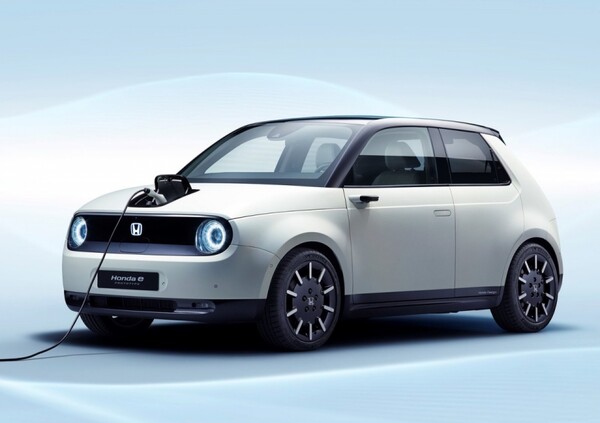
Honda’s electric car, ‘Honda e’. /Photo=Honda
Honda Posts First Annual Loss in 69 Years… Blamed for Failure in EV Strategy
According to foreign media outlets including the Nihon Keizai Shimbun on the 13th, Honda announced preliminary results, projecting a deficit of up to 690 billion yen (approximately 6.4 trillion won) for the fiscal year ending April 2025 and March 2026. The failure of its electric vehicle transition strategy is cited as the primary factor. The Asahi Shimbun reported that this marks the first time Honda has recorded an annual deficit since its listing.
Honda announced that its losses have increased as it decided to halt the development of three electric vehicles that were scheduled to be produced in North America.
Hyundai Motor Group Establishes Circular Economy for Indonesian EV Batteries with China’s Huayu Recycle
Hyundai Motor Group announced on the 12th that it has signed a Memorandum of Understanding (MOU) with Zhejiang Hua Li Recycling Technology (Hua Li Recycle) to establish a circular economy for EV batteries in Indonesia.
Through this MOU, the two companies will recover battery scrap generated at HLI Green Power and pre-process it into black mass at Huayuri Recycle’s local base. HLI Green Power is a battery cell joint venture plant between Hyundai Motor Group and LG Energy Solution located in Indonesia.
POSCO FutureM Signs MOU with US-based Sila for Advanced Battery Material Technology Development
POSCO Future M announced on the 13th that it signed a Memorandum of Understanding (MOU) with Silla on the 11th for cooperation in the field of advanced battery materials at COEX in Gangnam-gu, Seoul, where the ‘InterBattery 2026’ event was held.
Sila is a battery materials company headquartered in California, USA, and possesses high-performance silicon anode technology. It operates a silicon anode production plant in Moses Lake, Washington.
Through the signing of this MOU, POSCO Future M plans to advance advanced battery material technology by combining its anode and cathode technologies with Sila’s silicon anode technology.
China’s No. 1 EV Manufacturer BYD Considers Entering Formula One (F1)
On the 10th (local time), Bloomberg reported that BYD is considering participating in various motorsports, including not only F1 but also the World Endurance Championship (WEC), which includes the 24 Hours of Le Mans.
It is reported that BYD is considering options such as establishing its own racing team or acquiring an existing one. However, no final decision has been made yet, and actual participation has not been confirmed.
If BYD enters motorsports, it is expected to be a rare instance of a Chinese automaker seriously challenging F1, which has been dominated by European and American companies.
37% of Employees at SK Battery Plant in Georgia Laid Off
According to Bloomberg, SK Battery America, the U.S. subsidiary of SK On, announced through a filing that it has laid off 968 workers, or 37% of the 2,566 employees at its plant in Commerce, Georgia. The layoffs were carried out as part of a restructuring effort driven by slowing electric vehicle (EV) sales and changes in the market environment.
This factory has been supplying electric vehicle batteries to automakers such as Germany’s Volkswagen and South Korea’s Hyundai Motor.
Hyundai Mobis Begins Operations at Hungary Plant… Supplying Key Components to Mercedes-Benz EVs
Hyundai Mobis announced on the 10th that it has started operations at a new plant in Kecskemét, Hungary, and will supply chassis modules for Mercedes-Benz electric and hybrid vehicles. A chassis module is a key component that combines major parts such as steering, braking, and suspension into the vehicle’s lower frame.
Hyundai Mobis has been supplying chassis modules manufactured at its Alabama plant in the U.S. to Mercedes-Benz since 2022. Having been recognized for its quality competitiveness, the company secured additional orders and went on to build this plant in Hungary as well.
China’s CATL, the world’s No. 1 battery company, saw its net profit increase by 42% last year.
China’s CATL (Ningde Times), the world’s largest battery company, announced on the 9th that it recorded sales of 423.702 billion yuan (91.4 trillion won) last year. This represents a 17% increase compared to the previous year. Net profit was 72.201 billion yuan (15.6 trillion won), a 42% increase year-on-year.
CATL’s lithium battery sales volume was 661 GWh (gigawatt-hours) last year, a 39% increase from the previous year. Sales in the power sector recorded 541 GWh, a 42% increase. According to energy market research firm SNE Research, CATL’s global market share in power battery usage was 39.2% last year.
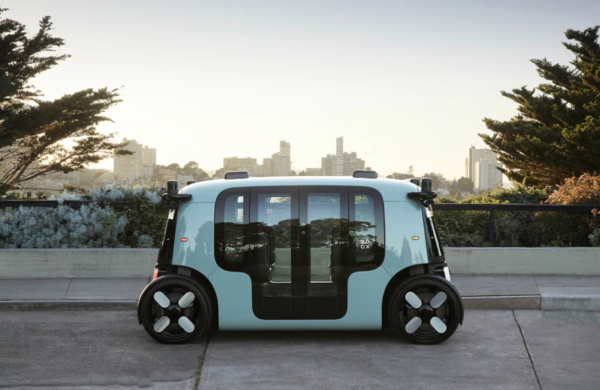
Uber to Call Amazon Robotaxis… Deployed in Las Vegas This Summer
According to a Bloomberg report on the 11th (local time), Uber and Zoox have signed a multi-year cooperation agreement. The two companies plan to enable users to hail Zoox robotaxis via the Uber app in Las Vegas, USA, starting this summer, and the service is scheduled to be available in Los Angeles starting next year.
Once the service launches, some Uber users may be matched with Zoox robotaxis instead of standard vehicles. This marks Zoox’s first collaboration with an external platform, and neither company has disclosed revenue sharing methods or whether fees will be charged. Currently, Zoox is not charging a separate fee for its trial service.
Actro Decides to Invest 15.4 Billion Won in Robot and Autonomous Driving Parts Production Facilities
Actro announced on the 13th that it is putting its robot and autonomous driving businesses on track by investing a total of approximately 15.4 billion won in automation facilities for new business manufacturing. According to an Actro official, the new facilities will be built as “fully automated facilities for the entire process” equipped with AI systems, in accordance with customer requests.
Accordingly, the timing for the mass production of Actro’s ‘Physical AI’ related components has also been concretized. Actro plans to complete the facility setup within this quarter, begin mass production of autonomous driving-related components starting in the second quarter, and start full-scale mass production of robot-related components starting in the third quarter.
Twinny, developer of autonomous robots, secures 20.4 billion won in investment
Twinny, a startup developing autonomous robots, announced on the 13th that it has secured 20.4 billion won in Series C funding. Ato Investment, KT Investment, SL, Gravity PE, SECO, and Seojin Automotive participated in this investment round. With this, the company has received a cumulative investment of approximately 59 billion won.
This company, founded in 2015 by twin brothers Cheon Hong-seok and Cheon Young-seok as co-CEOs, developed “Nargo,” an autonomous robot that moves on its own by using a 3D laser to identify space and objects, and an “order picking” robot that picks up items in a warehouse.
SPG Signs MOU with CUREXO for Supply of Precision Actuators for Medical Robots
SPG announced on the 13th that it signed a Memorandum of Understanding (MOU) with CUREXO on the 12th regarding the “supply of precision actuators for the localization of medical robots and strengthening of global competitiveness.”
The purpose of this agreement is to establish a stable supply chain for medical robot components and to establish a technical cooperative relationship for the advancement of robot performance by applying precision actuators produced by SPG to medical robots developed and produced by CUREXO.
Hyundai Motor’s autonomous driving arm, FortyTwoDot, posted a deficit of 349.7 billion won last year… double the previous year
According to industry sources on the 13th, FortyTwoDot recorded annual sales of 27.7 billion won, an operating loss of 349.7 billion won, and a net loss of 363.8 billion won last year. While sales increased by 10% compared to the previous year (24.8 billion won), operating and net losses increased by 98% and 107%, respectively.
FortyTwoDot is an autonomous driving technology development startup acquired by Hyundai Motor Group in August 2022 for an investment of 427.6 billion won. Hyundai Motor Group has also invested over 1 trillion won through measures such as paid-in capital increases since 2022 up until last year.
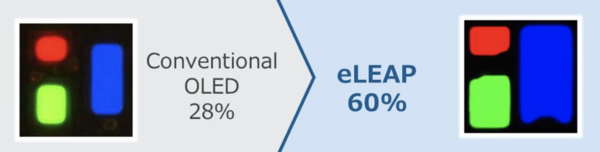
Comparison of aperture ratios between conventional OLED (left) and eLEAP. /Source: JDI
출처 : KIPOST(키포스트)(https://www.kipost.net)
Will China Dominate OLED Too?… “Production Capacity to Surpass Korea by 2029”
On the 13th, Counterpoint Research announced that China’s share of global display production capacity will expand from 73% to 75% between 2025 and 2027.
In contrast, South Korea is expected to see a slight decline from 9% to 8% during the same period. The market shares of Taiwan and Japan are also projected to decrease from 19% to 16% and from 4% to 1%, respectively. These figures demonstrate that China is gradually securing an absolute advantage in display production capacity and that the production structure of the global market is being rapidly reorganized.
Samsung Display: “FMM-free Patterning, a Fundamental Transformation of OLED Production”
Analysis suggests that the Fine Metal Mask (FMM) method, a core process for manufacturing conventional Organic Light-Emitting Diode (OLED) displays, is facing technical limitations amidst the trend toward higher resolution and larger panels. Consequently, it is predicted that FMM-free patterning technology will become key to realizing brighter and clearer next-generation OLEDs.
So Byung-soo, Senior Vice President of Samsung Display, stated on the 12th at ‘Display Korea 2026,’ hosted by market research firm UBI Research at the L Tower in Seocho-gu, Seoul, that “the transition to FMM-less patterning signifies a significant evolution in OLED manufacturing technology.”
Lee Chung, President of Samsung Display, said, “Rising memory prices and even war… the second half will be difficult.”
Lee Chung, President and CEO of Samsung Display (and Chairman of the Korea Display Association), said on the 12th, “The situation is already bad due to rising memory prices, and with prices expected to rise due to the war between the U.S. and Iran, the second half of this year will become increasingly difficult.”
President Lee met with reporters ahead of the ‘2026 Korea Display Industry Association Regular General Meeting’ at the Lotte Hotel in Jamsil, Songpa-gu, Seoul, and addressed concerns regarding profitability due to the war in the Middle East, stating, “If the war is prolonged, the cost burden will become extremely heavy.”
Leave a Reply