

Rambus Unveils Industry’s Fastest HBM4E Controller, Delivering a 60% Increase in Bandwidth
Rambus, a semiconductor design asset (IP) company, has unveiled the industry’s fastest memory controller supporting HBM4E, the next-generation high-bandwidth memory standard. With a throughput of 4.1 terabytes per second (TB/s) per memory device, it is expected to dramatically improve the performance of AI accelerators.
IT media outlet WccfTech reported on the 4th (local time) that Rambus’s announcement will change the landscape of the next-generation data center and high-performance computing markets. The newly announced HBM4E controller supports data transfer speeds of up to 16 Gbps (gigabits per second) per pin.
Nvidia halts production of H200 chips for export to China, shifting production to VeraRubin
Nvidia has shifted production facilities at Taiwanese foundry TSMC from producing H200 chips to producing next-generation ‘Vera Rubin’ chips, the Financial Times (FT) reported on the 5th (local time), citing multiple sources.
This is interpreted as being due to the delay in US export approval for the H200 chip to China and the emergence of potential Chinese regulations.
Last December, U.S. President Donald Trump announced his intention to allow exports of Nvidia’s H200 chips to China, but approval was reportedly delayed due to Nvidia’s disagreement with the Department of Commerce over procedures such as the Know Your Customer (KYC) system.
Samhwa Paints to Supply Semiconductor Materials to Samsung SDI
Samhwa Paints announced on the 6th that it has completed the development of high-performance MMB (Melt Master Batch), a key material for next-generation semiconductor packaging, in collaboration with Samsung SDI, and has begun full-scale mass production and supply.
This supply comes approximately a year after the two companies agreed in April of last year to jointly develop EMC (Epoxy Molding Compound Resin) compositions, an epoxy sealant for semiconductor packaging. Samwha Paints’ MMB, developed by Samwha Paints, will be supplied to Samsung SDI for use in packaging AP (Application Processor), a key component in newly released mobile devices.
Hanwha Systems partners with Seoul National University and Sungkyunkwan University to domestically produce defense semiconductors.
Hanwha Systems announced on the 5th that it will hold a ceremony to establish a joint research and development (R&D) center with Seoul National University’s Semiconductor Research Institute and Sungkyunkwan University’s College of Information and Communication Engineering to secure defense and space semiconductor design technology. These centers will be established on each university campus.
Hanwha Systems plans to establish infrastructure for joint research with Seoul National University and Sungkyunkwan University, and to pursue preliminary research, technology acquisition, and component commercialization. It will also pursue industry-academia exchanges and the recruitment of top talent.
We will engage in joint research with Seoul National University to develop high-frequency semiconductor design technology for communications by 2031.
Meta “Expands In-house Chips for AI Learning” Reaffirms Semiconductor Self-Reliance Strategy
Meta has reaffirmed its “semiconductor independence” vision, emphasizing its strategy to develop its own semiconductors for artificial intelligence (AI) learning. While leveraging external supply chains like NVIDIA and AMD in the short term, the company plans to increase the proportion of its own semiconductor designs in the long term.
This is interpreted as an attempt to quell the crisis that has arisen within Meta due to recent difficulties in its own chip development project.
According to Bloomberg News on the 4th (local time), CFO Susan Lee Mehta expressed her intention to expand her own chips at a technology conference hosted by Morgan Stanley, saying, “A significant portion of Mehta’s workload is specialized for our services.”
Broadcom’s Q1 AI revenue doubled from last year’s, with further growth expected in Q2.
American semiconductor company Broadcom’s artificial intelligence (AI) division sales in the first quarter of its fiscal year (November last year to January this year) doubled compared to the same period last year.
Broadcom announced on the 4th (local time) that its first-quarter revenue increased 29% year-over-year to $19.311 billion (approximately KRW 27.9 trillion). About two-thirds of the revenue, or $12.515 billion, came from its semiconductor division, while the remaining $6.796 billion came from its infrastructure software division.
Broadcom explained that in particular, AI-related sales in the semiconductor sector increased by 106% year-on-year to $8.4 billion.
OpenAI Unveils ‘GPT-5.4’ for Professional Work… “Industry Expert-Level”
On the 6th, OpenAI released ‘GPT-5.4’, an artificial intelligence (AI) model for performing professional tasks.
GPT-5.4 is the most advanced and efficient frontier model applied across OpenAI’s major products, including ChatGPT, Application Programming Interface (API), and Codex, and features an integrated model that combines inference capabilities, coding performance, and agent-based workflows.
GPT-5.4 significantly improves how you use various tools and software in professional work environments, such as spreadsheets, presentations, and documents, while incorporating the industry-leading coding capabilities of GPT-5.3-Codex.
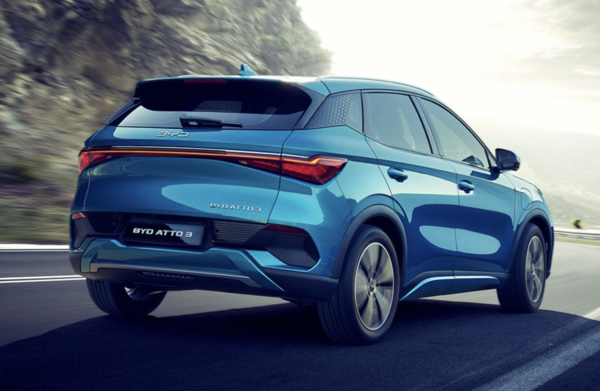
BYD’s electric SUV ‘Ato 3’. /Photo = BYD
Solum and Pumpkin Partner to Localize Power Modules for Electric Vehicle Rapid Chargers
Power electronics company Solum and commercial vehicle charging specialist Pumpkin have signed a business agreement to develop and apply power modules for electric vehicle chargers. Through this agreement, the two companies will pursue the domestic production of 30kW and 50kW modules for commercial vehicle rapid chargers.
The scope of the two companies’ cooperation extends beyond infrastructure construction to include renewable energy. They are exploring a charging station model that integrates ESS (Energy Storage Systems) and solar power facilities, aiming to improve infrastructure operation efficiency through this approach.
Electric vehicle charging equipment is being prepared, and a securities report has been submitted, aiming for a KOSDAQ listing in the first half of the year.
On the 4th, Chaebi submitted a securities registration statement to the Financial Services Commission for a KOSDAQ listing. The offering will involve issuing 10 million new shares. The target offering price range is 12,300 to 15,300 won, raising a total of 123 billion to 153 billion won. Based on the offering price, the company’s market capitalization is projected to be 586.7 billion to 729.7 billion won.
Founded in 2016, Chaebi is a specialized electric vehicle charging infrastructure company that has built its business foundation centered on the development and manufacturing of rapid chargers. It is the only company in Korea to directly handle everything from charger manufacturing to installation, operation, and aftercare.
Witz targets Turkey’s electric vehicle market, allying with local AI company
Witz announced on the 4th that it signed two memorandums of understanding (MOUs) with Cerebrum Tech, a leading AI and digital solutions company in Turkey, for strategic business cooperation and the establishment of EV charging infrastructure.
Turkey is aggressively expanding its infrastructure, boasting the highest number of chargers per electric vehicle installed in Europe. The Turkish government aims to deploy 3.3 million electric vehicles and install 270,000 chargers by 2035.
Witz plans to go beyond simple device sales and apply its domestic electric vehicle charging infrastructure operation know-how and platform technology to the Turkish market through GS Energy subsidiary GS Chargebee.
Alton Launches Korea’s First Electric Bicycle Equipped with LMFP Batteries
Alton announced on the 6th that it has launched the ‘M Plus 20’ and ‘M Plus 16’, urban electric bicycles that use LMFP (lithium manganese iron phosphate) batteries for the first time in the domestic electric bicycle industry.
This new product features an LMFP battery, which boasts enhanced thermal stability and durability compared to conventional lithium-ion (NCM) batteries. Its superior overheating resistance even in high-temperature environments reduces the risk of fire, a significant concern in electric mobility. Furthermore, it boasts a long lifespan, maintaining high battery capacity even after over 800 charge and discharge cycles.
Pirain Motors Signs MOU for Domestic Production of Battery Packs
Electric bus company Pirain Motors announced on the 5th that it signed a memorandum of understanding (MOU) with battery pack company Nanointech for business cooperation in the domestic production of battery packs for electric buses.
The two companies will jointly develop battery packs for electric buses based on high-energy-density NCM (nickel, cobalt, manganese) cells supplied by domestic battery cell manufacturers, and will work together to verify and prepare for mass production of the battery packs to be applied to all models of Pirain Motors’ 11m (large), 9m (semi-large), and 7m (medium) electric buses.
Electric vehicle battery usage surged 10.7% in January, but Korea’s market share fell 4.3 percentage points.
According to market research firm SNE Research on the 6th, the total battery usage of electric vehicles (EVs), plug-in hybrid vehicles (PHEVs), and hybrid vehicles (HEVs) worldwide in January was 71.9 GWh (gigawatt hours), a 10.7% increase compared to the same period last year.
Although electric vehicle sales decreased by 2.1% over the same period, the analysis shows that battery capacity actually increased due to an increase in average battery capacity and a change in product mix centered on luxury vehicles.
On the other hand, the combined market share of the three domestic battery companies, LG Energy Solution, SK On, and Samsung SDI, was 12.0%, down 4.3 percentage points (p) from the same period last year.
BYD’s Battery Confidence: ‘Charge in 9 Minutes’
BYD, China’s largest electric vehicle company, has unveiled a “blade battery” capable of nearly fully charging in just nine minutes. This is the first new battery product unveiled in six years.
According to Bloomberg News on the 6th, BYD held a press conference in Shenzhen, China the previous day and unveiled the latest generation of its ‘Blade Battery’ and ultra-fast flash charging system.
The new technology allows the battery to be charged from 10% to 70% in just five minutes, and BYD claims it can reach a near-full charge in just nine minutes. “The second-generation Blade battery can charge from 20% to 97% in just 12 minutes, even in temperatures as low as -20 degrees Celsius,” said Wang Chuanfu, BYD’s chairman. “It has a driving range of 777 kilometers.”
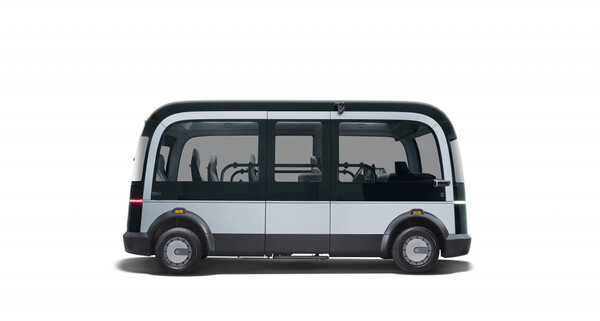
Forty Two Dot’s KRW 65.4 billion capital increase strengthens Hyundai Motor’s dominance.
According to industry sources on the 6th, Forty2Dot held an extraordinary general meeting of shareholders on the 23rd of last month and decided to burn a total of 506,607 shares, including common and preferred stock, for a fee. The purpose is to rationalize capital and enhance shareholder value.
With this process, once the outside investors’ shares are liquidated, Hyundai Motor and Kia will effectively own 100% of Forty Two Dot. With the governance structure unified under the Hyundai Motor Group, swift decision-making aligned with the group’s roadmap will be possible, and it will be easier to focus company-wide capabilities on advancing software and autonomous driving technologies. This will lay the foundation for the execution-focused, one-team system emphasized by newly appointed President Park Min-woo (also serving as Head of Hyundai Motor’s Advanced Vehicle Platform (AVP) Division) on the 23rd of last month.
Nota’s Upstage “Solar” Compresses 73%, Paving the Way for Robotics and Autonomous Driving AI
Nota announced on the 5th that by applying its technology to Upstage’s “Solar Open 100B,” it was able to reduce the Solar’s memory usage from 191.2GB to 51.9GB. This represents a reduction of approximately 72.8%, effectively compressing the model by approximately 73%.
The performance indicator, Perplexity (PPL; lower is better), also recorded 6.81, maintaining a similar level to the original model (6.06). In contrast to some common techniques that can degrade performance by more than five times, this new model minimizes performance loss and has even filed a related patent.
Kolmar Korea Introduces Robot for Cosmetics Preservation Testing, First in Korea
Kolmar Korea announced on the 5th that it has become the first company in Korea to introduce a robot-based automated system for cosmetics preservation testing. Preservation testing verifies how safe cosmetics are from microorganisms such as bacteria and mold.
Kolmar Korea has proactively responded to the rapidly increasing demand for product safety verification driven by the global expansion of K-beauty and has introduced an automated system as a preemptive investment to enhance analysis accuracy.
Actual test processing capabilities have been significantly improved. Robots have been deployed to handle simple, repetitive processes, accelerating processing speeds by 2.5 times compared to previous processes. Throughput for microbial reaction verification has also increased by approximately 50%. Unmanned nighttime operations are also possible.
Newbility Unveils Humanoid Service Robot ‘Billy’
Newbility, a physical artificial intelligence (AI)-based robot service and platform company, announced on the 5th that it has unveiled its wheel-based humanoid service robot, Billy, for the first time.
Billy combines a wheel-based drive system with a 360-degree rotating robotic arm, the “manipulator.” It features a modular, openable loading compartment and shelves.
It is designed so that robots can directly perform physical interactions with existing infrastructure such as buttons on elevators and doors, shelves, and even pick up, load, and deliver items.
Now Robotics signs a 3.7 billion won contract with Korea Fukoku to supply robotic automation systems.
Now Robotics, a company specializing in intelligent robots, announced on the 5th that it has signed a contract worth 3.7 billion won to supply a ‘robot assembly automation system’ with Korea Hukkoku, a company specializing in automotive parts.
According to the company, this contract is for the supply of automotive engine damper robot assembly automation equipment to FKC America (US plant), and the contract period is until February 28th of next year.
The system supplied by Now Robotics is a robotic automation solution optimized for the assembly of core automotive components, which requires high precision and durability. Now Robotics handles the entire process in-house, from design to manufacturing and test operation, and plans to complete on-site installation and final inspection in the US by February of next year.
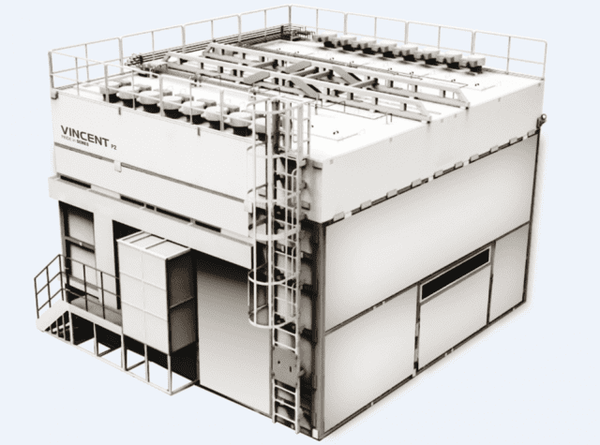
Semes Ships High-Resolution QD-OLED Inkjet Equipment
Semiconductor equipment manufacturer Semes announced on the 4th that it has shipped high-resolution quantum dot (QD)-organic light-emitting diode (OLED) inkjet equipment. The model name is “Vincent.”
In Samsung Display’s large-scale display technology, QD-OLED, the QD color conversion layer is produced using an inkjet printing process. QD-OLED is applied to TV and monitor panels.
DMS shares trade for the first time in a year, thanks to positive display market conditions.
DMS announced that stock trading will be possible on the KOSDAQ market starting on the 6th as the Korea Exchange KOSDAQ Market Headquarters has lifted the suspension of stock trading after excluding it from the list eligibility review.
A DMS official said, “With the resumption of stock trading, we have completely escaped the accounting-related uncertainty that has persisted for about a year,” and added, “Combined with the recovery in investment in the display industry, there is a possibility of a reevaluation of the company’s value in the future.”
The global OLED luminescent materials market reached $2.27 billion last year, growing 7.2% year-over-year.
According to the ‘OLED Emitting Material Market Tracker’ published by display market research firm UBI Research on the 27th, the sales of global OLED emitting material suppliers last year increased by 7.2% compared to the previous year.
Among these, it was revealed that the purchase of luminescent materials by Korean panel manufacturers increased starting in the third quarter when mass production of Apple’s new product OLED panels began in earnest.
While Chinese panel makers’ purchases remained similar to the previous quarter, the market for luminescent materials was found to have grown significantly in the second half of the year compared to the first half. By country, Korean OLED panel makers’ share of luminescent material purchases in 2025 was estimated at approximately 49.1%.
Leave a Reply