

Semits, a semiconductor logistics company, passes preliminary screening for listing on the KOSDAQ.
SemiTS, a semiconductor AMHS (Automated Material Handling Systems) integrated solutions provider, announced on the 6th that it received preliminary approval for listing from the Korea Exchange on the 4th. The company possesses clean conveyor system technology for the semiconductor entire process, a technology with high barriers to entry. It has implemented flexible route design for each process and industry-leading return throughput.
Additionally, the ‘S-Plate’, a non-remodeled nitrogen purge system that can be installed without changing the structure of existing equipment, is said to have reduced installation time by approximately 75% compared to other companies.
Japan’s semiconductor revival accelerates… TSMC begins mass production of 3nm process, Rapidus secures private funding
According to the Yomiuri Shimbun on the 5th, Taiwan’s TSMC, the world’s largest semiconductor foundry, has informed the Japanese government of its plan to mass-produce 3 nanometer (nm, 1 billionth of a meter) process products in Kumamoto Prefecture, Kyushu.
TSMC executives are expected to visit the Prime Minister’s Office today and convey the same intention to Prime Minister Sanae Takaichi.
TSMC is currently producing 12-28nm products at its first factory in Kumamoto Prefecture, and its second factory, which is scheduled to begin operations around December next year, was originally planned to produce 6-12nm products.
Lam Research surpasses KRW 1 trillion in parts procurement from Korean partners.
Lam Research, a semiconductor manufacturing equipment company, announced on the 5th that its component procurement volume in Korea exceeded 1 trillion won last year. This achievement, the company explained, reflects Lam’s long-term business capabilities and its long-term strategy to integrate Korean partners into its global manufacturing network.
Since 2003, Lam Research has built a robust and flexible supply chain with various companies in Korea. Materials and components produced in Korea are utilized across Lam Research’s global manufacturing facilities.
Ecolab’s Yangsan plant completes production, marking the start of production of key semiconductor materials in Korea.
Ecolab announced on the 6th that it held a completion ceremony for its high-purity colloidal silica manufacturing plant for semiconductors at the Yangsan Plant site in Eogok-dong, Yangsan-si, Gyeongsangnam-do. The Yangsan plant is the first colloidal silica production facility established by the American company outside the United States.
An Ecolab representative explained, “We will now produce advanced semiconductor materials, previously concentrated in the US and heavily reliant on imports, directly in Korea.” In addition to building ultra-pure water facilities and advancing technology, Ecolab plans to make additional investments in its Chemical & Technical Group (CTG) business, which provides water treatment and energy efficiency solutions.
Spacelintech Expands Space Medicine Platform with AI Semiconductor Company Mobilint
Spacelintech announced on the 6th that it has signed a business agreement with Mobilint to expand the AI capabilities of space experiments and a space medicine research platform that can be verified in actual missions.
Through this agreement, the two companies will jointly develop AI space payloads utilizing Mobilint’s neural processing unit (NPU) and optimize high-performance, low-power AI semiconductor solutions optimized for space environments. They plan to jointly address and verify the technical requirements for implementing AI computations within constraints such as power, heat, and communication.
Sinopex succeeds in domestically producing its first 5-nanometer semiconductor filter.
Sinopec announced that it will unveil its self-developed 5-nanometer chemical filter for the first time at ‘SEMICON Korea 2026’, which will be held at COEX in Seoul from the 11th to the 13th.
With this development, Synopex has completed its semiconductor filter lineup, adding a cutting-edge 5nm product to its existing 15nm and 10nm products. The 10nm filter, unveiled last year, has already passed the initial performance evaluation by a global semiconductor company and is poised for mass production. The company also plans to sample the new 5nm product and begin its full-scale market penetration next month.
Intel and SoftBank Partner to Develop Memory Beyond HBM
Intel has officially announced a partnership with SoftBank subsidiary Saimemory. The two companies plan to jointly develop next-generation memory technology.
According to the Nihon Keizai Shimbun on the 3rd, Intel and CyMemory announced at a technology event held in Tokyo that day that they plan to develop an innovative memory technology called the ‘ZAM’ (Z-Angle Memory) program.
Intel will provide the core stacking technology. Cymemory aims to invest 8 billion yen by fiscal year 2027 to develop a prototype and commercialize it by fiscal year 2029.
Canada scraps plan to become 100% electric by 2035.
Canada on the 5th (local time) withdrew its plan to mandate that all new cars sold in the country be electric by 2035.
However, the policy direction of ‘electric vehicles are the future’ was maintained by further strengthening automobile exhaust gas emission standards and introducing additional policies to encourage electric vehicles, such as providing subsidies for electric vehicle purchases and charging station installation.
“If there’s a fire, you can’t escape”… China bans embedded handles on electric vehicles, a world first.
On the 2nd (local time), China’s Ministry of Industry and Information Technology announced on social media the “Automobile Door Handle Safety Technology Requirements,” which mandate the installation of mechanical door opening devices in vehicles sold starting in 2027. The regulations will take effect on January 1st of next year.
Meanwhile, many electric vehicles, including Tesla, have adopted a built-in structure where the handle is located on the outside of the vehicle body.
Although these ’embedded handles’ have been evaluated as stylish in terms of design, they have also been criticized for their structural limitations, such as the fact that the electric handles do not work when the vehicle power is cut off due to a fire or accident, making it impossible to open the door.
Global electric vehicle sales surpass 20 million units… China’s BYD and Geely take first and second place, overtaking Tesla.
According to market research firm SNE Research, the total number of electric vehicles registered worldwide last year reached 21.47 million, a 21.5% increase from the same period the previous year. This marks the first time global electric vehicle sales have surpassed 20 million units.
Last year, BYD ranked first in sales, selling 4.121 million units, a 0.6% decrease from the same period last year. Geely Group ranked second, selling 2.225 million units, a 56.8% increase year-on-year.
Tesla ranked third, with sales of 1.636 million units, down 8.6%. Its market share fell to single digits, reaching 7.6%, down 2.5 percentage points from last year.
Toyota to increase hybrid vehicle production by 30%, reaching 6.7 million units by 2028.
According to the Nihon Keizai Shimbun on the 4th, Toyota recently notified major parts suppliers of its production plans, including hybrid vehicles. Toyota has set its global production volume for 2028 at approximately 11.3 million units, a 10% increase from 2026, including gasoline and electric vehicles. Of this, hybrid vehicles, including plug-in hybrids (PHEVs), are projected to reach 6.7 million units.
The share of hybrid vehicles in Toyota’s global production is expected to increase from 50% in 2026 to 60% in 2028.
Ford and Xiaomi in Discussion of Electric Vehicle Partnership
The Financial Times (FT) reported on the 1st (local time), citing sources, that American automaker Ford has been in discussions about forming a partnership with Chinese electric vehicle (EV) manufacturer Xiaomi.
According to the FT, discussions are in the early stages, and sources said Ford has been exploring the possibility of forming a joint venture (JV) with Xiaomi to produce electric vehicles in the US.
If this partnership goes through, it is expected to serve as a springboard for Chinese automakers to enter the US market, and Ford has also been discussing the possibility of partnerships in the US with other Chinese electric vehicle manufacturers, such as BYD, the FT reported.
Hyundai Mobis secures KRW 13.2 trillion in non-affiliate orders, demonstrating its competitiveness amid the electric vehicle chasm.
Hyundai Mobis announced on the 2nd that it had received orders totaling $9.17 billion (approximately KRW 13.2 trillion) from overseas automakers excluding Hyundai Motor Company and Kia Motors last year.
This is a 23% increase over the initial target order amount (USD 7.45 billion) and is 3.6 times the amount of orders received from global customers in 2024 (USD 2.57 billion).
Hyundai Mobis explained, “This achievement was made while global automakers are continuously changing their new car launch plans to fit the electric vehicle chasm,” and “This achievement was achieved through securing new orders for large-scale electrification parts, expanding the supply of high value-added electrical components, and targeting emerging markets such as China and India.”
LG Chem files injunction against Chinese cathode materials subsidiary for patent infringement.
According to industry sources on the 3rd, LG Chem filed an injunction against Jaeseongnungwon for patent infringement on the 16th of last month.
Jaeseongnungwon is a Korean subsidiary established by Longbai, a Chinese company that is the world’s largest producer of nickel, cobalt, and manganese (NCM) cathode materials.
This injunction application is a follow-up measure to the Patent Examination Board’s ruling in favor of LG Chem in the invalidation trial of two patents related to the crystal structure orientation of LG Chem’s cathode materials and one patent related to the relative composition ratio of the cathode material surface, which were previously requested by the Korea Institute of Electrical and Electronic Engineering and Construction.
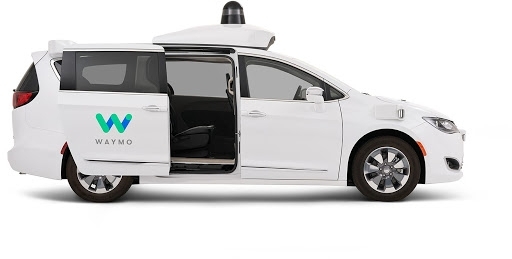
Google Waymo’s self-driving car. /Photo = Waymo
A2G Demonstrates Self-Driving Taxi Technology in Japan, Deploying Level 4 Ioniq 5
Autonomous A2Z announced that it will provide its autonomous driving technology to a two-month autonomous taxi demonstration project being conducted in Naruto City, Tokushima Prefecture, Japan, from March 6th to March 31st. This marks the first time that A2Z’s autonomous driving technology has been applied to Japan’s public transportation system.
A2Z will deploy a modified Hyundai Ioniq 5 vehicle equipped with its Level 4 autonomous driving system for the demonstration. The autonomous taxis will operate free of charge within designated areas, centered around 27 pick-up and drop-off points, including Tokushima Awaodori Airport.
IBM and StradVision Build a Large-Scale Autonomous Driving Data Management Environment
IBM announced on the 5th that StradVision, an artificial intelligence (AI) vision recognition technology company for autonomous vehicles, has introduced IBM Storage Deep Archive, which includes IBM’s next-generation tape storage, the IBM Diamondback Tape Library.
StradVision transitioned to an IBM-based archive system that offers both scalability and rapid data access to address the recovery delays and cost burdens inherent in existing cloud environments. StradVision continuously generates massive amounts of video and sensor data to enhance autonomous driving algorithms. This data must be reliably stored for long periods of time, while also being readily recoverable for retraining and validation when needed.
Google’s Waymo, which secured 23 trillion won in funding, accelerates autonomous driving.
Waymo, the self-driving division of Google’s parent company Alphabet, has raised $16 billion (about 23 trillion won), Bloomberg and Reuters reported on the 2nd (local time).
This investment round values Waymo at $126 billion (approximately KRW 182.6 trillion).
In a previous funding round in October 2024, Waymo was valued at approximately $45 billion. In less than two years, its valuation has nearly tripled.
Rideflux, a self-driving startup, raises 33 billion won in pre-IPO funding and aims to go public within the year.
According to venture capital (VC) industry sources on the 3rd, Rideflux recently secured 33 billion won in pre-IPO funding. This funding, which came just two months after the company began raising pre-IPO funding in early December of last year, saw participation from Atinum Investment, Industrial Bank of Korea, and Capstone Partners.
Rideflux was founded in 2018 by CEO Park Jung-hee, a Ph.D. in engineering from MIT. The company has developed technologies necessary for autonomous driving, including perception, positioning, prediction, judgment, and control, and received a provisional permit for unmanned autonomous driving in 2024.
VCs praised Rideflux for conducting autonomous driving tests in the Sangam area of Seoul, with no driver behind the wheel, based on a “permit-based” driverless system. The company has already amassed over 2,300 hours of autonomous driving data and plans to launch its service publicly next year.
Chamseul Tech is the first to apply Tesla’s FSD-based autonomous driving call control to a newly built apartment.
Chamseul Tech, a company specializing in autonomous driving parking guidance convergence systems, announced on the 4th that it has applied its patented ‘autonomous driving call control’ technology, which is configured to respond to the Tesla FSD (Full Self-Driving)-based autonomous vehicle call environment, to a new apartment for the first time in Korea.
This technology, based on Chamseultech’s autonomous driving convergence platform, “T-Linker,” utilizes the parking guidance system infrastructure typically designed and built into new apartments to manage and control autonomous driving calls. This approach is also noteworthy from a business perspective, as it eliminates the need for additional autonomous driving-specific equipment, eliminating the need for additional construction or costs.
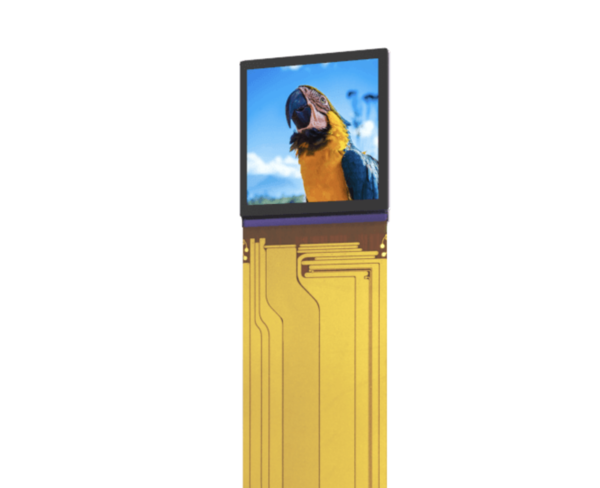
SeeYa’s 1.03-inch OLEDoS display module. /Photo = SeeYa
Sunik Systems Hits Jackpot with 20.6 Billion Won OLEDoS Equipment Order
Sunik System announced on the 5th through a public notice that it had signed a contract with China’s Anhui Hongxi Weixian Technology to supply deposition equipment for mass production of OLEDoS displays worth approximately 20.576 billion won.
OLEDoS, expected to benefit the most from the growth of the XR market, is a technology that achieves ultra-high resolution by depositing organic materials on silicon wafers and is a key component of next-generation AR and XR devices. Sunik Systems is one of the few companies in the global market capable of supplying deposition equipment for mass production of OLEDoS, and this order reaffirms its position as a leader in high-difficulty process technology.
Hyundai Mobis begins commercializing windshield displays, partnering with global companies.
Hyundai Mobis announced on the 3rd that it has launched the ‘Quad Alliance’ for mass production of ‘Holographic Windshield Display’ (HWD) with European specialized companies possessing leading technology for next-generation vehicle displays.
The alliance includes Germany’s Zeiss, which possesses world-class optical technology; Germany’s Tessa, a global leader in the adhesive tape industry; and France’s Saint-Gobain Sekurit, Europe’s leading automotive glass manufacturer.
Hyundai Mobis, which first began its collaboration with Zeiss in 2024, plans to expand its collaborative ecosystem to four companies and commercialize HWD by 2029.
Solus Advanced Materials posted a deficit of 71.5 billion won last year, laying the foundation for a turnaround.
Solus Advanced Materials announced on the 5th that it recorded sales of KRW 616.4 billion and an operating loss of KRW 71.5 billion on a consolidated basis last year.
Sales reached an all-time high, increasing approximately 8% year-over-year. Growth was driven by increased sales of high-value-added products from the copper foil division, driven by the expansion of the artificial intelligence (AI) market.
In the organic light-emitting diode (OLED) materials business, sales remained at a similar level to the previous year at KRW 126.2 billion.
Source: Kipost.net
Leave a Reply