

The US has proposed semiconductor tariff exemptions to Taiwan first, with South Korea remaining in negotiations.
The U.S. Department of Commerce announced on the 15th (local time) the details of the trade agreement reached with Taiwan, stating that it would exempt some tariffs only for Taiwanese companies that establish and operate semiconductor production facilities in the U.S.
Accordingly, Taiwanese companies building new semiconductor production facilities will be exempt from tariffs on up to 2.5 times their production capacity while construction is underway. Preferential rates will apply to imports exceeding 2.5 times that capacity. Furthermore, Taiwanese companies that complete new semiconductor production facilities in the US will be able to import up to 1.5 times their new production capacity duty-free.
In fact, some analysts say that the United States has set Taiwan as the first country to set guidelines for semiconductor tariffs.
Demand for AI semiconductors remains robust, with TSMC predicting a 30% increase in sales this year.
TSMC announced today that its net profit for the fourth quarter of last year was NT$505.7 billion (approximately KRW 23.54 trillion), a 35% increase from the previous year (NT$374.5 billion).
Last year, annual sales reached NT$3.809 trillion (approximately KRW 177 trillion), a 32% increase from the previous year (NT$2.8943 trillion), and net profit also surged 46% over the same period to NT$1.7157 trillion (approximately KRW 80 trillion).
The “leading contributor” to the company’s performance is its high-performance computing (HPC) division, which manufactures AI semiconductors. Last year, HPC sales grew 48% year-over-year, accounting for 58% of total sales.
Hanmi Semiconductor hires former Apple executive Lee Myung-ho as vice president.
Hanmi Semiconductor announced on the 14th that it had hired Vice President Lee Myung-ho, a semiconductor expert from Apple in the United States.
According to the company, Vice President Lee Myung-ho will oversee development and sales at Hanmi Semiconductor, focusing on strengthening new product and technology development. He also plans to further solidify Hanmi Semiconductor’s business by expanding its global client base and fostering strategic collaborations.
Vice President Lee Myung-ho is a veteran with over 25 years of experience in the semiconductor industry, having held key roles at global semiconductor companies such as Apple, Texas Instruments (TI), JCET, StatsChipPAC, and Amkor Technology.
Semes Develops Mass Production of the “Tepas 100” Sorter for Semiconductor PLPs
Semiconductor equipment manufacturer Semes announced on the 16th that it has developed the first mass-produced ‘Tepas 100’, a sorter equipment for large-scale semiconductor panel-level packages (PLPs), in Korea.
The Tephas 100 is a device that cuts raw material packages into individual pieces, inspects the manufactured semiconductor chips for defects and quality using vision, and sorts them into trays using high-speed, high-precision sorting technology. This device’s significance lies in its ability to cut and handle packages from large panels measuring 515 x 510 mm. It also boasts a wide range of materials, from organic materials to glass.
Hanchem Begins Mass Production of MLCC Materials Early
Hanchem is bringing forward the start-up date of its new production line to meet the surging global demand for MLCCs (Multilayer Ceramic Capacitors) and semiconductors. The company aims to achieve two goals simultaneously: stabilizing supply contracts with major domestic customers and accelerating the launch of new growth engines for semiconductors and next-generation substrate materials. This will both improve the company’s fundamentals and enhance its corporate value.
Hanchem announced on the 13th that it will enter into mass production early due to a recent surge in requests for MLCC material supply from major customers.
LG Innotek invests 100 billion won in Gwangju to expand its automotive semiconductor component production line.
LG Innotek is investing approximately KRW 100 billion to expand its automotive semiconductor component production line in Gwangju. This investment is expected to strengthen the competitiveness of its new business and contribute to balanced regional development.
LG Innotek announced on the 13th that it signed an investment agreement (MOU) with Gwangju Metropolitan City. Under the MOU, the company plans to complete the new plant by December of this year and begin producing automotive application processor (AP) modules.
Bessie’s orders reached 430 billion won in the fourth quarter of last year, up 105% year-on-year.
Dutch semiconductor equipment company Bessie announced on the 12th (local time) that its provisional orders for the fourth quarter of last year amounted to 250 million euros (approximately 430 billion won).
This represents a 105% increase compared to the same period last year and a 43% increase compared to the previous quarter. Total orders for the second half of last year amounted to approximately €425 million (approximately 730 billion won), a 63% increase compared to the first half.
Bessie primarily supplies semiconductor assembly process equipment. It manufactures 2.5D advanced packaging and high-bandwidth memory (HBM) manufacturing equipment.
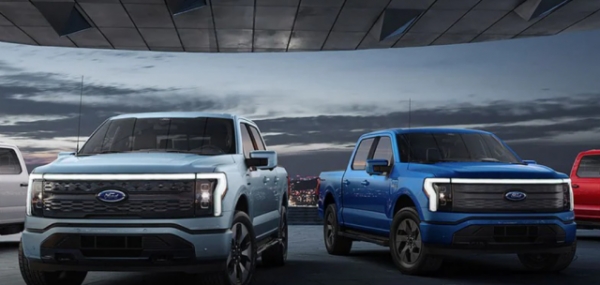
Ford’s electric pickup truck, the 2022 F-150 Lightning. / Photo = Ford
Ford Discusses Purchasing Batteries from China’s BYD
The Wall Street Journal (WSJ) reported on the 15th (local time) that Ford Motor Company of the United States is discussing using batteries from China’s BYD in some of its hybrid vehicle models.
According to sources, the two companies are discussing specific collaboration options, including importing BYD batteries to Ford plants outside the United States. BYD produces some commercial vehicle batteries at its bus plant in California, but does not manufacture passenger car batteries in the United States.
Gosung Engineering and KGA Sign MOU for Development of Integrated Battery with Cover
Gosung Engineering, a specialist in robot system integration (SI) solutions, announced on the 15th that it has signed a memorandum of understanding (MOU) with KG A, a specialist in secondary battery electrode processes, to develop a cover-integrated battery for AI drones. The main purpose of this agreement is to integrate KG A’s currently developing expandable power solution (molded battery) with a drone case cover.
The two companies plan to closely cooperate in exploring business opportunities, including ▲drone product research and development ▲prototype production and performance verification ▲product commercialization ▲overseas marketing ▲participation in government and public institution research projects.
Cosmo Materials Issues KRW 120 Billion in Convertible Bonds, Secures Overseas Production Base
Cosmo Shinsoujae announced on the 16th through a public notice that it had decided to issue convertible bonds (CB) worth 120 billion won.
The company explained that this financing is intended to proactively respond to the rapidly changing global secondary battery market and secure future growth engines. Cosmo Advanced Materials plans to use the funds raised through the convertible bond issuance to address domestic industry protection policies, such as strengthening environmental regulations in the Americas and Europe, and to secure overseas production bases to meet global market demands.
The amount of cathode material loaded on electric vehicle batteries increased by 35% between January and November last year.
According to SNE Research, an energy market research firm, on the 13th, the total loading of cathode materials in the global electric vehicle market, including pure electric vehicles (EVs), plug-in hybrid vehicles (PHEVs), and hybrid vehicles (HEVs), from January to November last year was 1.241 million tons, a 35.3% increase compared to the same period last year.
During the same period, loads in markets excluding China increased by 28.2% to 447,000 tons.
By company, China’s Shanshan (269,000 tons) and BTR (217,000 tons) ranked first and second, respectively. Both companies boast a wide range of customers, including CATL, BYD, and LG Energy Solution, and possess large-scale production capabilities.
Group Fortin’s Sangju plant begins mass production of SCC55, a silicon battery material.
Group14 Technologies’ Sangju plant (BAM-3) held a product shipment ceremony on the 10th to announce the mass production of its electric silicon battery material, “SCC55.” Group14’s SCC55 is a silicon anode material that boasts up to 50% higher energy density than conventional lithium-ion batteries (LIBs) and enables ultra-fast charging of electric vehicles (EVs) in under 10 minutes.
It is evaluated as having the world’s best product competitiveness by solving the problem of volume expansion of silicon batteries that has been a problem for a long time and significantly extending the lifespan compared to existing LIBs.
Ninetech Begins Full-Scale Development of Maxene-Based All-Solid-State Battery Materials
Ninetech has begun full-scale development of all-solid-state battery materials based on MXene to secure a lead in the next-generation ‘physical AI (artificial intelligence)’ robot battery market.
Ninetech announced on the 13th that it is developing a MAXEN-based battery material in collaboration with Purdue University in the United States through a global collaborative R&D project hosted by the Technology Information Promotion Agency for Small and Medium Businesses (TIPA). Following the successful completion of Phase 1, the technology’s completeness and scalability have been recognized, and Phase 2 research is currently underway.
Enchem Announces Mid- to Long-Term Growth Strategy for Electrolyte, Presenting Roadmap for 1 Million Ton Capacity by 2030
Enchem announced on the 13th that it is currently pursuing a new electrolyte supply project worth a total of 3 trillion won to major global customers in North America, China, and Europe. Contracts for approximately 1.5 trillion won of this have already been finalized, with initial supplies scheduled to begin in the second quarter of this year.
Negotiations are underway for the remaining approximately KRW 1.5 trillion worth of orders, with the goal of securing them by the end of the year or the first quarter of 2027. Building on this, Enchem plans to secure all of the world’s top 10 battery manufacturers as clients within the year.
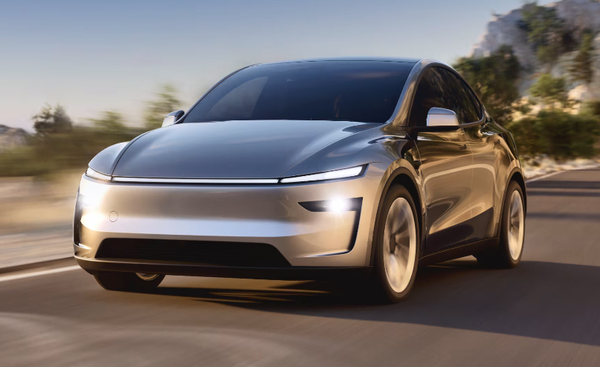
Tesla’s ‘New Model Y’. /Photo = Tesla
POSCO Group and Japan’s Yaskawa accelerate the introduction of robots to electric vehicle factories.
POSCO Group announced on the 14th that it will actively promote the expansion of robots in the production sites of drive motor cores, a key product of POSCO Mobility Solutions, in cooperation with Yaskawa Electric, one of the world’s top three industrial robot manufacturers.
Through this collaboration, robots produced by POSCO Mobility Solutions will be gradually implemented at the Cheonan and Pohang plants, as well as overseas locations in Poland, Mexico, and India. These robots will transport motor cores to quality inspection measuring equipment and sort the transported products by quality grade.
HMM Introduces HD Hyundai Autonomous Navigation Solution, “Self-Selecting Optimal Routes”
HMM announced on the 16th that it signed an ‘AI-based autonomous navigation solution introduction contract and technical cooperation memorandum of understanding (MOU)’ with HD Hyundai affiliates HD Korea Shipbuilding & Offshore Engineering and Avicus.
Through this collaboration, HMM will implement Avicus’ autonomous navigation solution on 40 vessels. Unlike existing systems that merely provide navigation assistance, this solution enables ships to autonomously determine optimal routes and navigate. This is expected to enhance the competitiveness of the fleet, resulting in improved operational stability and efficiency, reduced fuel costs, and reduced carbon emissions. Based on the results of this pilot, HMM plans to expand the implementation of the autonomous navigation solution across its entire fleet.
Hyundai Motor Group continues to recruit leading figures in autonomous driving and robotics.
Hyundai Motor Group is accelerating the development of future mobility by recruiting global technology leaders in fields such as artificial intelligence (AI), robotics, and autonomous driving.
Following the hiring of Dr. Park Min-woo, a former Tesla and Nvidia executive, as Head of the Advanced Vehicle Platform (AVP) Division and CEO of Forty2Dot, the company also brought in Milan Kovic, a former Tesla VP who spearheaded the development of Tesla Robotics. This is seen as a major move toward future mobility and AI/robotics innovation.
Optrotek to Supply Autonomous Vehicle Lenses to North American Automakers
Optrotek, a company specializing in optical solutions, announced on the 14th that it is accelerating its conquest of the North American battlefield market based on its core management strategy this year.
Optrotek recently secured a finalized purchase order (PO) for key electrical components from a North American global automaker and began full-scale mass production this month. The monthly supply is 150,000 units, all manufactured using the company’s preemptive, state-of-the-art automated production line.
Tesla’s fully autonomous cars will be available on a subscription basis starting next month.
Tesla CEO Elon Musk announced that Full Self Driving (FSD) will stop being sold as a one-time, permanent vehicle option and will only be offered as a subscription. Musk announced on his X (formerly Twitter) on the 14th (local time), “Tesla will stop selling FSD after February 14th,” and “Going forward, FSD will only be available as a monthly subscription.”
Until now, Tesla FSD has been available for purchase for $8,000 (approximately 11 million won) in the US and can be owned for life or subscribed to for $99 (approximately 140,000 won) per month.

TopRun Total Solutions to Supply Display Components to China’s Chery Automobile
Toprun Total Solutions (336680), a company specializing in manufacturing advanced components, announced on the 16th that it will supply 28.9-inch large display components to the Pullwin T11, a premium SUV brand of China’s Chery Automobile.
Top Run Total Solutions, through its wholly owned subsidiary Top Run China Nanjing, will supply display parts worth a total of KRW 28 billion to Chery Automobile, a Chinese domestic automaker, over a five-year period starting in the second half of 2026.
The iPhone 18 Pro retains the same screen and features built-in Face ID.
Foreign media outlets, including MacRumors, reported on the 14th (local time) that detailed display specifications for the iPhone 18 Pro model, scheduled to be released this fall, have been released.
IT tipster Digital Chat Station reported on Weibo that the iPhone 18 Pro and iPhone 18 Pro Max will feature the same 6.3-inch and 6.9-inch displays as their predecessors. The Pro model, in particular, is said to feature a new in-screen facial recognition feature, Face ID.
Source: Kipost.net
Leave a Reply