

LG Innotek will also change the semiconductor packaging board… ‘Glass substrate’ is in full swing
LG Innotek announced on the 8th that it has entered into a R&D cooperation with UTI, a company specializing in glass precision processing, to strengthen the competitiveness of the glass substrate business, a next-generation technology that will change the semiconductor packaging market.
The two sides plan to jointly develop technology to increase the strength of glass substrates, which are next-generation semiconductor substrates.
Unlike conventional plastic (organic) substrates, glass substrates replace the core layer inside the substrate with glass, and glass strengthening technology is a key issue. UTII has the ability to manufacture thin yet strong tempered glass for mobile devices.
China launches anti-dumping investigation into imported dichlorosilane from Japan
China’s Ministry of Commerce issued a notice on its website on the 7th, announcing that it would begin an anti-dumping investigation into dichlorosilane imported from Japan from this day. Dichlorosilane is a key chemical used in the semiconductor chip manufacturing process.
The Ministry of Commerce explained, “We received the application for an anti-dumping investigation by a Chinese company and reviewed the products under investigation, similar products in China, the impact of the products under investigation on Chinese industry, and the countries under investigation, and determined that they met the requirements for initiating an investigation.”
CMTX in patent war with Lam Research… Won the patent invalidation trial
CMTX announced on the 30th of last month that the Patent Trial and Appeal Board ruled on the ‘establishment of the claim’ in the patent invalidation trial of Lam Research’s ‘Radio Frequency Grounding Return Devices (Patent No. 2285582)’ filed by CMTX. The order is that the trial for the establishment of the claim invalidates the patent and that the trial cost will be borne by the respondent, Lam Research.
The Patent Trial and Appeal Board determined that Lam Research’s patent lacked inventive step compared to prior art and was not valid as a patent. It is judged that the core technical composition of the patent is published in several prior technologies that have already been disclosed, and that it is at a level that can be easily derived without special technical creation if the prior technologies are synthesized.
Hanmi Semiconductor introduces the first ‘credit’ system in the equipment industry… Earn 2% of your order value
Hanmi Semiconductor has announced that it will continue to operate under the ‘HANMI Credit System· HCS) on the 2nd. This system is the first time in the global semiconductor equipment industry that customers will earn 2% of the order amount as credits (points) when they order semiconductor equipment.
Through this, the goal is to strengthen long-term partnerships with customers and increase brand competitiveness. Credits are automatically accumulated when 100% of the payment is paid in full after the equipment is shipped, and can be used for the next equipment purchase if it accumulates more than a certain amount. Credits are valid for 5 years from the date of credit.
“TSMC’s US production costs are 2.4 times more expensive than Taiwan’s”
Semianalysis, a semiconductor market analysis and consulting company, analyzed the production costs of TSMC’s Taiwan plant and its Arizona plant in the United States. The cost per wafer was compared between Fab 18 located in Tainan Science Park, Taiwan, and Fab 21 in Arizona, USA.
According to Semianalysis, the total cost of production per wafer for Taiwanese factories based on the 5-nanometer (nm) process was $6,681, and the U.S. was $16,123. When produced in the United States, the cost was about 2.4 times higher.
This is interpreted as having a significant impact on labor costs, material purchase prices, and depreciation costs.
Micron starts construction of a $100 billion megafab in New York State
Micron, an American memory semiconductor company, has started construction of the so-called Megafab, the largest semiconductor production facility ever worth about $100 billion (about 147 trillion won) in Ononda County, New York, USA. This factory is expected to become a key base for strengthening the US semiconductor supply chain and responding to demand for AI and advanced memory.
The factory site is in the Clay area of central New York, and it will be a super-large facility that includes up to four semiconductor production lines. Initially, about $20 billion will be invested, and the total investment is planned to reach up to $100 billion over the next few decades.
A-Spiritand mass-produces 25.4 billion won storage controllers
A-Spiritand announced on the 8th that it has signed a contract for the mass production of storage controllers worth $17.56 million (approximately 25.4 billion won).
Although the specific contract target has not been disclosed, it has been signed with a domestic company and is scheduled to be mass-produced and supplied by the end of this year.
Aziland is the only TSMC partner (VCA) among semiconductor design houses in Korea. A semiconductor design company (fabless) will support everything from semiconductor design optimization to process response and mass production yield management in line with TSMC’s process.
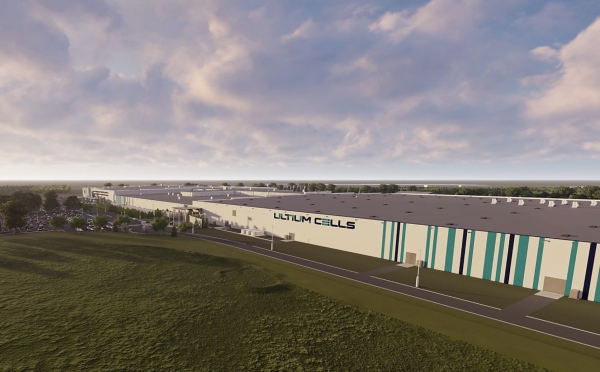
A view of LG Energy Solution and GM’s joint venture Ultium Cells. /photo=LG Energy Solution
Volkswagen surpassed Tesla… No. 1 in non-Chinese electric vehicle deliveries in January ~ November
According to SNE Research, a market research company, on the 9th, the total number of electric vehicles registered in countries around the world excluding China from January ~ November 2025 was about 6.853 million, an increase of 26.4% year-on-year.
By group, the Volkswagen Group sold 1.133 million units, an increase of 60.3% year-on-year, surpassing Tesla in first place, in terms of global electric vehicle deliveries excluding China. Focusing on the European market, flagship models based on the MEB platform, such as ID.4, ID.7, and ENYAQ, drove sales expansion, and sales of new cars using PPE platforms such as the A6 e-tron, Q6 e-tron, and Macan 4 Electric began in earnest, further accelerating growth.
GM will reduce the cost of reducing the electric vehicle business by 10 trillion won alone
On the 8th (local time), GM announced that it would reflect $7.1 billion (approximately 10.3 trillion won) incurred during the reduction of its electric vehicle business and restructuring in China as special expenses for the fourth quarter.
GM announced on the same day that about $6 billion (about 8.7 trillion won) of these costs were impaired losses incurred in the process of adjusting its business plan due to slowing demand for electric vehicles. It includes items with cash impacts such as supplier contract cancellation and settlement ($4.2 billion).
‘Hybrid Great Transition’ in the Electric Vehicle Chasm… 1 in 3 new cars are hybrid
According to the Korea Automobile Mobility Industry Association on the 9th, 359,134 hybrid vehicles were sold in the domestic market from January ~ November last year. Considering that the average monthly sales volume exceeded 30,000 units, it is estimated that annual sales last year exceeded 390,000 units.
By brand, Kia had the most units with 166,483 units, followed by Hyundai Motor Company with 159,191 units. The Kia Sorento Hybrid led the way with 63,769 units, followed by the Kia Carnival (42,251 units) and Hyundai Santa Fe (40,392 units) with over 40,000 units.
SK On improves battery life and safety… Development of high-density monocrystalline cathode materials
SK On announced on the 8th that it has succeeded in developing a high-density single crystal anode electrode composed of large particles in collaboration with the research team of Professor Kang Ki-seok of Seoul National University. It is expected to achieve meaningful research results in the field of monocrystalline cathode materials, which are key materials for next-generation batteries, and improve battery performance.
The results of this study, published in the world-renowned academic journal ‘Nature Energy’, identified the technical limitations of single crystal cathode material synthesis and proposed a new synthesis path. SK On explained that this has paved the way for improving battery life, stability, and energy density at the same time.
Terraview completes supply of lithium-ion battery inspection ‘Terrakota 3500’ for ESS
TeraView announced on the 9th that it has supplied the TeraCota 3500 inspection system to a domestic supplier that requires mandatory inspection of lithium-ion batteries for energy storage systems (ESS).
According to the company, Terracotta 3500 is an advanced non-contact measurement system for battery production lines. ▲Non-contact inspection that does not cause physical impact or external damage to the coating material ▲It operates on both cathode and anode during the battery manufacturing process and accurately measures coating thickness, density, and conductivity ▲It can be integrated with plant IT systems and can automatically calculate parameters without manual input from operators.
Three K battery companies observe a companion deficit in the fourth quarter… It’s dark again this year
According to F&Guide, a financial information company, on the 8th, LG Energy Solution’s consensus (market average forecast) for the fourth quarter of last year was an operating loss of 61.5 billion won. In the third quarter, it was the only battery company to record a surplus with an operating profit of 235.8 billion won, but it is expected that it will turn into a loss in the fourth quarter.
Samsung SDI is also likely to suffer consecutive losses. Securities companies estimated that it had a loss of more than 200 billion won in the fourth quarter of last year. SK On is also expected to have a deficit of 200 billion won, following an operating loss of 124.8 billion won in the third quarter.
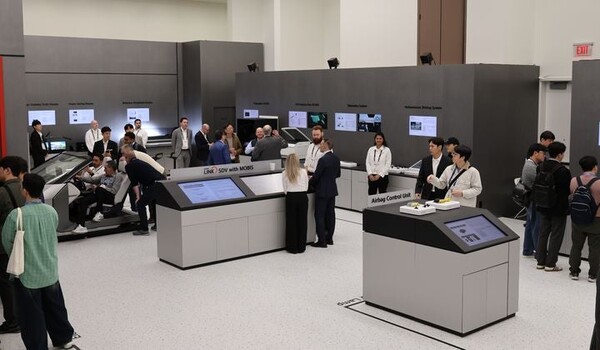
/photo=Hyundai Mobis
Hyundai Mobis builds AI robot ‘Atlas’ muscles… Partnering with Qualcomm to develop SDV
Hyundai Mobis announced at CES 2026 on the 7th (local time) that it will establish a strategic cooperation system with Boston Dynamics, a subsidiary of Hyundai Motor Group Robotics, and supply actuators for the next-generation humanoid robot ‘Atlas’. This cooperation is the starting point for Hyundai Mobis to secure global customers in the field of robotics, and it is evaluated as a signal that it has entered the robot parts market in earnest beyond vehicle parts.
Hyundai Mobis signed a business agreement (MOU) with Qualcomm on the joint development of SDV and advanced driver assistance systems (ADAS) at the LVCC West Hall in Las Vegas, USA.
Ford focuses on autonomous driving despite the retreat of electric vehicles… 2028 Phase 3 Challenge
According to CNBC and other US media, Ford’s chief electric vehicle, digital and design officer Doug Field announced in an interview on the 7th (local time) that it will launch a new car equipped with stage 3 autonomous driving technology in 2028. Field explained that the plan is “part of a broader technology strategy to bring Ford’s best and latest technology to areas where it is in demand and accessibility.”
Previously, in a 2021 announcement when the U.S. Joe Biden administration’s support for electric vehicles was expected, Ford announced that it would invest $22 billion (about 31 trillion won) in electric vehicle development and $7 billion (about 10 trillion won) in the development of autonomous driving technology by 2025.
However, the U.S. electric vehicle market has since faced a cold wind due to declining demand and the withdrawal of electric vehicle support measures by the second-term Donald Trump administration.
SOS Lab expands lidar supply to AI personal mobility
On the 9th, SOS Lab, a company specializing in LiDAR, announced that it had signed a strategic business agreement (MOU) with ‘Hicore’, a company specializing in physical AI robots, at CES 2026 in the United States to target the ‘AI personal mobility’ market.
The goal of this agreement is to equip and upgrade Highcore’s robot products with SOS Lab’s lidars such as ‘ML-U’.
Musk checks Nvidia’s autonomous driving technology…”It will take more than 5 to 6 years”
According to Musk’s X (formerly Twitter) page on the 7th (local time), he replied to a post about Nvidia’s self-driving platform ‘Alpha Mayo’ the day before, pointing out that “it will take several years from the time autonomous driving starts to work to a certain extent to a level that is much safer than humans.”
“Existing automakers won’t be able to design cameras and AI computers on a large scale in their vehicles (like Tesla) in a few years,” he said, adding, “So the competitive pressure on Tesla may only be in five to six years, but it will probably take longer.”
HL Clembe cooperates with Infineon for SDV and autonomous driving
HL Clemmove, a subsidiary of HL Group’s autonomous driving solutions, announced on the 8th that it has signed a strategic partnership with semiconductor company Infineon to develop future car technology.
The two companies have agreed to cooperate on ‘joint development of software-centric vehicle (SDV) architecture’ and ‘accelerating innovation in autonomous driving technology’. The SDV architecture not only improves the efficiency of vehicle software operation by integrating the management of electronic control units (ECUs), but also significantly reduces hardware such as wiring.
Autonomous driving also plans to raise the level of technology through real-time data processing solutions and cooperation in the commercialization of high-resolution radar.
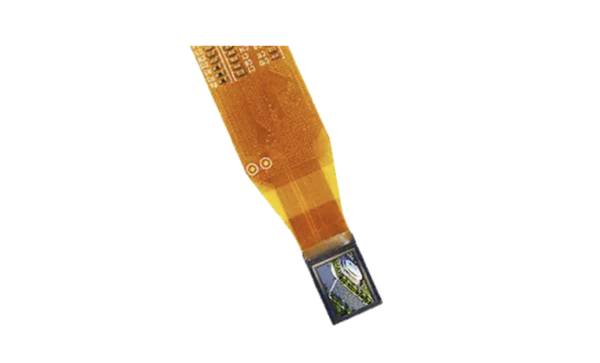
Seedtech’s microOLED module. /phot
Sunik System supplies micro OLED deposition machines to China… 41 billion won
Sunik System announced on the 8th that it will supply deposition equipment for mass production of micro OLED (OLED) displays to China’s Gore Pixel Technology. The contract size is around 41 billion won. Sunik System is scheduled to complete the delivery by September 30th.
The company has previously supplied deposition equipment for mass production of micro-OLED displays to other Chinese companies, such as Vision Display and Jiangsu Hantang International Trade Group.
Everchemtech registers Chinese patent for ‘graphene removable material for flexible OLED’
Everchemtech announced on the 5th that the patent ‘Detachment Layer, Manufacturing Method, Information Display Device and Manufacturing Method’, which was jointly applied with the Korea Electronics Technology Research Institute (KETI, Dr. Yang Woo-seok’s team), has recently received a registration decision from the Chinese Patent Office.
The patent decided to be registered this time is a technology that uses graphene material to achieve ‘debonding’ performance, which is the core of the flexible OLED manufacturing process.
Flexible OLEDs require a flexible plastic substrate to form a flexible plastic substrate on top of the glass substrate during the manufacturing process, and then use a laser to remove the glass substrate at the end of the process. This technology, jointly developed by Everchemtech and KETI, includes a manufacturing method that facilitates the separation of the substrate through a specially designed removal layer and prevents no foreign matter from remaining after separation.
Source: Kipost.net
Leave a Reply