

Prosecutors indict semiconductor company Padu executives and corporation over alleged false listing
The Seoul Southern District Prosecutors’ Office’s Joint Financial and Securities Crime Investigation Division announced on the 18th that it had indicted three executives of semiconductor design company Padu without detention on charges of violating the Capital Market Act, and also indicted Padu Corporation.
According to the prosecution, they are accused of hiding the fact that major clients, including SK Hynix, had suspended orders during the process of listing on the KOSDAQ market in August 2023 and inflating the public offering price.
The prosecution’s investigation revealed that despite receiving notices from major clients to halt orders, they submitted false sales information to the Korea Exchange and passed the preliminary listing review.
Doosan Acquires SK Siltron, Accelerating Semiconductor Expansion
SK Corporation announced on the 17th that it had selected Doosan Corporation as the preferred bidder for the sale of its SK Siltron stake. The sale reportedly involves SK’s 70.6% stake in SK Siltron.
SK Corporation explained, “Details will be decided through consultation with the preferred bidder, and will be re-announced when the relevant details are confirmed or within three months.”
SK Siltron, a semiconductor wafer manufacturing company of SK Group, ranks third in the global market share for 12-inch wafers.
China also succeeds in developing EUV lithography equipment, advancing its semiconductor industry in a bid to contain the West.
According to Reuters on the 18th, Chinese scientists completed an early prototype of EUV equipment in a Shenzhen lab earlier this year and are currently in the testing phase. However, it is not yet ready for actual chip production.
The Chinese government reportedly developed its own EUV lithography system by deploying Chinese engineers who previously worked at ASML and using reverse engineering to disassemble ASML equipment to understand its structure and operation. Reuters noted, “China aimed to produce actual chips using EUV prototypes by 2028, but realistically, it will likely take 2030,” but added, “This is much sooner than analysts expected.”
Micron, the “semiconductor weather vane,” delivers an earnings surprise.
Micron Technology of the United States recorded ‘surprise performance’ exceeding the consensus (average of securities firms’ estimates) in the first quarter of fiscal year 2026 (September-November 2025).
Micron announced on the 17th (local time) that it recorded revenue of $13.64 billion and adjusted earnings per share (EPS) of $4.78 for the first quarter of fiscal year 2026. Both revenue and EPS exceeded consensus estimates (revenue of $12.95 billion and EPS of $3.95).
The company’s official earnings guidance for the second quarter of fiscal year 2026 (December 2025-February 2026) also exceeded consensus. Revenue guidance of $18.3 billion to $19.1 billion significantly exceeded the consensus of $14.38 billion, and EPS of $8.42 also exceeded the consensus of $4.71.
Honda to cut production at its plants in Japan and China during the holiday season due to semiconductor shortages
Honda plans to halt or reduce production of finished vehicles at its plants in Japan and China from late this month to early January next year due to a semiconductor shortage.
According to Kyodo News and other sources on the 18th, production will be halted for two days from January 5th to 6th at two factories in Yorii, Saitama Prefecture and Suzuka, Mie Prefecture in Japan, and production will be reduced from the 7th to the 9th of the same month.
In China, production at a joint venture with Guangzhou Automobile Group (GAC) will be halted for five days, starting on the 29th of this month. Subsequent production plans will reportedly be determined based on semiconductor availability.
Wonik Holdings wins KRW 296.3 billion contract to supply semiconductor specialty gases from Linde Korea.
Wonik Holdings announced on the 17th that it had won a KRW 296.3 billion engineering, procurement, and construction (EPC) turnkey contract from Linde Korea to supply specialty gases for semiconductors. This represents 45.9% of last year’s consolidated sales.
The contract period runs from today until April 30, 2028. The advance payment will be received in two installments: KRW 40 billion (the first installment) and KRW 45 billion (the second installment), with the remaining balance billed and paid as construction progresses.
SFA Selected for National Project to Develop Nondestructive Testing Equipment for HBM
SFA announced on the 18th that it has been selected as the lead research institute for the national project, “Development of AI-based non-destructive equipment technology for defect detection and analysis of HBM,” worth a total of 10 billion won over the next four years, as part of the “AI Factory Pilot Project” hosted by the Ministry of Trade, Industry and Energy.
Currently, CT equipment supplied by overseas equipment companies takes several hours to inspect a single HBM chip. This quality innovation, which reduces this time to under 30 minutes, is expected to significantly improve HBM yields and enhance the productivity of HBM manufacturing lines. Specific goals include reducing inspection times by more than 25% through video and image-based non-destructive testing and achieving a quality inspection accuracy of over 99%.
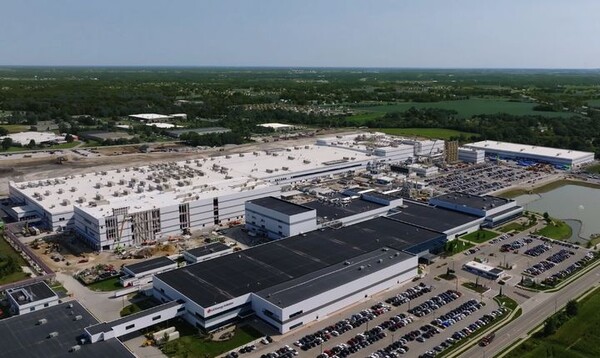
A view of LG Energy Solution’s Michigan plant in the United States. / Photo = LG Energy Solution
LG Ensol terminates KRW 9.6 trillion battery supply contract with Ford.
LG Energy Solution announced on the 17th that its long-term electric vehicle battery cell and module supply contract with Ford, signed in October of last year, had ended following Ford’s termination notice. The contract, worth 9.603 trillion won, represents 28.5% of LG Energy Solution’s recent sales.
The contract was to supply a total of 75 GWh of electric vehicle batteries from January 2027 to December 2032. The termination of the contract is expected to have a significant impact on LG Energy Solution’s mid- to long-term sales and profitability.
Ford drastically scales back its electric vehicle business, reflecting a 28 trillion won loss.
American automaker Ford has announced that it will drastically scale back its electric vehicle business, which could cost the company $19.5 billion (approximately 28.6 trillion won).
Ford announced on the 15th (local time) that it is adjusting its business plan to preserve profitability. A significant portion of the $19.5 billion in costs will be recognized in the fourth quarter of this year. Cash costs of $5.5 billion will be recognized through 2027.
The F-150 Lightning, Ford’s flagship electric vehicle model, has also been confirmed to be discontinued. Ford plans to produce the F-150 as an Extended Range Electric Vehicle (EREV).
Volkswagen Group’s Powerco begins production of its first European-made battery cells.
PowerCo SE, a battery cell manufacturer established by the Volkswagen Group, has started production of its first unified cell in Europe at its Salzgitter Gigafactory in Germany.
Powerco is the first company to conduct the entire battery cell design, development, and production process in Europe. The cells produced will be supplied to Volkswagen Group brands. After final road tests, they will be installed in urban electric vehicle models slated for launch next year by Volkswagen, Skoda, SEAT, and Cupra.
Powerco is expected to account for approximately 50% of the Volkswagen Group’s future integrated cell demand.
LFP cathode materials expected to reach 47 trillion won by 2031… “Nanotechnology and high-density materials to compete with NCM”
On the 17th, market research firm QY Research predicted that the LFP cathode material market size would grow at an average annual rate of 12.4% from $15.77 billion (approximately KRW 23.25 trillion) in 2024 to $31.8 billion (approximately KRW 46.8 trillion) in 2031.
LFP cathode materials use lithium iron phosphate (LFP, LiFePO₄) as the active material. Compared to ternary cathode materials based on nickel and cobalt, LFP offers superior thermal stability and long cycle life. While its energy density is lower, it is cost-effective because it avoids the use of expensive, rare metals.
POSCO FutureM to Build LFP Cathode Materials Plant to Meet Demand for Domestic Materials
POSCO Future M announced on the 16th that its board of directors approved the construction of a dedicated LFP cathode material plant in the Yeongil Bay 4 General Industrial Complex in Pohang at a board meeting held on the 15th. Construction is scheduled to begin next year, with mass production beginning in the second half of 2027. All LFP cathode materials produced at this plant will be supplied for ESS use.
POSCO Future M will push forward with the construction of an LFP cathode material plant through additional investment in CNP Advanced Materials Technology, a joint venture with CNGR, in 2023, and plans to expand capacity to up to 50,000 tons starting with this investment.
Lithium prices hit 18-month highs, leading to improved profitability for the battery materials industry.
According to the Korea Resources Information Service (KOMIS) of the Korea Mining and Resources Corporation (KOMIS) on the 18th, the price of lithium carbonate hit 95 yuan (approximately 20,000 won) per kg the previous day, the highest in 18 months since June 18th of last year (93.5 yuan). Compared to the price of lithium falling to the 57 yuan range in June of this year, it has nearly doubled in just six months.
The surge in lithium prices is driven by a surge in demand for ESS batteries, following the surge in demand for electric vehicle (EV) batteries.
Japan drastically reduces hydrogen car subsidies
On the 17th, the Yomiuri Shimbun reported that the Japanese government announced a plan to revise the “Clean Energy Vehicle Introduction Promotion Subsidy” regulations and provide subsidies to eco-friendly vehicles registered starting in January of next year.
The maximum subsidy amount for FCVs will be significantly reduced from the current 2.55 million yen (approximately 24.31 million won) to 1.5 million yen (approximately 14.3 million won) starting in April next year.
This is because, during the US-Japan tariff negotiations, Japan accepted the US’s complaint about Tesla’s competitiveness in EVs and promised to reduce the subsidy gap between EVs and FCVs.
Tesla’s self-driving car hype… US authorities warn of a 30-day suspension if no action is taken.
According to the California Department of Motor Vehicles (DMV) on the 17th (local time), after the state administrative judge finished hearing the lawsuit filed by the DMV against Tesla, the state judge ruled that Tesla’s use of the terms “Full Self-Driving (FSD) capability” and “autopilot” when describing the advanced driver assistance systems (ADAS) of its products was false advertising.
The administrative judge concluded that the ads misled consumers and violated state law and recommended a 30-day suspension of Tesla’s manufacturing and dealer licenses.
Everybot Expands R&D Staff for Autonomous Driving
Everybot announced on the 18th that it is expanding its research and development (R&D) workforce to develop autonomous driving-related technologies. Everybot plans to secure double-digit staffing levels. With 46% of its employees working in the R&D department, the company plans to continue expanding its R&D workforce.
The workforce expansion is a measure to expand the development of autonomous driving technology in partnership with SK Intelix, moving beyond the existing robot vacuum cleaner business. By strengthening autonomous driving-related hardware, software, and AI personnel, the company plans to expand the secured mobility platform into a variety of applications.
Mind AI-Ability and Port DPG Jointly Develop Autonomous Yard Tractors
Maeum AI, a leading physical AI company, announced on the 18th that it has signed a contract with Ability Systems to jointly build a port Digital Proving Ground (DPG) for end-to-end (E2E) autonomous yard tractor verification. A DPG is a virtual testing ground that replicates the actual site digitally.
The two companies will jointly develop a digital verification environment that precisely replicates the physical conditions of an actual port and a port DPG capable of end-to-end verification of scenarios encompassing autonomous driving and port operations. This system is characterized by its unified, continuous verification system, without separating the physical environment, equipment characteristics, driving behavior, and operational scenarios.
IL unveils mass-produced version of its autonomous quadruped robot, the ILbot L1.
Mobility platform company IL announced on the 17th that it has begun full-scale expansion of its robot business by unveiling the ‘ILbot L1’, an industrial quadruped robot optimized for field and special environments.
According to the company, the iLbot L1 is a high-performance platform with a high-speed driving performance of up to 3.7 m/s and a high output of approximately 3,500 W. It can be used in a variety of fields, including manufacturing, security, education, and entertainment.
The iLbot L1 has a fast movement speed of 0~3.7m/s (limit speed 5m/s) and is designed to withstand a static load of approximately 8kg (maximum 10kg), and is equipped with key functions required in industrial sites such as heavy lifting, high-speed maneuvering, and obstacle response.
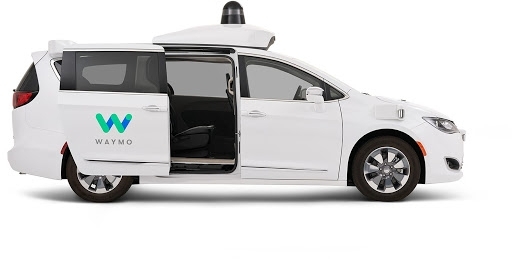
Waymo seeks to raise up to $20 billion at a valuation of $100 billion.
Waymo, the self-driving car company owned by Google’s parent company Alphabet, is raising new funding. The company’s valuation is expected to exceed $100 billion (approximately 148 trillion won).
The Financial Times (FT) reported on the 16th (local time), citing multiple sources and The Information, that Waymo is discussing raising $15-20 billion (approximately KRW 22-30 trillion) in investment early next year, and that its parent company, Alphabet, will lead this funding round. In addition to external investment, the possibility of additional investment from Alphabet is also being discussed.
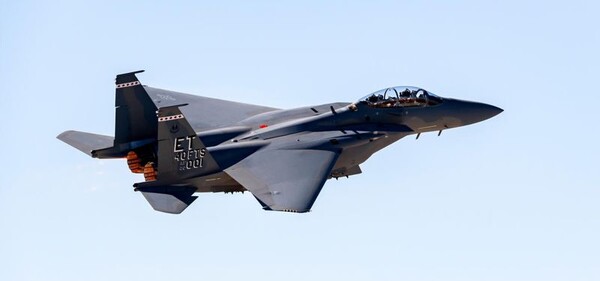
F-15EX. /Photo = Boeing
LG Innotek Develops Next-Generation Under-Display Camera Module
LG Innotek announced on the 18th that it has developed a ‘next-generation under-display camera module’ (next-generation UDC) that is installed behind the vehicle’s dashboard to monitor the driver.
UDC is a component of the driver monitoring system (DMS) that integrates cameras and software (SW) inside the vehicle, and is used to detect the driver’s status, such as forward gaze, in real time.
After a year of research and development in collaboration with LG Display, LG Innotek developed a ‘next-generation UDC’ that eliminates the chronic problem of UDC, which is the degradation of image quality.
Dongjin Semichem and Dongjin Advanced Materials to Build Production Facilities in Daeso, Eumseong
North Chungcheong Province, Eumseong County, and Dongjin Semichem signed an investment agreement on the 19th for advanced materials. Under the agreement, Dongjin Semichem plans to invest 45.8 billion won by the end of 2027 to build an advanced materials production facility linked to the semiconductor and display industries in Buyun-ri, Daeso-myeon.
Dongjin Advanced Materials, a subsidiary of Dongjin Semichem, also plans to invest 26 billion won to build a production facility in Buyun-ri by 2027.
Boeing Orders F-15EX Cockpit Display from Hanwha Systems
Boeing announced on the 18th that it will award a contract to Hanwha Systems to supply the ‘ELAD (Eagle Large Area Display) for the F-15EX program.’
ELAD is a modernized cockpit display applicable across the global F-15 fleet, including the F-15K Slam Eagle fleet operated by the Republic of Korea Air Force. Building on the existing LAD (Large Area Display), it provides enhanced situational awareness, interoperability with mission systems, and long-term maintainability.
This contract is one of Boeing’s first supply contracts in Korea, focusing on advanced cockpit electronics rather than traditional aircraft structural components.
Source: Kipost.net
Leave a Reply