

China, striving for semiconductor independence, is pushing to restrict imports of Nvidia H200 chips.
The Financial Times (FT) reported that although US President Donald Trump allowed the export of Nvidia’s H200 artificial intelligence (AI) chip to the public on the 8th (local time), China is trying to restrict imports in order to achieve ‘semiconductor independence’.
The FT, citing two sources, reported that Chinese regulators are discussing ways to restrict access to the H200 chip.
Sources said the National Development and Reform Commission (NDRC) and the Ministry of Industry and Information Technology (MIIT), the two government agencies that spearheaded China’s semiconductor independence, will come up with various countermeasures to ensure the competitiveness of the domestic semiconductor industry, which could include a ban on H200 purchases by the Chinese public sector.
Intel Acquires Sambanova, Intensifying Global NPU Technology Competition
On the 11th, foreign media reported that Intel, which has received investment from the U.S. government, is virtually finalizing its acquisition of the startup Sambanova Systems. Information and communications technology media outlet Wired reported that Intel recently signed the acquisition agreement after rumors of the acquisition began to spread.
While variables remain until the final decision, the local industry is watching closely as Intel’s strategic decision. SambaNova, a company founded by Stanford University professors, possesses NPU technology specialized in large-scale language model (LLM) inference computation.
TSMC Considers Producing Advanced AI Semiconductors at Its Second Kumamoto Plant
The Nikkei reported on the 11th that Taiwan’s TSMC, the world’s largest foundry (semiconductor contract manufacturing company), is considering producing 4 nanometer (nm, one billionth of a meter) semiconductors for artificial intelligence (AI) at its second factory in Kumamoto, Japan, which began construction last October.
TSMC initially planned to produce 6-40nm semiconductors suitable for telecommunications devices at its second plant, but has now begun surveying demand for 4nm manufacturing facilities, which have become mainstream semiconductors for AI. Construction on the second plant, which began in October, is currently effectively halted.
China’s DeepSec is developing new AI models using Nvidia’s latest chips.
DeepSec is developing new models by acquiring thousands of graphics processing units (GPUs) using Nvidia’s latest architecture, “Blackwell,” the American information technology (IT) media outlet The Information reported on the 10th (local time), citing multiple sources. The sources said that DeepSec has been acquiring Nvidia chips for the past two years through indirect import routes via countries where purchases are permitted.
First, we secured non-Chinese data centers in Southeast Asia and procured Nvidia chips through official distributors.
STI wins order for power semiconductor component manufacturing equipment, partnering with Chinese client
STI, a semiconductor and display equipment specialist, announced on the 9th that it has successfully developed and secured orders for manufacturing equipment for heat dissipation components for power semiconductors.
The heat-dissipating component manufacturing process developed by STI is recognized as a technology that simultaneously improves heat dissipation performance and manufacturing efficiency compared to existing technologies. This technology has been recognized for its competitiveness by major Chinese power semiconductor manufacturers.
The two companies signed a Memorandum of Understanding (MOU) to establish an automated inline production line for heat dissipation components, established a joint venture, and signed an equipment purchase contract worth approximately $66.5 million. The project is scheduled to begin in earnest next year.
Jaram Technology wins $23 billion ASIC contract in Europe.
Jaram Technology, a company specializing in system-on-chip (SoC) design, announced on the 10th that it has signed a design and supply contract for the ‘XGSPON’ application-specific integrated circuit (ASIC) with a global customer in Europe.
The contract is worth approximately 23.05 billion won (US$15.65 million), representing 104% of Jaram Technology’s sales from last year. The contract runs until January 7, 2028.
In particular, with this contract, Jaram Technology not only receives non-recurring development (NRE) fees but also secures a long-term, stable cash cow. The core revenue stream for the custom semiconductor design business is the sales generated from mass production following the completion of semiconductor development.
TSMC achieves 100% utilization across all CoWoS packaging lines.
It has been reported that the next-generation packaging process (CoWoS) of Taiwan’s TSMC, the world’s largest semiconductor foundry, has reached 100% operation rate.
The Taiwan Economic Daily reported on the 8th that all processes, including CoWoS-L and CoWoS-S, have effectively reached “full operation” due to a surge in AI and high-performance computing orders from major clients such as Nvidia, Google, Amazon, and MediaTek. According to the media, TSMC is expanding its packaging facilities to compensate for its insufficient production capacity and is also expanding outsourcing to external packaging companies (OSAT).

Ford’s electric pickup truck, the 2022 F-150 Lightning. / Photo = Ford
SK On and Ford part ways after four years, focusing on profitable ESS.
SK On announced on the 11th that it has mutually agreed to independently own and operate the Blue Oval SK joint venture with Ford. Under the agreement, SK On will solely operate the Tennessee plant, with an annual capacity of 45 GWh, while Ford will own Kentucky Plants 1 (37 GWh) and 2 (45 GWh). The agreement is expected to be finalized by the end of the first quarter of next year, pending regulatory approvals and other follow-up procedures.
SK On’s breakup with Ford allowed it to secure orders from other electric vehicle companies and shift to other businesses. As the 50:50 joint venture was built to supply Ford, it would be difficult for it to manufacture batteries for other electric vehicles. It was reported that Ford was forced to pay compensation to SK On, as it failed to secure the minimum contracted volume due to sluggish electric vehicle sales.
Battery foundry JR Energy Solutions signs IPO lead underwriter contract with Shinhan Securities.
JR Energy Solutions, a secondary battery components and materials company, announced on the 11th that it has recently signed an initial public offering (IPO) lead manager agreement with Shinhan Investment & Securities and is actively pursuing a listing. JR Energy Solutions, a battery foundry headquartered in Eumseong, North Chungcheong Province, manufactures core lithium-ion battery materials—electrodes, cells, packs, and modules—on a contract basis using its smart factory system.
Founded in December 2022, JR Energy Solutions has secured over 40 clients based on its comprehensive understanding of battery materials, processes, and equipment, as well as its manufacturing-optimized capabilities.
J.O. Receives NET Certification for Carbon Nanotube Manufacturing Technology for LFP Battery Challengers
J.O, a global leader in carbon nanotube (CNT) technology, announced on the 11th that its self-developed ‘low-diameter non-ferrous carbon nanotube manufacturing technology for secondary battery conductive materials’ has received certification as a new excellent technology (NET-New Excellent Technology) from the Ministry of Trade, Industry and Energy’s National Institute of Technology and Standards.
The New Technology Certification (NET) system is a system that nationally examines and certifies excellent technologies that are developed for the first time in Korea or that innovatively improve existing technologies.
Electric vehicle separator loading capacity grows 44.5%, with China accounting for 90% of the market.
According to SNE Research, an energy market research firm, the total volume of separators used in pure electric vehicles (EVs), plug-in hybrid vehicles (PHEVs), and hybrid vehicles (HEVs) registered worldwide from January to October was tallied at 14.525 billion square meters. During the same period, markets excluding China recorded 4.16 billion square meters, a 33.4% increase year-on-year.
In the overall market, Chinese companies continued to dominate, holding a market share approaching 90%. Japan held 7.4%, and Korea 4.0%.
Ford and Renault Form Strategic Partnership to Share Platforms to Aid China’s Low-Price Electric Vehicle Market
American automaker Ford and French automaker Renault have agreed to form a strategic partnership, including sharing a small EV platform, to counter Chinese electric vehicle manufacturers that are using price competitiveness to encroach on the European electric vehicle (EV) market.
In a press release posted on its website on the 9th (local time), the Renault Group announced, “We have decided to form a strategic partnership to strengthen the competitiveness of both companies in the rapidly changing European automotive market.” Ford also said on the same day, “This partnership will strengthen the competitiveness of both companies in Europe by combining the expertise and industrial scale of Ford and Renault Group.”
“Heavy electric vehicles are ruining roads”… Japan considering weight-based additional taxes
According to the Asahi Shimbun on the 12th, the Japanese Ministry of Finance is considering a plan to additionally impose an ‘EV weight tax’ on the automobile weight tax paid when inspecting electric and hydrogen vehicles.
Generally, electric vehicles are heavier than internal combustion engine vehicles and are more prone to road damage, so the burden of infrastructure maintenance and upkeep should be imposed on electric vehicles as well. The levy increases with vehicle weight: 6,500 yen per year for vehicles weighing 2 tons or less, 19,900 yen for vehicles weighing 2 to 2.5 tons, 24,000 yen for vehicles weighing 2.5 tons or more, and 3,600 yen for light vehicles.
Japanese parts industry accelerates development of electric vehicle motors with reduced rare earth use.
According to NHK on the 11th, Astemo, a major auto parts company, has developed motor technology that does not use neodymium. China is the world’s largest producer of neodymium, a key material used to make permanent magnets (neodymium magnets), which are among the most powerful magnets currently commercially available.
High-performance electric vehicle motors have traditionally used neodymium magnets to increase torque. However, Astemo has succeeded in generating sufficient torque by applying iron-based magnets to its motors.
Autonomous robot startup Newbility secures KRW 25.1 billion in Series B funding.
According to industry sources on the 10th, Newbility recently closed a 25.1 billion won investment round, bringing its total investment to 55 billion won. Newbility was previously valued at approximately 87 billion won in its Series A funding round, but this latest round reportedly raised its valuation to over 200 billion won.
Newbility, founded in 2017, is the first company in Korea to commercialize an urban autonomous driving delivery service last year.
Forty2Dot releases video of autonomous driving on public roads, challenging Tesla’s FSD.
On the 7th, Forty2Dot shared a test drive video of its autonomous driving AI, “Atria,” through its official YouTube account. Atria operates on an “end-to-end” (E2E) basis, recognizing road conditions through a vehicle equipped with eight cameras and one radar, autonomously judging and controlling learning data. It is slated for application to Hyundai Motor Group’s software-driven vehicles (SDVs) in the third quarter of next year.
The video posted by Forty2Dot shows a test vehicle based on the Hyundai Ioniq 6 driving on its own through tunnels and intersections in urban areas and running at speeds of up to 100 km/h on a dedicated automobile road.
Yang Hee-won, head of Hyundai Motor Company’s R&D division, retires, marking a shift in hardware and software.
Yang Hee-won, head of Hyundai Motor Group’s Research and Development (R&D) division, is stepping down. Following Song Chang-hyun, head of the Future Vehicle Platform (AVP) Division, the two highest-ranking officials leading Hyundai Motor Group’s hardware (HW) and software (SW) R&D axes have also decided to step down.
According to the Hyundai Motor Company and Kia Motors Namyang Technology Research Center on the 11th, Yang Hee-won, head of the R&D headquarters, announced his retirement to key executives at the Hwaseong Namyang Research Center. The retirement ceremony is scheduled to be held at the Namyang Research Center on the 15th.
Google’s Waymo doubles paid autonomous taxi service.
American business media outlet CNBC reported on the 8th (local time) that Waymo’s weekly paid rides have surged 80%, from 250,000 in April to 450,000. Last month, Waymo expanded its service scope by launching paid robotaxi rides, including highway driving, in three cities: San Francisco, Phoenix, and Los Angeles.
CNBC evaluated it as “an indicator showing that Waymo is ahead of its competitor Tesla.”
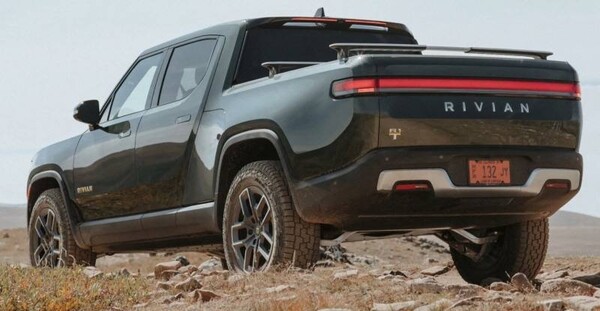
Rivian Unveils AI Chip for Autonomous Driving, Breaking Reliance on NVIDIA
On the 11th (local time), Rivian announced that its upcoming R2 sport utility vehicle (SUV) will be equipped with the Rivian Autonomy Processor 1 (RAP1) chip and a new LiDAR sensor. The RAP1 is manufactured by Taiwan’s TSMC.
Rivian plans to begin mass production of the R2 in the first half of next year, with customer deliveries scheduled shortly thereafter. However, the initial production vehicles will not be equipped with the RAP1 chip and lidar, offering limited functionality.
Starting in 2027, Rivian plans to gradually support features through software updates that will allow the vehicle to navigate certain sections of the road without the driver having to hold the steering wheel or watch the road.

Smartphone OLED shipments expected to reach 900 million units this year… China catching up with Korea’s market share
According to the “OLED Display Market Tracker” released by market research firm UBI Research on the 9th, OLED panel shipments for smartphones and foldable phones this year are estimated at approximately 900 million units. Chinese panel makers accounted for approximately 48.8% of this volume, approaching the level of Korean display companies (51.2%). In fact, the market share gap between the two countries narrowed from 15.2 percentage points in 2023 to 2.4 percentage points in 2025, just two years later.
While shipment volumes are similar, Korean companies boast a higher proportion of premium products, including iPhones and Galaxy flagships. Consequently, Korean companies maintain an advantage in terms of sales.
EM&I receives documents for heavy water imports from India’s Heavy Water Authority.
EM&I announced on the 9th that it has received official documents from the Heavy Water Board (HWB) of India to initiate the process of importing heavy water and has begun the process of introducing strategic materials in earnest.
Heavy water is classified as a strategic material in the nuclear industry, but its use in various advanced processes, including organic light-emitting diodes (OLEDs), semiconductors, cosmetics, and pharmaceuticals, is rapidly increasing demand. However, due to the lack of domestic self-sufficiency in the core materials used in this process, Korea remains entirely dependent on foreign sources.
The US National Defense Authorization Act calls for military displays to be de-Chinaized by 2030.
Displays made by Chinese companies such as BOE, CSOT, and Visionox are expected to be phased out of the US military.
According to Reuters, the final version of the National Defense Authorization Act (NDAA) drafted by the U.S. Congress mandates that the Department of Defense eliminate its reliance on products from non-ally countries like China and Russia by 2030. This mandates a cessation of use within five years, effectively mandating the elimination of Chinese-made displays.
Source: Kipost.net
Leave a Reply