


JUSTEM, AI Successfully Improves Performance of Semiconductor Humidity Control Equipment
‘JUSTEM’, a semiconductor humidity control equipment company, has succeeded in maximizing the performance of its humidity control equipment JFS (Jet Flow Straightener) using AI (artificial intelligence) technology.
Justem announced on the 11th that it has developed ‘AIP-JFS (AI Powerd-JFS)’, which upgrades the 2nd generation humidity control solution JFS, currently being supplied to global semiconductor companies, into a cutting-edge AI-based precision control system.
AIP-JFS programs the humidity control performance of JFS to optimize it for the environment, such as the process and equipment of each production line, and uses AI to analyze the airflow and control the speed and intensity to maximize the stability of the production line.
“Not even in the top 10 semiconductor companies”… Intel CEO’s self-reflection on restructuring
Lip Bu Tan, who took office as Intel CEO in March of this year, expressed his self-reflection by saying, “Intel is no longer a top 10 semiconductor company.”
It is analyzed that he made this remark to alert employees as Intel, which had led the semiconductor industry as a former industry leader, continued to struggle with its central processing unit (CPU) and foundry (semiconductor consignment manufacturing) businesses. It is expected that CEO Tan will significantly revise business strategies in areas such as artificial intelligence (AI) semiconductors and foundry businesses to speed up Intel’s recovery of competitiveness.
Hana Technology Completes Development of Semiconductor Glass Substrate TGV Technology
Hana Technology announced on the 7th that it has succeeded in developing TGV (Through Glass Via) glass processing technology, a core technology for semiconductor glass substrates. Hana Technology showcased the semiconductor glass substrate solution it has developed through its own technology demonstration.
The company explains that it is significant in that it has begun to fully enter the next-generation semiconductor glass substrate market by developing a total solution from the starting process of semiconductor glass substrates, which is the original processing, to TGV processing, and glass processing processes, using its own technology.
Human division spiral Hanamicron, minority shareholders oppose “illegal division”
On the 10th, Hana Micron held a meeting at the Financial Investment Education Center in Yeouido, Seoul and explained the background of its plan to establish a holding company.
The company’s current business can be divided into ▲OSAT, which is in charge of post-processing ▲brand business, which directly purchases wafers and manufactures and sells them in Brazil ▲semiconductor sub-unit (Hana Materials), which sells consumable parts needed for the semiconductor etching process. The intention is to make selective investment by business easier through the division.
Earlier, on the 3rd, the shareholder action platform Act announced a group action against Hanamicron. Act stated, “Hanamicron’s plan to separate its main business divisions, create a subsidiary, and relist it is in fact a spin-off and a double listing,” and “We suspect an intention to evade key protections applied to spin-offs, such as ▲stock purchase rights and ▲listing suitability review.”
Luken Technologies Completes Development of HBM Test Core Component ‘Wafer Interposer’
Semiconductor inspection solution specialist Lucent Technologies announced on the 9th that it has completed the development of a wafer interposer that transmits signals to a circuit board (PCB) through fine-pitch contacts on a finished high-bandwidth memory (HBM) product through the Test Interface Board business acquired to expand its semiconductor business.
Interposers used in existing semiconductor test probe cards and fine pitch test sockets have mainly utilized multilayer ceramic substrates (MLC) and multilayer organic substrates (MLO).
TSMC, Q2 Sales 44 Trillion Won… Another Breakthrough in Quarterly Sales
Taiwanese semiconductor foundry TSMC has once again set a new record for quarterly sales. TSMC announced on the 10th that its June sales were NT$263.7 billion, bringing its Q2 (April to June) sales to NT$933.8 billion (approximately KRW 43.8138 trillion).
This is a 38.6% increase over the same period last year, surpassing the previous record of NT$868.5 billion in quarterly sales in the fourth quarter of last year.
Next-Generation ‘LPDDR6’ Standard Released… Samsung and SK Add New Battleground for AI Memory
The next-generation low-power DRAM, ‘LPDDR6’ standard, has recently been established. LPDDR6 features bandwidth that is up to 1.5 times higher than its predecessor, and is expected to create demand in high-performance computing fields such as edge AI and on-device AI. Major memory companies such as Samsung Electronics and SK Hynix have also secured a new growth engine from a mid- to long-term perspective.
The Joint Electron Device Engineering Council (JEDEC) announced on the 9th that it has established the LPDDR6 standard, ‘JESD209-6’. LPDDR is a low-power DRAM mainly used in devices where power efficiency is important, such as smartphones and edge servers.
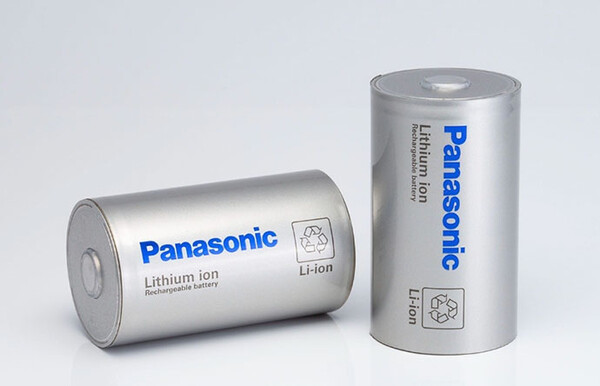
“Japan’s Panasonic to Reconsider Production of Electric Vehicle Battery Plant in Kansas, USA”
Japan’s Panasonic Holdings is reconsidering its plans to build a new electric vehicle battery factory in Kansas, the Nihon Keizai Shimbun (Nikkei) reported on the 11th.
According to the newspaper, Panasonic originally planned to produce about 30 gigawatt-hours (GW) of batteries at the plant by the end of 2026. However, it decided to postpone that. The future production date is “undetermined.”
This is because sales of Tesla, the American electric car company that is a major customer, are sluggish. US President Donald Trump’s passive attitude toward the spread of electric vehicles also had an impact.
“If we trust China, we won’t be able to produce electric cars”… India, incentives to promote rare earth production
India is working on a fiscal incentive policy for private companies to boost domestic production of rare earth magnets.
According to Bloomberg News and other sources on the 9th (local time), the Indian government is preparing an incentive program worth up to 25 billion rupees (about 400 billion won) for private companies producing rare earth magnets and is expected to receive cabinet approval soon.
The Indian government aims to produce about 4,000 tonnes of neodymium and praseodymium-based magnets from raw materials mined in India. It plans to support three to four large companies and provide subsidies for five years after a two-year preparation period. The subsidy is expected to be up to 6 billion rupees (about 100 billion won) per 1,000 tonnes.
Volkswagen Group, which has taken the lead in electric vehicles… BEV sales grow rapidly in the first half of the year
The Volkswagen Group announced on the 9th (local time) that the number of electric vehicles delivered in the first half of 2025 was 465,500 units, a 46.7% increase year-on-year. The global electric vehicle market share increased significantly to 11% year-on-year (7%). Electric vehicle sales were led by the European market. Electric vehicle deliveries in Europe surged by a whopping 89% to 347,900 units.
Among them, Volkswagen ranked as the brand that sold the most electric vehicles. It delivered a total of 192,600 units in the first half of this year, taking the center stage for the group’s overall electric vehicle performance. The flagship models, ID.4 and ID.5, sold 84,900 units, ID.3 sold 67,000 units, and ID.7 sold 38,700 units, taking the top spot among best-selling electric vehicles.
Mintech, ‘Electric Vehicle Battery Rapid Diagnosis System’ begins verification
Mintech announced on the 11th that it participated in the demonstration kick-off meeting for establishing a future electric vehicle inspection system at the ‘Electric Vehicle Safety Evaluation and Integrated Safety Technology Development Project’ inspection meeting held on the 10th at the Haeundae Inspection Center of the Korea Transportation Safety Authority (hereinafter referred to as TS) with the attendance of officials from the Ministry of Land, Infrastructure and Transport, the Korea Agency for Infrastructure Technology Advancement, and others, and began the demonstration of the ‘Electric Vehicle Battery Rapid Diagnosis System’.
TS has been conducting a national research and development project (R&D) to transform the existing inspection method focusing on visual and auditory inspections into an analysis method through measurement to ensure safety management of high-voltage batteries, which are key components of electric vehicles, and is currently taking steps to verify the field applicability of the electric vehicle inspection techniques and equipment developed as a result.
Hyundai Motor Continues to Reduce Electric Vehicle Production… “No Overtime in July”
Hyundai Motor is reducing its domestic electric vehicle production. The operating rate of the Ulsan plant’s electric vehicle line is also being affected by the combination of high U.S. tariffs and stagnant domestic demand.
According to industry sources on the 10th, Hyundai Motor Company has not set a weekend overtime schedule for Line 2 of its Ulsan Plant 1, which produces major electric vehicle models this month. This is unusual considering that the Ulsan Plant will be closed from July 25 to August 4 during the summer vacation period.
During July and August, when factories are partially closed for summer vacation, overtime work is done on weekends to maintain production levels. In fact, other production lines, except for Line 2 of Hyundai Motor Company’s Ulsan Plant 1, will be working overtime on weekends 2-3 times this month.
Kapec Valeo to Build Electric Vehicle Battery System Production Line in Yeongcheon
Gyeongbuk Province, Yeongcheon City, Kapec Valeo, Daegu-Gyeongbuk Free Economic Zone Authority, and Korea Land and Housing Corporation signed an MOU for investment in building an electric vehicle battery production line at Yeongcheon City Hall on the 7th.
Kapec Valeo plans to invest KRW 160 billion by 2030 to build an electric vehicle battery system (BSA) production line on 36,363㎡ (approximately 11,000 pyeong) in the Yeongcheon High-Tech Park District, creating approximately 100 new jobs.
Capec Valeo is an auto parts company with headquarters in Daegu, factories in Waegwan and Seongju, Gyeongbuk, and local corporations in Mexico, China, Japan, and the United States.
Easy Charger and LG U+ Volt Up Join Hands for Synergy in Electric Vehicle Charging Business
Easy Charger, an e-mobility specialist in the electric vehicle charging infrastructure sector, and LG U+ Bolt Up (CEO Sangpil Yeom) have joined hands to expand their charging business.
At the signing ceremony held at the Easy Charger headquarters in Gasan-dong, Seoul on the 9th, the two companies agreed to pursue all-round collaboration to expand electric vehicle charging infrastructure and innovate customer services.
First, they decided to strengthen the safety of customers using the charger by utilizing AI (artificial intelligence) technology. They will also improve efficiency by introducing a digital maintenance system for the charging facility. They will also establish a collaboration system in eco-friendly smart energy business areas such as demand resource trading (DR, V2G, etc.) using electric vehicle chargers and carbon emission rights business. To this end, the two companies will form a working group and begin joint marketing and developing customer-centered integrated charging services.

Hyundai Glovis Carrier, World’s First ‘Autonomous Operation’ Introduced
Hyundai Glovis is the first in the world to apply an AI-based autonomous ship (MASS) system to a PCTC (personal cargo transporter). The development of the MASS system is being handled by Avicus, an autonomous subsidiary of HD Hyundai, a ‘cousin company.’
According to industry sources on the 11th, Hyundai Glovis recently signed a contract with Avicus to introduce the MASS system and decided to apply the autonomous navigation system to seven PCTC ships by the first half of next year.
The system is in the second stage (partial remote control) of the four stages of ship autonomous navigation. Although it does not reach the third stage (complete unmanned remote control) or the fourth stage (AI judgment and decision), the company explained that even if only the second stage system is introduced, fuel costs will be reduced and operational efficiency will be increased as AI will suggest the optimal route and optimal operation method.
“Infrastructure-based autonomous driving”… Seoul Robotics registers European patent
Seoul Robotics, an industrial autonomous driving company, announced on the 11th that it has acquired a patent for a ‘virtual space-based vehicle control system using sensor data’ from the European Patent Office (EPO).
The core of this patent is a 3D object recognition AI technology based on deep learning. It is related to multimodal AI technology that analyzes 3D spatial information collected from sensors and other sources in real time through a neural network-based object classification model (deep learning) and extracts spatiotemporal features to detect and track objects.
Samsung C&T and Hyundai Engineering & Construction jointly develop autonomous material transport robot
Samsung C&T Construction Group (hereafter Samsung C&T) announced on the 6th that it has developed an autonomous material transport robot in collaboration with Hyundai Engineering & Construction. This robot can lift construction materials by recognizing plank shapes or lifting holes through 3D (three-dimensional) images.
It also has autonomous driving functions based on ‘SLAM technology’ that recognizes the surrounding environment, creates a map, and determines its own location. Samsung C&T explained that it is optimized for actual construction sites as it is also equipped with functions for transport work management, robot control, and automatic charger connection.
Autonomous A2Z announces autonomous driving integrated brand ‘AZTON’
Autonomous A2Z, a self-driving startup, announced on the 4th an integrated brand called ‘AZTON’ that encompasses core autonomous driving technologies, products, and service capabilities.
Azton stands for ‘Total technology ON, turning on autonomous driving in all everyday environments from A to Z.’ If you read the English letters backwards, it becomes ‘NOTZA,’ which also means ‘experience autonomous driving with both hands free.’ It expresses the vision of realizing a safe and complete future autonomous driving world anytime, anywhere, and the philosophy of providing the value of transportation that goes beyond technology and adds warm consideration.

TLI said it would merge with Wonik D2I, but withdrew after 3 months
TLI, an affiliate of Wonik Holdings, has withdrawn its plan to merge with Wonik D2I, which was scheduled to take place on July 1. It is because it was judged that pushing ahead with the merger would place excessive burden on TLI, given that Wonik D2I’s performance is lower than expected.
According to the Financial Supervisory Service’s electronic disclosure system on the 10th, on the 30th of last month, TLI, a fabless (semiconductor design company) subsidiary of Wonik Holdings, withdrew its decision to merge with another subsidiary, Wonik D2I. This is about three months after the board of directors decided to merge.
The company explained, “In a situation where business uncertainty is increasing, if we forcefully merge Wonik D2I, which is expected to have poor second-quarter performance, into TLI, there will be a problem of violating the rights of TLI’s minority shareholders.”
China, 8.6th generation OLED introduces ‘inkjet printing’ as a decisive move… Samsung and LGD are chasing
The Chinese display industry is gearing up to secure next-generation large-area OLED technology. Following BOE and Visionox, CSOT is also expected to build an 8.6-generation OLED line in the second half of this year.
In particular, CSOT is the first in the industry to apply the cutting-edge display deposition technology, ‘Inkjet Printing’, to 8.6-generation OLED. This is a technology that can significantly increase process efficiency compared to existing inkjet printing. If CSOT successfully introduces this, there are concerns that it will become a potential risk factor for the domestic display industry, including Samsung Display and LG Display.
Dowinsys, public offering price confirmed at 32,000 won… Subscription on the 14th and 15th
Dowinsys, a company specializing in ultra-thin tempered glass (UTG) for flexible displays, announced on the 11th that it had set the final public offering price at 32,000 won in a demand forecast for institutional investors.
According to the company, a total of 2,180 domestic and international institutions participated in the Dowinsys demand forecast conducted from the 3rd to the 9th, recording a competition rate of 785.41 to 1. Of all participating institutions, 98.5% offered a price higher than the upper limit of the desired subscription band.
The confirmed public offering price is 44.8 billion won, and the expected market capitalization after listing is approximately 344.2 billion won.
Source: kipost.net