

System semiconductors that are not performing well… Samsung begins management diagnosis
According to the semiconductor industry, Samsung Electronics has reportedly begun a management diagnosis of its System LSI division, which is a fabless (design-only) business, since January. This management diagnosis is being conducted by the Management Diagnosis Office, which was newly established under Samsung Global Research through an organizational restructuring in November of last year. It has not yet been decided whether Samsung will conduct an audit of its Foundry Division following its System LSI Division.

Samsung Electronics’ non-memory business divisions, including the foundry and LSI divisions, have been recording deficits for several years. The securities industry estimates that Samsung recorded an operating loss of 4 to 5 trillion won in system semiconductors last year. The reason Samsung conducted a large-scale management diagnosis is because it judged that despite large-scale investments, the results were not up to par.
US ONSemi Makes 9.9 Trillion Won Acquisition Proposal for Automotive Semiconductor Company Allegro
On Semiconductor, a U.S. intelligent power semiconductor company, announced on the 7th that it had made an acquisition proposal to the board of directors of Allegro Microsystems, a U.S. automotive semiconductor technology company.
Hassan El Khoury, CEO of ONSemi, said: “We believe the combination of ONSemi and Allegro will bring together two complementary businesses, benefiting our respective customers and delivering immediate value to Allegro shareholders.”
Onsemi has intelligent power semiconductor and sensor technology. Allegro has achieved a high market share in the automotive and industrial magnetic sensing and power IC fields.
Kolon Global, Myongji University and ‘Semiconductor Water Treatment Industry-Academic Cooperation’
Kolon Global announced on the 6th that it signed a ‘business agreement for industry-academic cooperation in the field of semiconductor water treatment’ with Myongji University on the 5th. With this agreement, Kolon Global plans to apply the ‘low-energy separation membrane water treatment technology’, which it successfully developed and commercialized for the first time in the world, to semiconductor water treatment technology.
This technology, which features a horizontal reciprocating motion rather than the existing blowing method, is already being used in around 70 domestic sewage and wastewater treatment plants, and Kolon Global plans to secure a technological edge by applying it to the semiconductor industry.
‘Semiconductor factory promotion’ Japan’s SBI, SK Hynix, Taiwan UMC, cooperation negotiations
The local industrial economic newspaper, the Daily Industrial Newspaper, reported on the 7th that Japanese financial company SBI Holdings is in negotiations with Korea’s SK Hynix and Taiwan’s UMC for cooperation in relation to a semiconductor plant it is promoting to build in Miyagi Prefecture, Japan. However, the newspaper did not disclose the specific source of the information. UMC is Taiwan’s second-largest foundry (semiconductor contract manufacturing) company.
Previously, SBI Holdings had planned to build a semiconductor plant in an industrial complex near Sendai, the largest city in Miyagi Prefecture, in 2023 in collaboration with Taiwan’s third-largest foundry company PSMC, but the plan fell through.
Micron, TSMC recruit former chairman to board
According to industry sources on the 6th, Micron announced on its website on the 5th (local time) that it had appointed former TSMC Chairman Mark Liu to its board of directors.
Former Chairman Liu led TSMC for over 30 years, including serving as president and co-CEO from 2013 to 2018 and chairman until last year. His contributions are credited with helping TSMC rise to the ranks of the world’s largest foundry (semiconductor contract manufacturing) companies.
Sanjay Mehrotra, CEO of Micron, expressed his expectations, saying, “Lee’s experience will be of great help in leading Micron as we capitalize on AI-driven growth opportunities and scale our business from the data center to the edge.”
TSMC Announces $100 Billion Investment in the US
TSMC Chairman Weijer Zhao met with President Trump at the White House on the 3rd (local time) and announced that the company would invest $100 billion (approximately KRW 145.9 trillion) in the United States. TSMC previously announced that it would invest $12 billion to build a semiconductor factory in Arizona, USA in 2020, and expanded the investment to $65 billion. With the announcement of this new investment plan, the total investment amount has increased to $165 billion.
In response to TSMC’s announcement of its investment plan, President Trump said, “The world’s most powerful artificial intelligence (AI) semiconductors will be made right here in the United States, and a significant portion of them will be made by TSMC,” adding, “This is a matter of economic security as well as national security.”
Samsung Electronics President Song Jae-hyuk Appointed as New Head of Semiconductor Association… “Efforts to Cooperate and Develop Talent”
Song Jae-hyuk, Chief Technology Officer (CTO) of Samsung Electronics’ Semiconductor (DS) Division, has been elected as the new head of the Korea Semiconductor Industry Association. President Song emphasized that if there is strong cooperation within the domestic semiconductor ecosystem, it will be possible to exploit the weaknesses of semiconductor powerhouses such as the U.S., China, and Japan and achieve new innovations.
On the 5th, the Semiconductor Association held its 2025 general meeting at the DoubleTree by Hilton Hotel in Seongnam, Gyeonggi Province, and elected President Song as the new association president.
The Korea Semiconductor Industry Association is the largest industry organization in Korea. It seeks to develop the domestic semiconductor industry and plays a role in informing and discussing difficulties faced by the industry.
Tesla falls behind Chinese electric cars
Market research firm SNE Research announced on the 6th that the number of electric vehicles (including PHEVs) registered worldwide in January this year totaled 1,253,000, a 21.2% increase compared to the same month last year.
Looking at the number of electric vehicles sold by group, China’s BYD ranked first with 258,000 units sold, a 37.9% increase from the same period last year. China’s Geely Group accelerated its transition to electric vehicles and sold 152,000 units, a 58.5% increase from the same period last year, ranking second.
Tesla, which ranked second last year, sold 91,000 units, down 15.0% year-on-year, due to a decrease in sales of its main models, the Model 3 and Model Y (pictured). In particular, it showed sluggish performance in major markets, with sales in Europe down 45.9% year-on-year and in North America down 2.1%.
Kia Electric Car Factory to be Built in Mars for 2.2 Trillion Won
Gyeonggi Province, Kia, and Hwaseong Special City signed a business agreement (MOU) on the 6th to establish a ‘Platform Beyond Vehicle (PBV)’ electric vehicle factory.
PBV is a vehicle that is custom designed to perform a specific purpose or function, such as logistics delivery or passenger transportation. The interior space can be designed so that all seats and storage spaces except the driver’s seat can be freely changed, so it can be used in various ways, such as a vehicle for the disabled, a camper van, a large taxi, a courier, or a mobile store.
According to the agreement, Kia will invest a total of KRW 2.2 trillion to build the Hwaseong EVO Plant, a 290,000 m2 PBV-only factory within Kia Autoland Hwaseong.
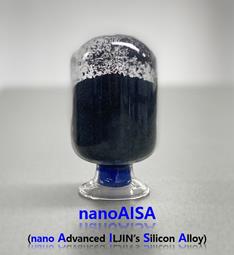
Iljin Electric, Next-Generation Silicon Alloy Cathode Material Debut
Iljin Electric announced on the 5th that it will officially unveil the next-generation silicon alloy cathode material ‘nanoAISA-1750’ at ‘InterBattery 2025’ held at COEX in Gangnam-gu, Seoul until the 7th.
‘nanoAISA’, released by Iljin Electric, is an innovative cathode material that uses rapid cooling solidification alloy technology to minimise silicon to a size of several nanometers (nm). Its strengths include maximising raw material utilization by applying a high-efficiency process, reducing manufacturing costs and making it advantageous for mass production.
In particular, the capacity of ‘nanoAISA-1750’ reaches 1,750mAh/g, providing a high storage capacity that is nearly five times that of existing graphite anode materials (approximately 350mAh/g). Iljin Electric reported that it has proven higher performance than existing products, such as a high initial efficiency of over 90% and maintaining over 90% of the initial capacity even after over 500 charge/discharge cycles (based on 500mAh/g electrode).
LG Chemical Vice Chairman Shin Hak-cheol: “No Changes in Cathode Material Investments, Including Tennessee Plant”
LG Chem Vice Chairman Shin Hak-cheol stated that there is no change in the investment plan for the cathode material business, a battery material. The plan is to also proceed with the Tennessee plant in the U.S., which is scheduled to be operational next year, as planned.
Vice Chairman Shin Hak-cheol said this while meeting with reporters at the battery industry exhibition ‘InterBattery 2025’ on the 6th.
Last month, LG Chem announced that it expected this year’s capital expenditure (CAPEX) to be in the latter half of 2 trillion won, but that it would limit new investment plans as much as possible by prioritizing execution. Vice Chairman Shin said, “There are currently no specific changes to the investment plan,” and “The Tennessee plant will also be operational next year.”
POSCO FutureM “Decided to Mass Produce Lithium Manganese Rich, ‘China’s LFP Counterpart’ This Year”
POSCO Future M announced on the 5th that it will lead the battery material market by developing ‘lithium manganese rich’ (LMR) cathode materials as China’s low-priced lithium iron phosphate (LFP) batteries are expanding their market share. POSCO Future M plans to decide whether to mass-produce LMR cathode materials within this year through consultation with its customers.
POSCO Future M announced this at a technology meeting held at the ‘InterBattery 2025’ event held at COEX in Gangnam-gu, Seoul, hosted by Vice President and Director of Technology Research Hong Young-jun.
Let’s save the European car industry in crisis… EU supports battery and electric car industry
The European Union (EU) has come up with a comprehensive support plan to revive the crisis-stricken automotive industry in the EU. On the 5th (local time), the EU Commission announced the ‘European Automotive Sector Industry Action Plan’, which focuses on supporting the battery and electric vehicle industries in the EU.
Support for the battery sector is key. Northvolt, the largest battery company in Europe, recently went bankrupt, and concerns are growing over the infiltration of Chinese battery companies into the region. The government has decided to increase the proportion of European products throughout the battery supply chain and provide 1.8 billion euros (about 2.8 trillion won) in support for battery manufacturers to expand their production lines over the next two years.
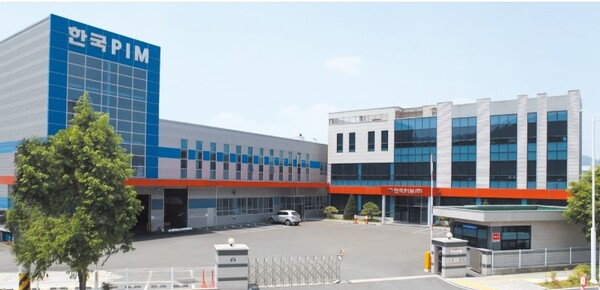
Korea PIM develops autonomous driving camera module materials
Korea PIM announced that it is jointly developing a next-generation product at the request of a domestic camera module company. The product will be applied to global electric vehicle companies through the domestic large company, and the two companies plan to conduct performance tests on the next-generation autonomous driving camera module with the prototype developed this time.
A Korea PIM official said, “During the process of carrying out the battlefield business, we have proven our technological prowess in the autonomous driving camera module field to large domestic companies and secured them as customers, and we are cooperating to develop new products.” He added, “We are developing next-generation camera modules to advance autonomous driving technologies for global electric vehicle companies, and we recently completed the delivery of a prototype to a large domestic company.”
Hyundai Motor signs agreement with U.S. startup to jointly develop self-driving cars
Reuters reported on the 5th (local time) that Hyundai Motor Company and U.S. autonomous driving technology startup Avride signed an agreement to jointly develop autonomous vehicles.
Under this agreement, Hyundai will provide Ioniq 5s produced at its Georgia plant to AVRide. This year, it will provide 100 Ioniq 5s, and plans to increase the number of vehicles provided next year.
AV Ride will apply autonomous driving technology to the electric vehicles it receives and modify them. The Ioniq 5 with autonomous driving technology applied will be used in Uber’s robotaxi service, which has formed a partnership with AV Ride. In addition, it may be used in logistics businesses such as autonomous delivery services.
SuperbAI Launches AI-Based Multi-Video Automatic Analysis Solution
Superb AI, an all-in-one vision AI platform company, announced on the 6th that it has launched its new ‘Superb Video Surveillance Solution’. This solution is an advanced video surveillance system that uses AI technology to automatically analyze multiple videos and identify various situations in real time.
The ‘Superb Video Surveillance Solution’ is equipped with an AI agent that can automatically recognize various situations, such as fire smoke detection, vehicle recognition, facial recognition, and detection of falls and abnormal behavior.
GRT Enters China’s South Apple and AI Robot Market
GRT, a precision coating new material specialist, is entering the AI robot market together with Nansa Technology, a leading Chinese electronics company.
GRT announced on the 5th that it has launched the open source full-stack robot, ‘Lingxi X1’, in collaboration with Namsa Science and Technology and Agi Bot. Namsa Science and Technology supported the production of over 1,000 AI robots from Agi Bot last year and plans to further expand the supply quantity in the future. GRT is known to have provided various core materials required for the production process of artificial intelligence (AI) robots.
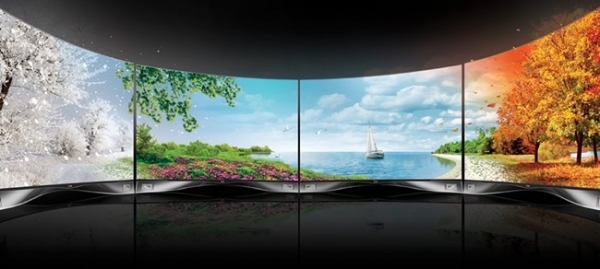
OLED shipments for smartphones and foldable phones increased 27% last year
According to the ‘2025 Small OLED Display Annual Report’ published by market research firm UBI Research on the 7th, OLED shipments for smartphones and foldable phones last year recorded 834 million units and 24 million units, respectively, for a total of 858 million units.
This is a 27% increase over the previous year, and is the result of Samsung Electronics’ expanded use of rigid OLEDs and China’s increased shipments of flexible OLEDs.
UBI Research estimates that OLED shipments for smartphones and foldable phones this year will reach 910 million units and 38 million units, respectively, an increase of 9% and 27% compared to last year.
Global Premium TV Market Share: Korea 80% vs China 2%
According to the British market research firm Omdia on the 3rd, Samsung Electronics and LG Electronics took up 50.5% and 30.6% of the premium TV market over $2,500 based on shipments in the fourth quarter of last year. On the other hand, major Chinese TV brands TCL and Hisense only took up 1.0% and 0.5%, respectively. Korean companies’ share was 81.1%, overwhelming China’s share of less than 2%.
In terms of sales, the market share in the fourth quarter of last year was Samsung Electronics at 50.7%, and LG Electronics at 30.2%, with the two companies’ combined market share exceeding 80%. Last year, the annual market share based on sales was Samsung Electronics at 49.6%, LG Electronics at 30.2%, Sony at 15.2%, TCL at 1.6%, and Hisense at 0.9%
Source: kipost.net