

Samsung Electronics, Target Stock Price Downgraded… Semiconductor Market Uncertainty Remains
According to F&Guide, 16 out of 20 reports on Samsung Electronics in the past month have lowered their target stock prices. This year alone, three securities firms, including Samsung Securities, Daishin Securities, and Korea Investment & Securities, have lowered their target stock prices.
Daishin Securities lowered its target price from 85,000 won to 78,000 won, and Samsung Securities lowered its target price from 83,000 won to 74,000 won. KB Securities lowered its target price for Samsung Electronics from 80,000 won to 70,000 won, presenting the lowest target price among securities companies. On the other hand, Mirae Asset Securities maintained its target price at 85,000 won.
The main reason why securities firms lowered their target stock prices for Samsung Electronics is the sluggish semiconductor industry and continued inventory adjustments.
Kim Jae-hyun, a ‘semiconductor technology expert’, appointed as the new CEO of Hanwha Precision Machinery
Hanwha Precision Machinery announced on the 1st that it has appointed Kim Jae-hyun, head of Hanwha Momentum’s New Business Promotion Office, as its new CEO.
After graduating from Seoul National University’s Department of Naval Architecture and Ocean Engineering, CEO Kim received his master’s and doctoral degrees in mechanical engineering from the Massachusetts Institute of Technology (MIT) in the United States.
Since then, he has focused on developing new semiconductor equipment technologies while serving as a senior engineer and head of the R&D division at Samsung Electronics, Lam Research, and Wonik IPS. He joined Hanwha Group last year and began to explore new businesses that will lead future markets.
STI Receives First Order for Semiconductor EUV Cleaner Equipment

STI announced on the 2nd that it had received an order for EUV (extreme ultraviolet) POD cleaner equipment from a global semiconductor company.
The EUV POD cleaner equipment ordered by STI is a device that cleans the dedicated POD that stores the reticles of EUV exposure equipment. The reticle POD cleaner market has a high market share in North America, so it is significant that STI has succeeded in localizing it with its own technology and achieved its first order.
China to promote self-reliance in electric vehicle semiconductors… Impact of strengthened US regulations
On the 31st (local time), the Wall Street Journal (WSJ) reported that “China is not satisfied with becoming a major producer of electric vehicles in the world and is also trying to install domestically produced semiconductors in electric vehicles.”
Until now, most of the semiconductors used in Chinese cars were produced by companies in the US, Japan, and Europe, including Texas Instruments and Infineon. However, the proportion of Chinese semiconductors has now risen to about 15%, and industry insiders expect this proportion to rise further.
Industry sources say most of the automotive semiconductors produced in China are of low quality and it will take years for China to achieve full self-sufficiency. However, considering China’s past dependence on the United States, Japan, and European countries, it is considered a significant step forward.
Alpha Holdings, with new management, will it be a signal of ‘management normalization’?
According to the Financial Supervisory Service’s electronic disclosure on the 1st, Alpha Holdings announced on the 30th that its largest shareholder had changed from Alpha Equity Partners to Ensnet. Ensnet completed a third-party allocation paid-in capital increase worth 5 billion won and plans to increase Alpha Holdings’ stake to over 40% by conducting an additional bequest worth 5 billion won this month. Ensnet is a company whose largest shareholder is CEO Seok-won Yoon, and as of 2023, it recorded assets of 65.5 billion won and a net loss of 1.8 billion won.
Alpha Holdings is a design solution partner (DSP) of Samsung Electronics and is engaged in semiconductor design and design service business. In addition, its fabless business division, which is responsible for designing and manufacturing IR receiver chips for remote controls, is ranked among the top global companies in the field.
Semipower to supply WBG power semiconductor modules
Semipower announced on the 1st that it has established its own ‘power semiconductor module supply system’ that can provide WBG power semiconductor modules, stacks, and systems from design to manufacturing individually or on a turnkey basis.
WBG power semiconductors are compound semiconductors made of silicon carbide (SiC) and gallium nitride (GaN). WBG power semiconductor modules are products that can operate at high voltage, temperature, and frequency. By utilizing these characteristics, power consumption of the device can be reduced, size can be reduced, and heat management and reliability can be improved, making them efficient. They are currently used in various fields such as electric vehicles, energy storage systems, and industrial inverters.
Since its establishment in January 2024, Semipower has secured technological prowess by gradually developing its own WBG power semiconductor modules, stacks, and systems.
China’s ByteDance plans to procure $10 billion worth of Nvidia chips
According to IT media outlet The Information on the 30th (local time), ByteDance plans to invest 7 billion dollars (about 10.3 trillion won) next year to procure Nvidia’s flagship AI chip, the ‘Hopper’ GPU (graphics processing unit). If this plan becomes a reality, the industry sees ByteDance as one of the global companies that owns the largest number of Nvidia chips despite the strong regulations in the United States.
The U.S. government has banned the export of AI chips to China since October 2022 in order to prevent advanced semiconductor technology from being used to strengthen China’s military power. In particular, as the export route of Nvidia’s core GPUs to China has been blocked one after another, Nvidia is currently developing the GPU H20 with significantly lower performance than its main chip and selling it to the Chinese market.
ITM Semiconductor Signs Additional Development Service for New Electronic Cigarette Models
Secondary battery protection circuit technology company ITM Semiconductor announced on the 3rd that it signed a service contract with KT&G for the development of new electronic cigarette products. ITM Semiconductor is mass producing the Lil Hybrid and plans to start supplying export-oriented strategic models this year. Through this development, four device products will be supplied.
The new model of the electronic cigarette device being developed this time is a model exclusively for export, and if mass production proceeds as expected, additional sales are expected from the second half of this year. ITM Semiconductor’s electronic cigarette sales are expected to more than double compared to 2024.
During this contract period, development verification, initial verification, and mass production verification will be conducted, and mass production is scheduled to begin this year and mass supply will begin in 2026.
China to Promote Export Controls on Battery Parts Manufacturing and Rare Metal Processing Technology
China plans to push for export controls on technologies related to battery component manufacturing and rare metal processing.
The Chinese Ministry of Commerce announced on the 2nd a revised list of technologies subject to export bans or restrictions, and said it would accept public comments until the 1st of next month. The list includes battery cathode material manufacturing technology and some technologies and processes for extracting rare metals such as lithium and gallium. China’s official Xinhua News Agency explained that this is part of efforts to strengthen technology import and export management.
Bloomberg News reported on the 3rd that China’s push for technology export controls came just one month after the US announced a ban on exports of Chinese dual-use civilian and military items.
Hybrids More Popular than Electric Cars in China… Tesla in a Sweat
BYD, China’s largest manufacturer of electric and hybrid vehicles, delivered a total of 4.3 million vehicles last year, it said.
It was calculated that pure electric vehicles accounted for about 1.8 million units, while hybrid vehicles accounted for about 2.5 million units. The proportion of hybrid vehicles is higher than that of pure electric vehicles. This is the opposite of the previous year. The proportion of pure electric vehicles was higher last year.
This is interpreted as being because Chinese consumers also prefer hybrid vehicles over pure electric vehicles due to inconveniences such as charging.
Korea has the upper hand when it comes to quality over quantity of ‘LFP battery’ patents
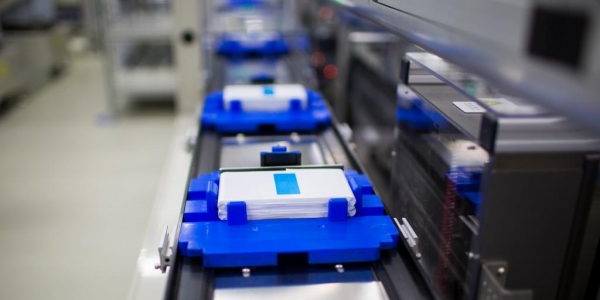
According to SNE Research’s LFP patent report on the 2nd, as of 2022, China accounted for 4,695 cases, or 63% of all LFP-related patent applications. The US (11%) and Europe (9%) followed, and Korea recorded 726 cases, or 10%.
SNE Research analyzed that when looking at data beyond the simple number of patent applications, the competitiveness of Korean companies stands out.
In particular, in terms of the number of core patents evaluated based on the number of citations and the number of patent families (a collection of patents based on the same invention: indicating the international scope and extensibility of the patent), Korea’s LG Chem was found to be in the lead globally with 16 patents.
Goldman Sachs: Electric Car Batteries Will Be 19% Cheaper This Year
The global average price of electric vehicle batteries is expected to fall from $111 per kilowatt-hour (kWh) to $90 this year. The downward trend in battery prices is expected to continue for the time being amid weak demand, overcapacity, and fierce competition among various battery technologies.
On the 2nd, Hong Kong’s South China Morning Post (SCMP) reported this, citing a Goldman Sachs report. According to the report, the price of electric vehicle batteries this year is expected to drop by about 19% from $111 per kWh at the end of last year to $90. It could also drop to $82 per kWh next year. Compared to the average price of $149 per kWh in 2023, it will be cut in half. The report predicted that by then, the price of pure electric vehicles in the United States will be similar to that of internal combustion engine vehicles without subsidies.
Tesla Completes Construction of Megapack Battery Factory in Shanghai, China
It has been reported that American electric car company Tesla has completed construction of a large-capacity energy storage device ‘Megapack Battery’ factory in Shanghai, China and has begun test production. According to Chinese media outlets such as Xinhua News Agency and IT Zijia (之家) today (31st), Tesla announced that the Shanghai ‘Megafactory’, a Megapack battery production plant, passed the completion inspection on the 27th.
This is Tesla’s first Megapack production plant outside the United States, and the products produced will be supplied to global markets.
The plant has already started trial production and plans to start full-scale mass production in the first quarter of next year. Initially, it will produce 10,000 megapacks per year, equivalent to 40 GWh (gigawatt hours).
IAM acquires 32% stake in Topmac, a high-tech materials equipment company
IM announced on the 27th that it will acquire a 32% stake in Topmac, a company specializing in deposition and plating equipment for precision material production, for 6.4 billion won. After acquiring the stake, IM will become the second largest shareholder of Topmac.
This strategic equity investment was made to strengthen the competitiveness of the composite copper foil business, which is currently being commercialized. The two companies have already been cooperating to build composite copper foil production equipment and secure manufacturing technology, and plan to continue to cooperate in the future to commercialize composite copper foil and various advanced materials and secure competitiveness.
Meanwhile, IAM has succeeded in mass producing composite copper foil films that replace electrolytic copper foil, the existing secondary battery negative electrode collector. Currently, mass production samples have been provided to domestic and international customers for quality certification, and once the quality test is completed, they plan to start full-scale mass supply.
Cowintech to supply 10 billion won worth of autonomous transport robots to North American battery factories
Cowintech announced on the 2nd that it signed a contract worth 10 billion won to supply autonomous transport robots (AMR) for the front-end process of secondary batteries to a North American factory of a global battery company.
By May, Cowintech plans to supply AMRs for unmanned automation of the positive and negative mixing process, electrode roll-to-roll process, and stacking process.
Cowintech has been developing unmanned transport robots (AGVs) for the secondary battery process sector, and has been supplying AGVs with roll loading and unloading functions for the electrode process since 2021. Last year, it successfully developed an AGV for the mixing process and is supplying it to global battery companies.
Naver-Invested Autonomous Vehicle Startup Attracts 3 Billion Won in Investment from CJ
Naver D2SF announced on the 2nd that Mobiltech, which invested in the company, had attracted an investment of 3 billion won from CJ Investment.
Mobiltech is a realistic digital twin and lidar technology company. It has attracted a cumulative investment of over 20 billion won from Naver D2SF, Hyundai Motor Group Zero One, Korea Investment & Securities, etc. It has established partnerships with domestic automakers (OEMs) and global lidar companies, and has achieved excellent results in the fields of autonomous driving, smart cities, and national defense.
Mobiltech provides ▲a high-precision map building system that combines lidar and cameras ▲‘Replica City’, an ultra-realistic digital twin platform produced with the technology. Mobiltech’s digital twin data is compatible with NVIDIA Omniverse, Unreal Engine, etc. and is being utilized in various industries.
Eight, Jinwoo ATS and Autonomous Driving Cooperation MOU
Digital twin company Aite announced on the 30th that it signed a memorandum of understanding (MOU) with Jinwoo ATS, a company specializing in Cooperative Intelligent Transport Systems (C-ITS), for mutual cooperation in the fields of transportation-related digital twins and C-ITS solutions.
Through this agreement, Jinwoo ATS will provide its C-ITS technology and autonomous driving-related business network. Aite will actively utilize data-based digital twin platform technology and references from the autonomous driving infrastructure construction project in the Hwajeong Station area of Goyang City.
Through this, they plan to jointly develop businesses in various fields, such as △building a digital twin platform based on 3D simulation that integrates transportation infrastructure and vehicle data, △developing a C-ITS solution that utilizes real-time communication technology between vehicles and infrastructure, △customized policy and technology support, and △collaborating on sales and marketing in the public sector.
Beijing, China to Expand Self-Driving Cars… “Goal of Operating Unmanned Buses and Taxi”
The Chinese capital Beijing has decided to expand the operation of self-driving cars starting in April next year.
According to Reuters and local Chinese media outlet Beijing.com on the 31st, the Standing Committee of the 16th National People’s Congress in Beijing passed the ‘Autonomous Vehicle Regulations’ to promote autonomous driving technology. According to the regulations, the use of autonomous vehicles in various fields such as private cars, public buses, and taxis in Beijing will be encouraged.
Autonomous vehicles that have passed road tests and safety assessments can apply to the authorities for demonstration operations. This ordinance will take effect on April 1 next year.
ASUS Launches Two QD-OLED Gaming Monitors
ASUS Korea released two 4th generation QD-OLED (Quantum Dot OLED) based gaming monitors in Korea on the 3rd.
The Swift OLED PG27UCDM is equipped with a 27-inch, 4K (3840×2160 pixels) QD-OLED panel and has a pixel density (ppi) of 166ppi, ensuring image and text clarity.
The maximum screen refresh rate is 240Hz, and it supports HDR content playback, such as games and videos produced with Dolby Vision and HDR10. Video input supports DisplayPort 2.1a (UHBR20) and HDMI 2.1, and it can be connected to smartphones and laptops via a USB-C terminal to handle charging and video display at the same time.
Aplus-Suwon University Startup Incubation Center Signs Business Agreement for Display Startup Support
Aplus Device announced on the 3rd that it signed a business agreement with Suwon University’s Startup Incubation Center to support startups in the display field. It will establish an organic collaboration system to promote the growth of the display industry.
According to the agreement, Aplus and Suwon University Startup Incubation Center will cooperate in discovering technology transfer demand through industry-academia cooperation, utilizing benefits of designation as a venture business incubation promotion zone, supporting technology finance, technology evaluation, technology protection, and consulting, and sharing information on technology transactions and commercialization.
Kang Cheol-gu, CEO of Aplus Device, said, “We will work closely with Suwon University to lead technological innovation in the display field and actively support the growth of startups through industry-academia cooperation.”
OLED panel supply for iPhone 17 ‘targeted’
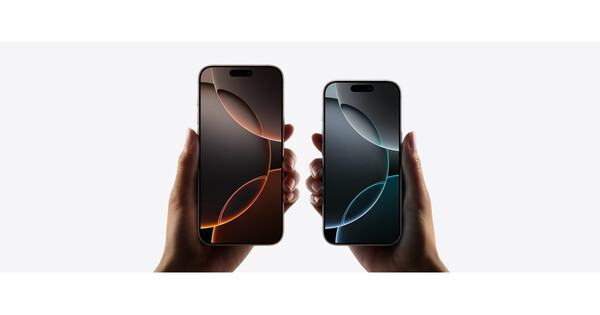
The Korea Chamber of Commerce and Industry evaluated the replacement demand due to the full-scale application of artificial intelligence (AI) functions in smartphones and the increase in shipments of information technology (IT) devices and TVs using premium organic light-emitting diodes (OLEDs) as positive factors in relation to the display industry.
In particular, since all models of Apple’s iPhone 17 to be released this year are expected to use LTPO panels, which are low-power displays, it is expected that domestic companies with supply experience in previous models will benefit. Korean companies such as Samsung Display and LG Display account for over 80% of OLED panels used in Apple, and the analysis is that the expansion of OLED led by Apple is directly linked to the growth of the Korean display industry.
Source: kipost.net